In the world of landscaping and outdoor design, the interplay between flowers and lights can create breathtaking environments that captivate and inspire. For lighting contractors, understanding how to effectively combine these elements is essential for delivering stunning results that meet client expectations. This guide delves into the nuances of integrating lighting with floral designs, offering insights that will enhance the skills of any lighting contractor.
Understanding the Basics of Landscape Lighting
Before diving into the specifics of combining flowers and lights, it’s crucial to grasp the fundamentals of landscape lighting. This knowledge will serve as the foundation for creating harmonious outdoor spaces. A well-thought-out lighting plan not only enhances the beauty of a garden or yard but also extends the usability of outdoor areas into the evening hours, allowing homeowners to enjoy their landscapes long after the sun goes down.
Types of Landscape Lighting
Landscape lighting comes in various forms, each serving different purposes. Path lights illuminate walkways, ensuring safety while enhancing the aesthetic appeal of the landscape. Spotlighting can highlight specific features, such as trees or sculptures, drawing attention to focal points. Additionally, string lights offer a whimsical touch, perfect for creating a cozy atmosphere in gardens and patios. These lights can be draped over trees, wrapped around railings, or strung between posts to create a magical ambiance that invites social gatherings and relaxation.
Understanding these types of lighting will help contractors select the appropriate fixtures for different areas of a landscape. Each type has its unique characteristics and applications, making it essential to match the lighting choice with the intended effect. For instance, well lights can be used to wash the base of a tree with light, creating a dramatic effect that emphasizes its height and structure, while uplighting can cast intriguing shadows that add depth and dimension to outdoor spaces.
Key Considerations for Lighting Design
When designing a lighting scheme, several factors must be considered. The first is the purpose of the lighting. Is it meant to enhance security, create ambiance, or highlight specific features? Each purpose will influence the choice of fixtures and placement. For example, if safety is a primary concern, brighter lights with a wider beam spread may be necessary along pathways and entry points, while softer, more diffused lighting can be used in seating areas to create a relaxing environment.
Another critical consideration is the color temperature of the lights. Warm white lights tend to create a welcoming atmosphere, while cooler tones can evoke a more modern feel. The selection of color temperature should align with the overall design theme of the landscape. Additionally, the positioning of lights plays a vital role in achieving the desired effect; lights placed too high may wash out details, while those positioned too low can create unwanted glare. Balancing these elements will ensure that the lighting not only serves its functional purpose but also enhances the overall beauty of the outdoor space.
Integrating Flowers and Lighting
Once the basics of landscape lighting are understood, the next step is to explore how to integrate flowers into the lighting design. This combination can elevate a garden’s beauty, making it a vibrant space both day and night.
Choosing the Right Flowers
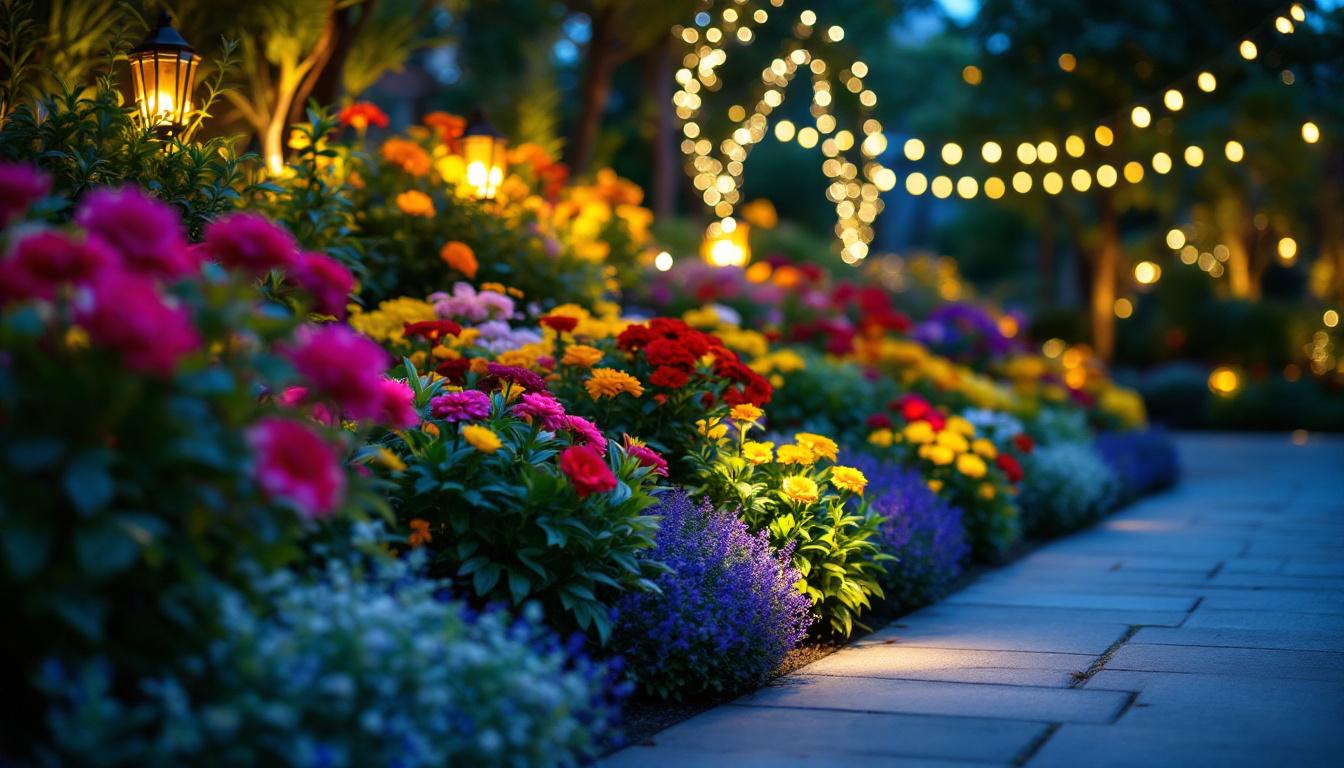
The type of flowers selected for a landscape can significantly impact how lighting is perceived. Brightly colored flowers can create a striking contrast against the soft glow of lights, while more subdued hues can blend harmoniously with the lighting scheme. Consider seasonal flowers that bloom at different times of the year, ensuring that the landscape remains vibrant throughout the seasons.
Additionally, the height and structure of the flowers should be taken into account. Taller plants may block light from reaching lower areas, while low-growing flowers can be beautifully illuminated, creating a layered effect. Understanding the growth patterns and blooming cycles of various plants will help in planning a cohesive design. For instance, incorporating perennials that bloom in spring and summer, such as peonies and daylilies, alongside autumn-blooming asters can provide continuous color and interest. Furthermore, selecting flowers with varying textures and forms can enhance visual appeal, as the interplay of light and shadow can accentuate their unique characteristics.
Lighting Techniques for Floral Displays
There are several techniques that can be employed to highlight floral displays effectively. Uplighting is a popular method where lights are placed at the base of plants, casting light upward and creating dramatic shadows. This technique can add depth and dimension to a garden, making flowers appear more vibrant and alive.
Another effective technique is backlighting, where lights are positioned behind the flowers. This method creates a halo effect, enhancing the flowers’ outlines and making them stand out against the night sky. It’s particularly effective for translucent petals, which can glow beautifully when illuminated from behind. To further enhance the visual experience, consider using colored filters or gels on the lights to cast different hues on the flowers, creating a whimsical, enchanting atmosphere. Additionally, incorporating path lighting along walkways can guide visitors through the garden, allowing them to appreciate the floral displays from various angles while ensuring safety and accessibility at night.
Creating Ambiance with Lighting
Beyond merely illuminating flowers, lighting can be used to create an overall ambiance that enhances the outdoor space. This involves strategic placement and selection of fixtures to evoke specific feelings and moods.
Layering Light for Depth
Layering light is a technique that involves using multiple sources of light at varying intensities to create depth in the landscape. This can be achieved by combining path lights, spotlights, and ambient lighting to create a balanced and inviting atmosphere.
By layering light, contractors can guide the eye through the landscape, highlighting key features while ensuring that the overall space feels cohesive. This approach not only enhances the beauty of the flowers but also creates a welcoming environment for guests.
Seasonal Adjustments
Seasonal changes can significantly affect the appearance of both flowers and lighting. As the seasons change, so too should the lighting design. In spring and summer, brighter lights may be more suitable to complement the vibrant blooms, while in fall and winter, softer, warmer lights can create a cozy atmosphere.
Contractors should encourage clients to consider seasonal adjustments to their lighting schemes. This may involve swapping out fixtures, changing the color temperature, or even repositioning lights to adapt to the changing landscape.
Safety and Sustainability Considerations
As with any outdoor project, safety and sustainability should be at the forefront of planning. Lighting contractors must ensure that their designs are not only aesthetically pleasing but also safe for users and environmentally friendly.
Ensuring Safety in Lighting Design
Safety is paramount when designing landscape lighting. Pathways should be well-lit to prevent accidents, and any lighting fixtures should be installed securely to avoid hazards. Additionally, using low-voltage lighting can reduce the risk of electrical issues and minimize energy consumption.
Contractors should also consider the placement of lights to avoid glare, which can be disorienting for pedestrians and drivers alike. Using shielding techniques or selecting fixtures designed to minimize glare can enhance safety without compromising aesthetic appeal.
Emphasizing Sustainability
In today’s environmentally conscious world, sustainability is an essential consideration for any lighting project. Contractors should opt for energy-efficient LED lights, which consume less power and have a longer lifespan compared to traditional bulbs. This not only reduces energy costs but also lessens the environmental impact.
Additionally, incorporating solar-powered lights can further enhance sustainability efforts. These lights harness solar energy during the day, providing illumination at night without drawing from the electrical grid. This approach can be particularly effective in gardens where access to electricity may be limited.
Case Studies: Successful Integrations of Flowers and Lights
Examining successful case studies can provide valuable insights into effective strategies for integrating flowers and lights. These examples highlight the diverse approaches that can be taken and the stunning results that can be achieved.
Residential Garden Transformation
In one residential project, a homeowner desired a vibrant garden that could be enjoyed both during the day and at night. The contractor selected a mix of perennial flowers that bloomed at different times, ensuring year-round color. Uplighting was strategically placed to highlight the taller plants, while path lights guided visitors through the space.
The result was a stunning transformation that allowed the homeowner to enjoy their garden in a new light—literally. The layered lighting created depth, and the flowers appeared even more vibrant against the illuminated backdrop.
Public Park Enhancement
In a public park setting, a lighting contractor was tasked with enhancing the existing floral displays while ensuring safety for park visitors. The contractor implemented a combination of spotlights and ambient lighting to create a welcoming atmosphere. Seasonal flowers were chosen to provide color throughout the year, and the lighting was adjusted accordingly.
This project not only beautified the park but also encouraged more visitors to enjoy the space after dark. The thoughtful integration of flowers and lights transformed the park into a vibrant community hub.
Conclusion: The Future of Floral and Lighting Integration
As the landscape design industry continues to evolve, the integration of flowers and lights will remain a vital aspect of creating captivating outdoor spaces. For lighting contractors, understanding the nuances of this combination is essential for staying competitive and meeting client expectations.
By mastering the fundamentals of landscape lighting, selecting the right flowers, and employing effective lighting techniques, contractors can create stunning environments that enhance the beauty of nature. As sustainability and safety become increasingly important, embracing energy-efficient solutions will not only benefit the environment but also appeal to a growing base of environmentally conscious clients.
Ultimately, the successful integration of flowers and lights is about creating experiences—transforming outdoor spaces into enchanting environments that invite exploration and enjoyment. With the right knowledge and skills, lighting contractors can elevate their projects and leave a lasting impression on their clients.
Illuminate Your Projects with LumenWholesale
Ready to bring the captivating combination of flowers and lights to life in your next outdoor project? At LumenWholesale, we provide lighting contractors with the high-quality, spec-grade lighting products you need to create those enchanting environments your clients will love. With our unbeatable wholesale prices and commitment to cutting out the middleman, you’re guaranteed to get the best value for your investment. Plus, with free shipping on bulk orders, you can stock up on premium lighting without worrying about hidden fees. Elevate your lighting designs today and discover the best in wholesale lighting at LumenWholesale.