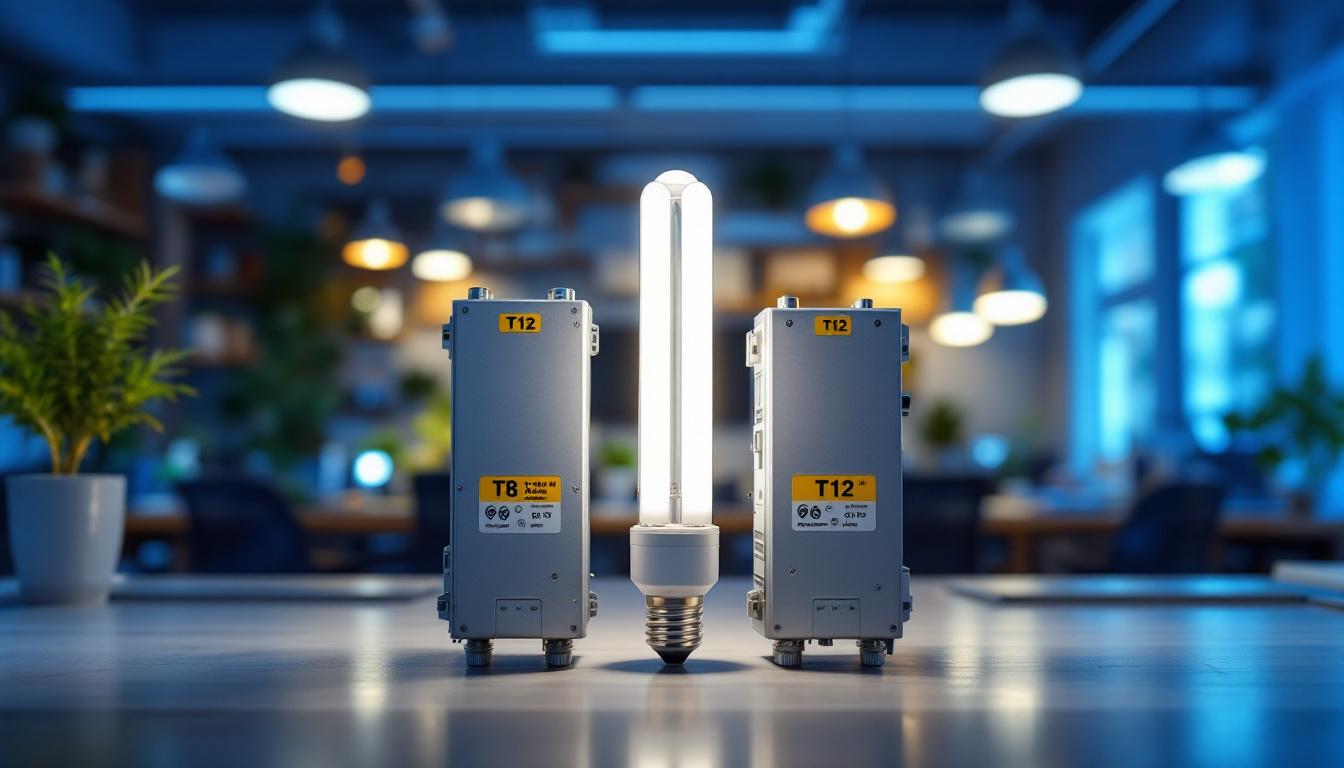
Understanding the Role of Ballasts in Fluorescent Lighting
In the realm of commercial and industrial lighting, fluorescent fixtures remain a popular choice due to their efficiency and longevity. However, the performance and efficiency of these fixtures hinge significantly on the ballast used. Ballasts regulate the current to the lamps and provide the necessary voltage to start them. Without the right ballast, fluorescent lamps can flicker, fail prematurely, or consume more energy than necessary.
Among the various types of fluorescent lamps, T8 and T12 are the most commonly installed, especially in retrofit and new construction projects. Understanding the differences between T8 and T12 ballasts is crucial for lighting contractors aiming to optimize lighting performance, reduce energy costs, and meet regulatory standards.
Ballasts come in two primary types: magnetic and electronic. Magnetic ballasts, which have been around for decades, are typically heavier and less energy-efficient than their electronic counterparts. They operate by using a transformer to regulate the current, but they can generate heat and may produce a humming noise, which can be distracting in quiet environments. On the other hand, electronic ballasts offer a more modern solution, providing higher efficiency, reduced flicker, and quieter operation. They also allow for better dimming capabilities and can extend the lifespan of fluorescent lamps, making them a preferred choice for many applications.
Another important factor to consider is the compatibility of ballasts with various fluorescent lamp types. For instance, T8 lamps generally require electronic ballasts designed specifically for their operation, while T12 lamps can often work with either magnetic or electronic options. This compatibility is essential not only for performance but also for ensuring that the lighting system meets energy efficiency standards set by organizations like the Department of Energy (DOE). As energy regulations continue to evolve, understanding the nuances of ballast selection becomes increasingly vital for achieving compliance and maximizing energy savings in commercial lighting projects.
Key Differences Between T8 and T12 Ballasts
Physical and Electrical Characteristics
T8 and T12 refer to the diameter of the fluorescent tubes, with T8 being 1 inch in diameter and T12 being 1.5 inches. This physical difference influences the type of ballast required. T12 ballasts are designed for older, larger diameter tubes, while T8 ballasts are optimized for the slimmer, more efficient T8 lamps.
Electrically, T12 ballasts typically operate at a lower frequency and are often magnetic, whereas T8 ballasts are generally electronic and operate at higher frequencies. The higher frequency operation of T8 ballasts reduces flicker and noise, improving visual comfort and lamp life. Additionally, the electronic design of T8 ballasts allows for features such as rapid start and dimming capabilities, which can enhance the overall lighting experience in various settings.
Energy Efficiency and Performance
One of the most significant distinctions lies in energy consumption. T8 ballasts paired with T8 lamps consume less power compared to T12 setups. Electronic T8 ballasts can improve energy efficiency by up to 30% compared to magnetic T12 ballasts. This difference can translate into substantial savings on electricity bills, especially in large facilities with extensive lighting systems.
Moreover, T8 ballasts provide more consistent light output and better color rendering. This is particularly important in environments where accurate color perception is critical, such as retail spaces, healthcare facilities, and manufacturing plants. The enhanced color rendering index (CRI) of T8 lamps allows for a more vibrant and true-to-life representation of colors, which can significantly impact customer satisfaction and productivity. Furthermore, the reduced heat output from T8 systems can contribute to lower cooling costs in commercial buildings, making them a more sustainable choice overall.
Why the Choice of Ballast Matters in Lighting Projects
Impact on Project Budget and Lifecycle Costs
While T12 ballasts and lamps may have a lower upfront cost, the total cost of ownership often favors T8 systems. The improved energy efficiency of T8 ballasts reduces operational costs significantly over the lifespan of the lighting system. Additionally, T8 lamps tend to have longer lifespans, reducing maintenance and replacement expenses.
Lighting contractors must consider these lifecycle costs when advising clients or selecting components for projects. A focus solely on initial costs can lead to higher expenses and dissatisfaction down the line. Moreover, the energy savings from T8 systems can often lead to rebates or incentives from utility companies, further offsetting initial investments. By taking a holistic view of costs, contractors can provide clients with a more accurate financial picture that includes potential savings over time.
Compliance with Energy Codes and Standards
Energy codes and standards have increasingly favored T8 systems due to their efficiency advantages. Many jurisdictions have phased out or restricted the use of T12 ballasts and lamps in commercial settings. Lighting contractors need to be aware of local regulations to ensure compliance and avoid costly retrofits or penalties.
Furthermore, specifying T8 ballasts can contribute to achieving sustainability certifications such as LEED or WELL, which are becoming more important in commercial building projects. These certifications not only enhance the marketability of a property but can also lead to increased occupancy rates and higher rental values. As sustainability becomes a priority for many businesses, integrating energy-efficient lighting solutions like T8 systems can position contractors as forward-thinking partners in their clients’ projects.
In addition to regulatory compliance, the shift towards T8 systems reflects a broader trend in the lighting industry focused on reducing environmental impact. With growing awareness of climate change and energy consumption, many organizations are prioritizing eco-friendly practices. By choosing T8 ballasts, contractors not only comply with regulations but also contribute to a larger movement towards sustainability, appealing to environmentally-conscious clients.
Common Challenges and Solutions When Transitioning from T12 to T8 Systems
Compatibility Issues
One challenge lighting contractors often encounter is ensuring compatibility between new T8 ballasts and existing fixtures or lamps. T8 ballasts are not interchangeable with T12 lamps due to differences in electrical requirements and physical dimensions. This necessitates either replacing lamps, ballasts, or both.
To address this, contractors should conduct thorough audits of existing lighting systems before specifying upgrades. Using retrofit kits designed for T8 lamps can simplify installation and reduce labor costs. These kits often include adapters that allow T8 lamps to fit into T12 fixtures, minimizing the need for extensive modifications. Moreover, contractors should also consider the long-term benefits of upgrading the entire fixture to ensure optimal performance and energy efficiency, as older fixtures may not be designed to handle the advancements in lighting technology.
Addressing Flicker and Light Quality Concerns
Some users report flicker or color inconsistencies when switching from T12 to T8 systems, often due to poor-quality ballasts or improper installation. Selecting high-quality electronic ballasts and ensuring proper wiring and grounding can mitigate these issues.
Additionally, integrating dimmable T8 ballasts can enhance control over lighting levels and further improve occupant comfort and energy savings. Beyond dimmable options, utilizing LED T8 replacements can provide even greater benefits, including a wider range of color temperatures and better energy efficiency. It’s also essential to educate users about the differences in light quality between T12 and T8 systems, as the latter can offer a more natural light experience, which is particularly important in environments like offices and schools where productivity and well-being are paramount. Regular maintenance and monitoring of the lighting system can help identify any emerging issues early, ensuring a consistently high-quality lighting environment.
Best Practices for Lighting Contractors When Selecting Between T8 and T12 Ballasts
Assessing Project Requirements Thoroughly
Before deciding on ballast type, contractors should evaluate the specific needs of the project, including lighting levels, energy goals, budget constraints, and regulatory requirements. This assessment ensures that the chosen ballast aligns with both client expectations and technical specifications.
Engaging with manufacturers and suppliers can provide insights into the latest ballast technologies and available warranties, which are critical for long-term project success. Additionally, it is beneficial to conduct a site analysis to determine factors such as existing infrastructure, ceiling heights, and the intended use of the space. This comprehensive understanding allows contractors to make informed decisions that not only meet the immediate needs but also anticipate future changes or expansions in lighting requirements.
Prioritizing Energy Efficiency and Sustainability
Given the global emphasis on reducing energy consumption and environmental impact, prioritizing T8 ballasts is often the more responsible choice. Their higher efficiency and compatibility with advanced lighting controls make them suitable for modern lighting projects aiming for sustainability.
Contractors should also consider integrating lighting controls such as occupancy sensors and daylight harvesting systems with T8 ballasts to maximize energy savings. Furthermore, exploring the potential for LED retrofits can significantly enhance energy efficiency, as LED technology offers longer lifespans and lower energy consumption compared to traditional fluorescent options. By promoting these sustainable practices, contractors not only contribute to environmental preservation but also position themselves as forward-thinking professionals in a competitive market.
Training and Staying Updated
The lighting industry evolves rapidly, with new ballast technologies and standards emerging regularly. Lighting contractors should invest in ongoing training and stay informed about the latest developments to provide the best solutions to their clients.
Participating in industry seminars, certification programs, and manufacturer workshops can enhance expertise and credibility. Additionally, subscribing to industry publications and joining professional organizations can keep contractors abreast of emerging trends, regulatory changes, and innovative products. Networking with peers and industry leaders can also foster collaboration and knowledge sharing, ultimately leading to improved project outcomes and client satisfaction. As the landscape of lighting technology continues to shift, a commitment to education and professional development will empower contractors to adapt and thrive in an ever-changing environment.
Conclusion: The Missing Piece in Many Lighting Projects
Choosing between T8 and T12 ballasts is more than a technical decision; it influences energy consumption, lighting quality, regulatory compliance, and overall project success. While T12 ballasts may still be found in older installations, the trend clearly favors T8 systems due to their superior efficiency, performance, and compatibility with modern lighting standards.
For lighting contractors, understanding the nuances of T8 versus T12 ballasts is essential. It enables informed recommendations, optimizes project outcomes, and ensures that lighting installations meet the demands of today’s energy-conscious and quality-driven market.
Ultimately, the ballast choice is a pivotal piece of the lighting puzzle—one that can transform a good lighting project into an exceptional one.
Illuminate Your Projects with LumenWholesale
Ready to elevate your lighting projects with the efficiency and performance of T8 ballasts? Look no further than LumenWholesale for all your lighting needs. We provide contractors with high-quality, spec-grade lighting products at unbeatable wholesale prices, ensuring you get the best value for your investment. Say goodbye to inflated markups and hello to a vast selection of reliable lighting solutions that meet the highest industry standards. Plus, with free shipping on bulk orders, you can stock up on premium lighting without any hidden fees. Don’t let the wrong ballast be the missing piece in your lighting project. Choose LumenWholesale and experience the perfect blend of quality, affordability, and convenience. Wholesale Lighting at the Best Value