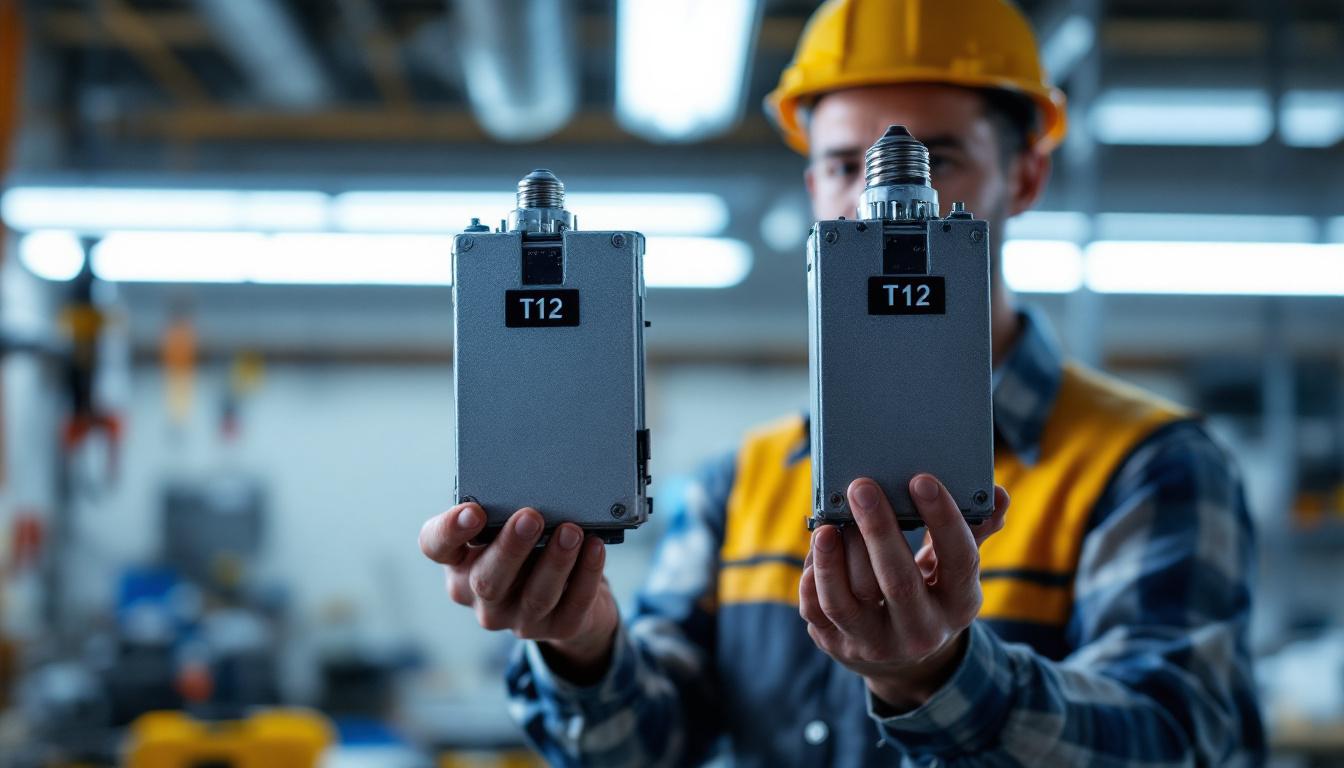
Understanding the Basics: What Are T8 and T12 Ballasts?
Lighting contractors frequently encounter the choice between T8 and T12 ballasts when working on commercial and industrial lighting projects. Both types serve the essential function of regulating current to fluorescent lamps, but their design and performance characteristics differ significantly. Knowing these differences is critical for optimizing energy efficiency, maintenance schedules, and overall lighting quality.
T8 and T12 refer to the diameter of the fluorescent tubes they support. The “T” stands for tubular, and the number indicates the diameter in eighths of an inch. So, a T12 tube is 12/8 inches (1.5 inches) in diameter, while a T8 tube is 8/8 inches (1 inch) thick. This seemingly simple distinction influences the ballast design, lamp efficacy, and compatibility.
In addition to their physical dimensions, T8 and T12 ballasts also vary in their energy consumption and light output efficiency. T8 ballasts are generally more energy-efficient, allowing for higher lumen output per watt consumed compared to T12 ballasts. This efficiency translates into lower electricity costs and reduced environmental impact, making T8 systems a more sustainable choice for businesses looking to minimize their carbon footprint. Moreover, the advancements in T8 technology, including electronic ballasts, have led to improved flicker-free operation and longer lamp life, which can significantly reduce maintenance costs over time.
Another important aspect to consider is the compatibility of existing fixtures and the ease of retrofitting. While T12 fixtures are still prevalent in older buildings, many organizations are transitioning to T8 systems to take advantage of the benefits they offer. However, this transition may require additional considerations, such as replacing or modifying existing fixtures to accommodate the smaller T8 tubes and their corresponding ballasts. Understanding the specific requirements for each ballast type can help lighting contractors provide tailored solutions that meet the unique needs of their clients, ensuring optimal performance and satisfaction.
Energy Efficiency and Operational Costs
Why T8 Ballasts Outperform T12 in Energy Savings
Energy efficiency is a top priority for lighting contractors advising clients on long-term operational costs. T8 ballasts paired with T8 lamps generally consume less power than T12 systems. This is due to advancements in ballast technology and the improved phosphor coatings on T8 lamps that yield higher lumens per watt.
For example, a typical T12 fluorescent setup might draw around 40 watts per lamp, whereas a comparable T8 setup can operate effectively at approximately 32 watts. Over a large installation with dozens or hundreds of fixtures, this difference translates into substantial energy savings and reduced utility bills. Furthermore, the reduced energy consumption not only benefits the bottom line but also contributes to a smaller carbon footprint, making T8 systems a more environmentally friendly choice. As businesses increasingly focus on sustainability, the transition to T8 lighting can enhance their reputation as responsible corporate citizens.
Impact on Maintenance and Replacement Costs
Beyond energy consumption, T8 ballasts tend to have a longer lifespan and lower failure rates compared to their T12 counterparts. This reduces the frequency of ballast replacements and associated labor costs. Additionally, T8 lamps generally maintain their brightness longer and experience less flickering, which can minimize complaints and improve occupant satisfaction. The improved reliability of T8 systems means that facilities can allocate fewer resources to maintenance, allowing staff to focus on more critical operational tasks.
Moreover, the enhanced performance of T8 ballasts can lead to better overall lighting quality in workspaces. With consistent brightness and color rendering, T8 systems can create a more pleasant and productive environment for employees. This is particularly important in settings such as offices, retail spaces, and educational institutions, where lighting plays a crucial role in the overall experience. As a result, investing in T8 technology not only reduces costs but also enhances the well-being and productivity of occupants, making it a smart choice for any organization looking to optimize their lighting solutions.
Compatibility and Retrofit Considerations
Challenges When Switching from T12 to T8
Many existing commercial buildings still operate with T12 ballasts and lamps. Lighting contractors often face the challenge of retrofitting these systems to more efficient T8 setups. However, T8 lamps are not always compatible with T12 ballasts due to differences in electrical requirements and starting methods.
Direct replacement of T12 lamps with T8 lamps without changing the ballast can lead to poor performance, reduced lamp life, and potential safety hazards. Therefore, contractors must ensure that the ballasts are compatible or plan for a ballast replacement as part of the retrofit. In some cases, this may involve a more extensive evaluation of the existing lighting infrastructure, including the wiring and fixtures, to determine if they can accommodate the new technology. Additionally, it is crucial for contractors to educate building owners about the long-term benefits of investing in a complete retrofit, as the initial costs may be offset by significant energy savings and reduced maintenance expenses over time.
Electronic vs. Magnetic Ballasts
T12 ballasts are typically magnetic and less efficient, while T8 ballasts are often electronic. Electronic ballasts offer several advantages, including quieter operation, reduced heat output, and instant start capabilities. When retrofitting, upgrading to electronic T8 ballasts can significantly enhance system performance and energy savings. Furthermore, electronic ballasts can provide more consistent light output and improved color rendering, which is particularly important in environments where accurate color perception is critical, such as retail spaces or art galleries.
Moreover, the transition to electronic ballasts also supports the growing trend toward smart lighting solutions. Many electronic ballasts can be integrated with advanced lighting control systems, allowing for features such as dimming, occupancy sensing, and daylight harvesting. This not only maximizes energy efficiency but also enhances the overall user experience by creating a more adaptable and responsive lighting environment. As sustainability becomes a priority for many organizations, the ability to implement such technologies can also contribute to achieving green building certifications and improving the overall marketability of the property.
Lighting Quality and Environmental Impact
Improved Light Output and Color Rendering
T8 lamps generally provide better color rendering and more consistent light output than T12 lamps. This can be particularly important in settings such as retail stores, offices, and healthcare facilities where accurate color perception is critical. The improved phosphor technology in T8 lamps results in a more natural, pleasant light that can enhance the ambiance of any space.
Environmental Benefits of T8 Systems
The shift from T12 to T8 ballasts and lamps also aligns with environmental sustainability goals. T8 systems use less energy and reduce greenhouse gas emissions associated with electricity generation. Additionally, newer T8 lamps often contain lower levels of mercury compared to older T12 lamps, making disposal safer and less environmentally damaging.
Cost Analysis: Initial Investment Versus Long-Term Savings
Upfront Costs of Ballast Replacement
One of the main concerns for contractors and clients alike is the initial cost of switching from T12 to T8 ballasts. Electronic T8 ballasts and compatible lamps generally come at a higher upfront price than legacy T12 systems. Installation labor and potential fixture modifications can add to the initial investment.
Return on Investment Through Energy and Maintenance Savings
Despite higher initial costs, the return on investment (ROI) for T8 systems is often compelling. Energy savings alone can reduce operating expenses by 20-30%, depending on usage patterns and local electricity rates. When factoring in reduced maintenance frequency and longer lamp life, the payback period for upgrading to T8 ballasts often falls within a few years.
Regulatory and Code Compliance
Many jurisdictions have updated energy codes and lighting standards that favor or require more efficient lighting systems. T12 ballasts are increasingly being phased out or banned in new construction and major renovations. Lighting contractors must stay informed about local regulations to ensure compliance and avoid costly rework.
Furthermore, utility rebate programs often incentivize the replacement of T12 systems with T8 or LED alternatives. These rebates can offset some of the upfront costs and improve project feasibility for clients.
Practical Tips for Lighting Contractors
Assessing Existing Systems Thoroughly
Before recommending a ballast upgrade, conduct a detailed assessment of the existing lighting infrastructure. Identify the types of ballasts, lamp conditions, fixture compatibility, and wiring configurations. This information is crucial for planning a smooth retrofit with minimal downtime.
Educating Clients on Benefits and Trade-offs
Clients may hesitate to invest in newer ballast technology due to cost concerns or unfamiliarity. Providing clear, data-driven explanations of energy savings, improved lighting quality, and maintenance benefits can help build confidence in the upgrade decision.
Considering LED Alternatives
While this discussion focuses on T8 versus T12 ballasts, it’s worth noting that LED technology offers even greater efficiency and longer lifespans. Contractors should evaluate whether a direct switch to LED tubes or fixtures might be a more future-proof solution, depending on the project scope and budget.
Conclusion: Making the Right Choice for Your Projects
Choosing between T8 and T12 ballasts is more than a technical detail-it influences energy costs, lighting quality, maintenance schedules, and regulatory compliance. For lighting contractors, understanding these crucial differences enables better recommendations and successful project outcomes.
T8 ballasts paired with T8 lamps generally offer superior energy efficiency, enhanced lighting performance, and environmental benefits compared to T12 systems. Though the initial investment may be higher, the long-term savings and improved client satisfaction often justify the upgrade. Staying informed about compatibility issues, retrofit challenges, and evolving regulations ensures that contractors can deliver lighting solutions that meet both current needs and future demands.
Illuminate Your Projects with LumenWholesale
Ready to elevate your lighting projects with the most energy-efficient and cost-effective solutions? Look no further than LumenWholesale. Our commitment to providing contractors with top-quality, spec-grade lighting products at wholesale prices ensures that you can confidently make the switch to T8 ballasts and lamps, or even LED alternatives, without the burden of inflated costs. With LumenWholesale, you gain access to an extensive selection of premium lighting that meets the highest industry standards, backed by the convenience of free shipping on bulk orders. Don’t compromise on quality or value—choose Wholesale Lighting at the Best Value and make a bright investment in your lighting projects today.