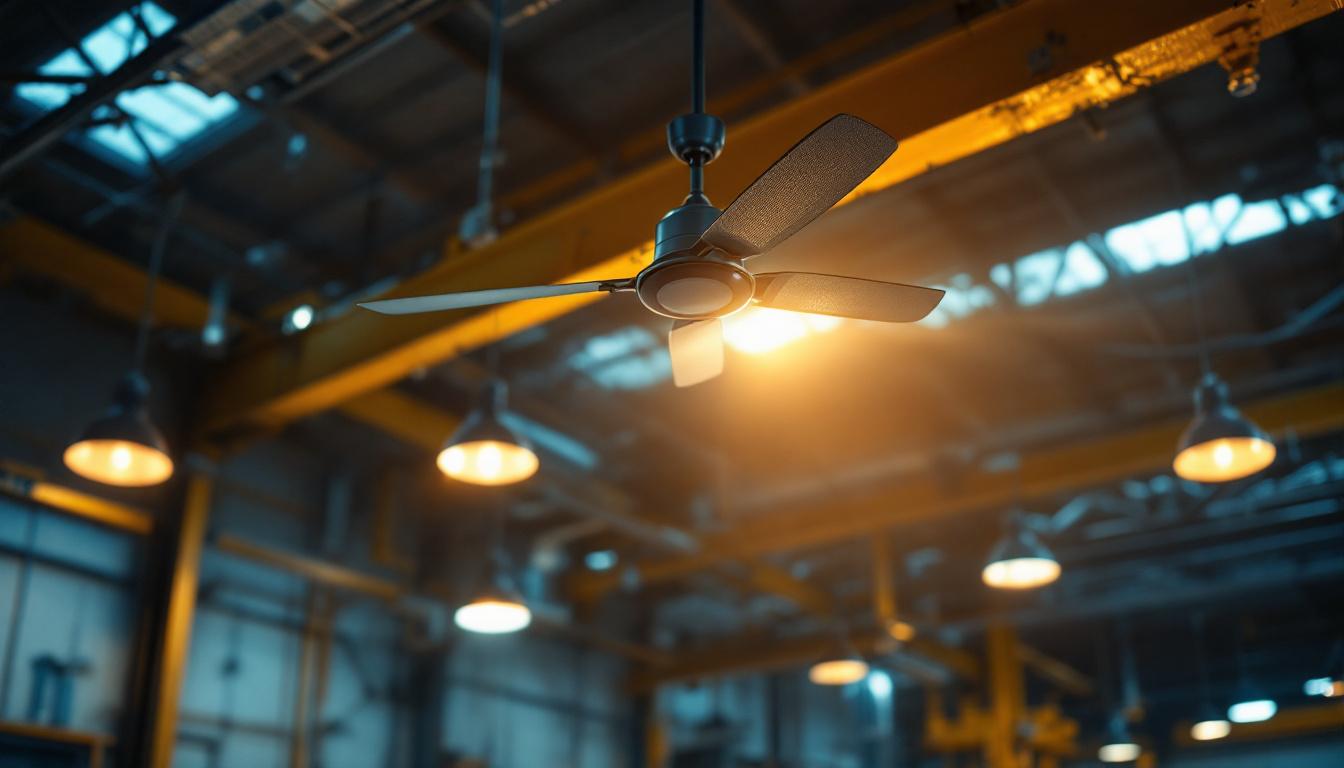
Understanding the Role of Small Industrial Ceiling Fans in Commercial Spaces
For lighting contractors, the integration of small industrial ceiling fans into commercial and industrial environments is becoming increasingly important. These fans not only contribute to air circulation but also impact lighting design, energy efficiency, and overall comfort within a space. Recognizing their multifaceted role helps contractors provide comprehensive solutions that meet client needs.
Small industrial ceiling fans are designed to operate efficiently in environments where space may be limited, yet effective air movement remains critical. Unlike larger industrial fans, these compact models are ideal for warehouses, workshops, retail spaces, and offices where ceiling heights and structural constraints require a more tailored approach. Their ability to improve air quality and temperature regulation complements lighting systems by reducing heat buildup from fixtures, thereby extending the lifespan of both lighting and HVAC equipment.
Why Lighting Contractors Should Prioritize Fan Selection
Lighting contractors often focus primarily on illumination, but incorporating small industrial ceiling fans into their projects can enhance the overall environment significantly. Proper fan selection can reduce energy costs by improving air circulation and minimizing the need for extensive HVAC adjustments. This synergy between lighting and air movement is crucial in commercial settings where operational efficiency and occupant comfort are paramount.
Furthermore, many modern small industrial ceiling fans come equipped with integrated lighting options or are designed to accommodate lighting fixtures seamlessly. This integration allows contractors to streamline installation processes and create aesthetically cohesive solutions that satisfy both functional and design criteria. By choosing fans that complement the existing lighting design, contractors can ensure that the overall ambiance of the space is enhanced, making it more inviting for employees and customers alike.
In addition to their practical benefits, small industrial ceiling fans also contribute to the aesthetic appeal of commercial spaces. With a variety of styles, finishes, and blade designs available, these fans can serve as a design element that enhances the overall decor. Whether in a chic retail environment or a modern office, the right fan can add a touch of sophistication while maintaining the necessary functionality. Moreover, the quiet operation of these fans ensures that they do not distract from the ambiance created by the lighting, allowing for a harmonious blend of comfort and style.
Moreover, the environmental impact of small industrial ceiling fans cannot be overlooked. As businesses increasingly prioritize sustainability, these energy-efficient fans can play a significant role in reducing a building’s carbon footprint. By promoting better air circulation, they can help maintain comfortable temperatures without relying heavily on air conditioning systems, thereby conserving energy. This not only benefits the environment but can also lead to significant cost savings for businesses in the long run, making small industrial ceiling fans a smart investment for any commercial space.
Key Considerations When Selecting Small Industrial Ceiling Fans
Size and Airflow Capacity
Choosing the right size fan is essential for achieving optimal airflow without overwhelming the space. Small industrial ceiling fans typically range from 36 to 48 inches in diameter, making them suitable for rooms with moderate ceiling heights and square footage. Contractors should calculate the cubic footage of the area and consider the fan’s cubic feet per minute (CFM) rating to ensure adequate air movement.
For example, a workshop with a ceiling height of 12 feet and an area of 1,000 square feet might require a fan with a CFM rating between 5,000 and 7,000 to maintain effective circulation. Overestimating or underestimating this capacity can lead to inefficiencies, such as stagnant air pockets or excessive noise and energy consumption. It is also important to consider the layout of the space; obstacles like machinery or shelving can impede airflow, necessitating the strategic placement of fans to maximize their effectiveness. In some cases, multiple fans may be required to achieve a uniform distribution of air, particularly in larger or oddly shaped areas.
Energy Efficiency and Motor Technology
Energy efficiency is a critical factor for lighting contractors advising clients on sustainable building solutions. Small industrial ceiling fans equipped with brushless DC motors (BLDC) offer superior energy savings compared to traditional AC motors. BLDC motors consume less power, generate less heat, and provide quieter operation, which is especially beneficial in commercial environments where noise reduction is a priority.
Additionally, many fans now feature variable speed controls and smart technology compatibility, enabling precise adjustments to airflow based on occupancy or ambient temperature. These features allow contractors to recommend systems that align with energy codes and green building standards, enhancing the value of their installations. Moreover, the integration of smart sensors can optimize fan operation by automatically adjusting speeds based on real-time data, ensuring that energy is used efficiently and only when necessary. This not only reduces operational costs but also contributes to a more sustainable approach to energy consumption in industrial settings.
Durability and Maintenance Requirements
Industrial environments can be demanding, with exposure to dust, moisture, and temperature fluctuations. Selecting fans constructed from robust materials such as aluminum or steel, with corrosion-resistant finishes, ensures longevity and consistent performance. Lighting contractors should verify that the fan’s design includes sealed bearings and easy-access components to facilitate routine maintenance.
Maintenance considerations are crucial because fans that require frequent repairs or cleaning can disrupt operations and increase long-term costs. Offering clients fans with low-maintenance features supports a reputation for reliability and professionalism. Furthermore, it is beneficial to educate clients on the importance of regular inspections and cleaning schedules to prolong the life of their fans. Simple practices, such as wiping down blades and checking for loose components, can prevent more significant issues down the line. Additionally, some manufacturers provide warranties that cover parts and labor, which can further enhance the value proposition for clients looking to invest in durable and efficient ceiling fans for their industrial spaces.
Installation Best Practices for Lighting Contractors
Assessing Structural and Electrical Compatibility
Before installation, contractors must evaluate the ceiling structure to confirm it can support the fan’s weight and vibration. Small industrial ceiling fans, while compact, still require secure mounting to prevent safety hazards and operational issues. Reinforcing ceiling joists or installing dedicated support brackets may be necessary in some cases.
Electrical compatibility is equally important. Fans should be wired to circuits that can handle their power requirements without overloading. Integrating fan controls with existing lighting systems can simplify user operation but requires careful planning to avoid interference or circuit conflicts.
Optimizing Fan Placement for Maximum Efficiency
Strategic placement of small industrial ceiling fans enhances both air circulation and lighting effectiveness. Fans should be positioned to promote even airflow throughout the space, avoiding direct drafts on workstations or customer areas. Coordinating fan locations with lighting fixture layouts helps prevent shadows and glare, contributing to a comfortable visual environment.
In some scenarios, multiple fans may be necessary to cover larger areas uniformly. Lighting contractors should collaborate with HVAC professionals to develop comprehensive airflow plans that complement lighting designs and meet client expectations.
Incorporating Controls and Automation
Modern small industrial ceiling fans often support integration with building automation systems, allowing centralized control of lighting and ventilation. Lighting contractors can leverage this capability to offer clients advanced solutions that optimize energy usage and occupant comfort.
For instance, motion sensors can trigger fans and lights to operate only when spaces are occupied, reducing unnecessary energy consumption. Programmable timers and remote controls further enhance convenience and adaptability, making these fans a valuable addition to smart building strategies.
Common Challenges and How to Overcome Them
Addressing Noise Concerns
Noise generated by ceiling fans can be a significant issue in commercial environments, particularly in offices or retail spaces where a quiet atmosphere is essential. Selecting fans with high-quality motors and aerodynamic blade designs minimizes operational noise. Additionally, ensuring proper installation and balancing of blades reduces vibrations that contribute to sound disturbances.
Contractors should conduct sound level assessments during commissioning to verify that fan noise remains within acceptable limits, adjusting settings or replacing components if necessary.
Managing Heat and Lighting Interactions
Industrial lighting fixtures, especially those utilizing high-intensity discharge or halogen bulbs, can produce substantial heat that affects fan performance. Small industrial ceiling fans help dissipate this heat, but improper coordination between lighting and fan systems can lead to uneven temperature distribution or reduced lighting efficacy.
Collaborative planning with lighting designers and HVAC specialists ensures that fan airflow supports lighting performance without causing flicker or shadowing. Using LED lighting, which generates less heat, can also alleviate these challenges.
Ensuring Compliance with Safety Standards
Safety regulations governing electrical installations and mechanical equipment are stringent in commercial settings. Lighting contractors must ensure that small industrial ceiling fans meet all relevant local and national codes, including those related to wiring, grounding, and mounting.
Regular inspections and adherence to manufacturer guidelines are essential to maintain compliance and prevent liability issues. Providing clients with documentation and maintenance schedules further demonstrates professionalism and commitment to safety.
Enhancing Client Value Through Expert Fan Integration
Lighting contractors who master the selection, installation, and integration of small industrial ceiling fans position themselves as comprehensive solution providers. This expertise enables them to deliver projects that improve indoor air quality, energy efficiency, and occupant comfort simultaneously.
By staying informed about the latest fan technologies and industry best practices, contractors can recommend innovative products that align with evolving client demands and sustainability goals. Offering bundled services that combine lighting and ventilation solutions simplifies project management and enhances client satisfaction.
Ultimately, the thoughtful incorporation of small industrial ceiling fans into commercial projects reflects a commitment to quality and innovation, reinforcing the contractor’s reputation and opening doors to new business opportunities.
Get Your Premium Industrial Ceiling Fans at LumenWholesale
Ready to elevate your commercial projects with the best in small industrial ceiling fans? Look no further than LumenWholesale, where we provide lighting contractors with high-quality, spec-grade products at unbeatable wholesale prices. Our selection of ceiling fans meets the highest industry standards, ensuring you deliver on both efficiency and design. Plus, with free shipping on bulk orders, you can secure top-tier lighting and ventilation solutions without the hidden fees. Don’t compromise on quality or cost—choose LumenWholesale for the perfect blend of affordability and performance. Wholesale Lighting at the Best Value is just a click away.