Understanding the Importance of Proper Garage Lighting
For lighting contractors, selecting the best light for a garage goes beyond simply illuminating a space. Garages serve multiple functions—ranging from vehicle storage and mechanical work to hobby areas and even home gyms. Proper lighting enhances safety, improves visibility for detailed tasks, and contributes to energy efficiency. A well-lit garage reduces the risk of accidents, deters theft, and increases the overall usability of the space.
Statistics show that poor lighting is a significant factor in workplace accidents, and garages are no exception. For contractors, recommending and installing the right lighting solutions can directly impact client satisfaction and safety outcomes. Therefore, understanding the nuances of garage lighting is essential to delivering professional, reliable service.
Moreover, the type of lighting used can significantly influence the ambiance of the garage. For instance, LED lights are not only energy-efficient but also provide bright, clear illumination that can make even the most cluttered garage feel more open and organized. The color temperature of the lights can also play a role; cooler tones can enhance visibility for intricate tasks, while warmer tones may create a more inviting atmosphere for leisure activities. Additionally, incorporating motion sensors can further enhance convenience and energy savings, ensuring that lights are only on when the garage is in use.
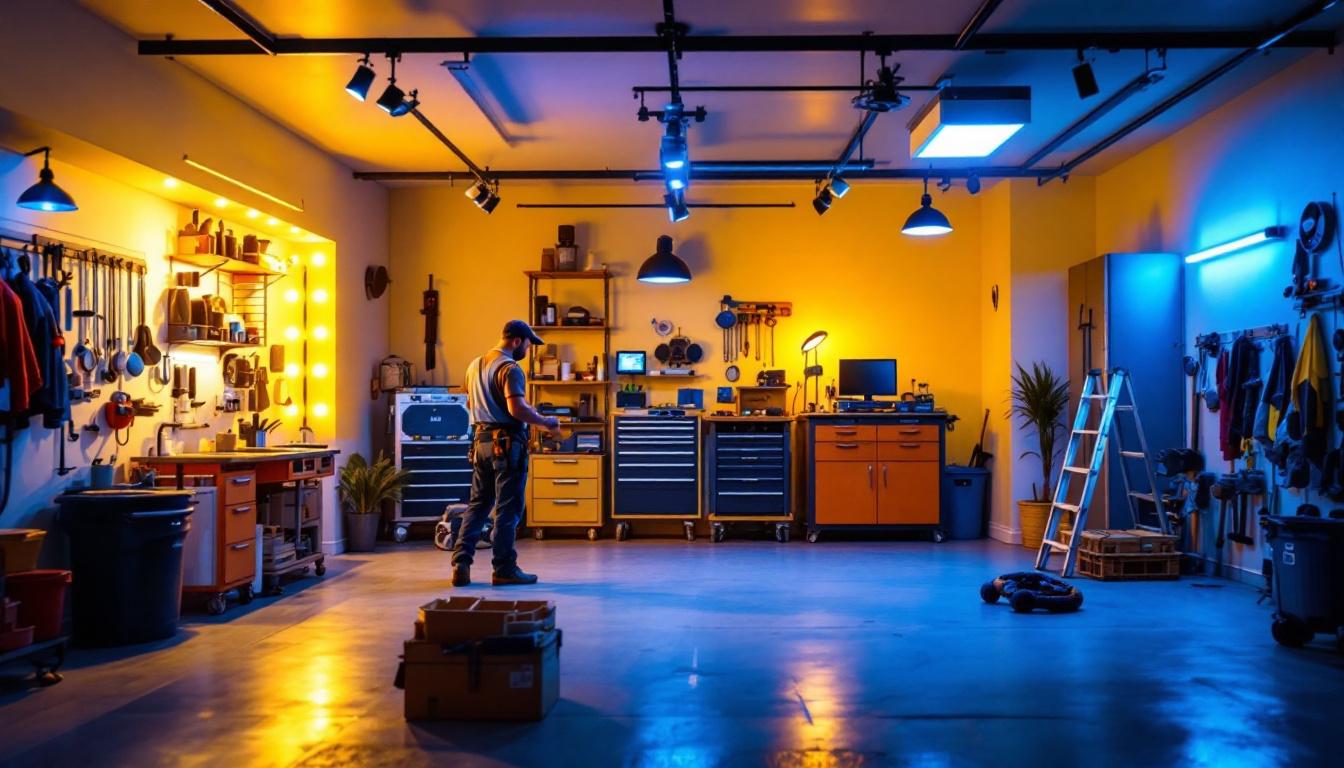
Another aspect to consider is the layout of the garage and how lighting can be strategically placed to maximize effectiveness. Utilizing a combination of overhead lights, task lighting, and accent lights can create a well-rounded lighting scheme that caters to various activities. For example, installing adjustable fixtures above workbenches allows for focused lighting on detailed projects, while ambient lighting can provide a general glow throughout the space. Understanding these dynamics not only helps in creating a functional environment but also elevates the overall aesthetic appeal of the garage, making it a more enjoyable space for homeowners to spend time in.
Key Considerations When Choosing Garage Lighting
Assessing the Garage’s Purpose and Layout
Before selecting lighting fixtures, contractors must evaluate the garage’s intended use. Is it primarily for parking vehicles, or will it double as a workshop? Will the space be used during the day, or is it mostly dark and enclosed? These questions influence the type, placement, and intensity of lighting required.
For example, a garage used for mechanical repairs demands bright, shadow-free lighting that mimics daylight. In contrast, a garage used mainly for storage may require less intense, strategically placed lights. The size and ceiling height of the garage also play a role in determining fixture type and wattage. Additionally, the layout of the garage can affect how light is distributed. For instance, if the garage has multiple sections, such as a dedicated workspace and a storage area, it may be beneficial to install separate lighting zones, allowing for tailored illumination based on the specific activities taking place in each section.
Energy Efficiency and Sustainability
With increasing emphasis on sustainable building practices, energy-efficient lighting solutions are a priority. LED lighting has become the industry standard due to its longevity, low energy consumption, and excellent light quality. Contractors should prioritize LED fixtures that offer high lumens per watt and are rated for damp or dusty environments typical of garages.
Incorporating lighting controls such as motion sensors and dimmers can further reduce energy use and extend fixture life. These features not only appeal to environmentally conscious clients but also reduce operational costs over time. Moreover, considering the use of smart technology can enhance the functionality of garage lighting. Smart systems allow homeowners to control their lighting remotely, set schedules, and even integrate with home automation systems. This level of control can be particularly beneficial in garages that serve multiple purposes, ensuring that the right amount of light is available exactly when needed, without unnecessary waste.
Do’s: Best Practices for Garage Lighting Installation
Do Choose High-Quality LED Fixtures
LED lights provide superior brightness, color rendering, and durability compared to traditional incandescent or fluorescent bulbs. For garages, LED fixtures with a color temperature between 4000K and 5000K are ideal, as they produce a bright, neutral white light that enhances visibility without causing eye strain.
Additionally, selecting fixtures with an IP rating suitable for garage conditions ensures resistance to dust, moisture, and temperature fluctuations. This increases the lifespan of the lighting system and reduces maintenance needs.
Do Plan for Layered Lighting
Effective garage lighting is rarely achieved through a single source. Contractors should design a layered lighting system that combines ambient, task, and accent lighting. Ambient lighting provides general illumination, while task lighting focuses on specific work areas such as benches or tool stations. Accent lighting can highlight storage areas or architectural features.
Using multiple lighting layers allows users to customize the lighting environment according to their activities, improving functionality and comfort.
Do Ensure Proper Fixture Placement and Spacing
Even the best fixtures can underperform if poorly placed. Contractors must carefully plan fixture spacing to avoid shadows and dark spots. For example, linear LED shop lights mounted evenly across the ceiling can provide uniform illumination, while adjustable task lights can be positioned to reduce glare and shadows on work surfaces.
Height matters too: fixtures should be installed at an optimal height to maximize light distribution without causing glare. For garages with high ceilings, high bay LED lights may be appropriate, whereas standard ceiling heights might benefit from flush-mounted or surface-mounted fixtures.
Do Incorporate Controls for Convenience and Efficiency
Integrating motion sensors, timers, or smart controls enhances the usability of garage lighting. Motion sensors automatically turn lights on when someone enters and off after a set period of inactivity, preventing energy waste. Timers and dimmers allow users to adjust lighting levels based on time of day or specific tasks.
Smart lighting systems that connect to home automation platforms offer additional convenience and energy savings, making them attractive options for modern clients.
Don’ts: Common Mistakes to Avoid in Garage Lighting
Don’t Overlook Glare and Shadow Issues
One of the most frequent mistakes contractors make is installing lighting that creates harsh glare or deep shadows. Glare can cause discomfort and reduce visibility, while shadows can obscure hazards or work details. Avoid positioning fixtures directly in line with workstations or reflective surfaces that amplify glare.
Using diffusers or indirect lighting techniques can minimize glare, while multiple light sources can reduce shadows. Testing lighting layouts before final installation helps identify and correct these issues.
Don’t Rely Solely on Fluorescent or Incandescent Lighting
While fluorescent and incandescent bulbs have historically been common in garages, they have significant drawbacks. Incandescent bulbs consume more energy and have shorter lifespans, while fluorescent lights can flicker and contain hazardous materials like mercury.
LED technology offers a superior alternative, providing consistent brightness, energy savings, and environmental benefits. Lighting contractors should educate clients on these advantages and avoid recommending outdated options unless specific circumstances dictate otherwise.
Don’t Neglect Safety and Electrical Codes
Compliance with local electrical codes and safety standards is non-negotiable. Improper installation can lead to electrical hazards, fire risks, and liability issues. Contractors must ensure that all fixtures, wiring, and controls meet or exceed code requirements.
Additionally, garages often require lighting fixtures rated for damp or wet locations, especially if the space is partially open or exposed to moisture. Ground-fault circuit interrupters (GFCIs) should be used where necessary to protect against electrical shock.
Don’t Ignore Client Needs and Preferences
Every client has unique preferences and requirements for their garage lighting. Some may prioritize brightness and task lighting, while others seek ambiance or energy efficiency. Contractors should conduct thorough consultations to understand these needs and tailor lighting solutions accordingly.
Ignoring client input can lead to dissatisfaction and costly revisions. Offering multiple options and explaining the pros and cons of each helps clients make informed decisions and fosters trust.
Advanced Tips for Lighting Contractors to Elevate Garage Projects
Utilize Daylight Integration
Where possible, integrating natural daylight into garage lighting plans can reduce energy consumption and improve occupant comfort. Skylights, translucent panels, or windows can supplement artificial lighting during daytime hours.
Contractors should consider how daylight affects lighting levels and glare, and recommend fixtures with dimming capabilities to balance natural and artificial light seamlessly.
Consider Color Rendering Index (CRI) for Task Lighting
The Color Rendering Index (CRI) measures how accurately a light source reveals colors compared to natural light. For garages used as workshops or hobby areas, a high CRI (above 80) is essential to distinguish colors and details accurately.
LED fixtures with high CRI ratings enhance visual clarity and reduce eye fatigue, making them ideal for precision tasks such as painting, wiring, or mechanical repairs.
Plan for Future Flexibility
Garages often evolve in their usage over time. Contractors should design lighting systems that can adapt to changing needs without requiring complete rewiring or fixture replacement. Modular lighting solutions, adjustable mounts, and smart controls offer flexibility for future modifications.
Advising clients on this aspect adds value to the service and positions contractors as forward-thinking professionals.
Conclusion: Delivering Optimal Garage Lighting Solutions
For lighting contractors, mastering the do’s and don’ts of garage lighting is crucial to providing safe, efficient, and user-friendly lighting systems. Prioritizing LED technology, layered lighting design, proper fixture placement, and energy-saving controls ensures that garages are well-lit for any purpose.
Avoiding common pitfalls such as glare, shadows, outdated lighting types, and code violations protects both the contractor’s reputation and the client’s investment. By incorporating advanced considerations like daylight integration, high CRI fixtures, and future-proof designs, contractors can deliver superior lighting solutions that stand the test of time.
Ultimately, understanding the unique demands of garage environments and tailoring lighting strategies accordingly empowers contractors to exceed client expectations and contribute to safer, more functional spaces.
Illuminate Your Projects with LumenWholesale
Ready to elevate your garage lighting installations with the best products on the market? Look no further than LumenWholesale, where we provide contractors with the highest quality, spec-grade lighting solutions at unbeatable wholesale prices. Say goodbye to local distributor markups and hello to a vast selection of reliable, high-performance lighting that meets the most rigorous industry standards. Plus, with free shipping on bulk orders, you can stock up on premium lighting without any hidden fees or compromises. Don’t miss out on the perfect combination of quality, affordability, and convenience. Take the next step in delivering optimal garage lighting solutions and explore our collection at LumenWholesale for Wholesale Lighting at the Best Value.