Introduction to Wire Splicing in Lighting Installations
For lighting contractors, the integrity of electrical connections is paramount. Whether working on residential, commercial, or industrial lighting projects, the choice of wire splicing methods and tools directly impacts safety, efficiency, and long-term reliability. Wire splicing is the process of joining two or more electrical wires together to create a continuous circuit, and it must be done with precision to prevent hazards such as short circuits, electrical fires, or system failures.
Among the various splicing options available, the Wago splicer has gained notable attention. However, alternatives such as traditional wire nuts, push-in connectors, and crimp connectors remain widely used. This article explores the Wago splicer in detail, compares it with other common alternatives, and provides guidance on which option lighting contractors should choose depending on project requirements.
Understanding the nuances of wire splicing can significantly enhance the performance of a lighting installation. For instance, the Wago splicer utilizes a spring-loaded mechanism that ensures a secure and reliable connection without the need for twisting wires together, which can sometimes lead to weak points. This method not only simplifies the installation process but also allows for quick disconnections, making it ideal for temporary setups or when modifications are necessary. Additionally, Wago connectors are designed to accommodate a range of wire sizes, providing versatility that can be particularly beneficial in complex projects where different gauges of wire may be used.
On the other hand, traditional wire nuts, while still prevalent, require a certain level of skill to ensure that the wires are twisted tightly enough to maintain a good connection. Improperly secured wire nuts can lead to corrosion over time, especially in environments with high humidity or temperature fluctuations. Push-in connectors offer a user-friendly alternative, allowing for quick connections without the need for tools. However, they may not provide the same level of security as Wago splicers, particularly in applications where vibration or movement is a concern. As such, lighting contractors must carefully assess the specific needs of each project, considering factors such as environmental conditions, wire types, and the potential for future modifications, to select the most appropriate splicing method.
Understanding the Wago Splicer: Features and Benefits
What Is a Wago Splicer?
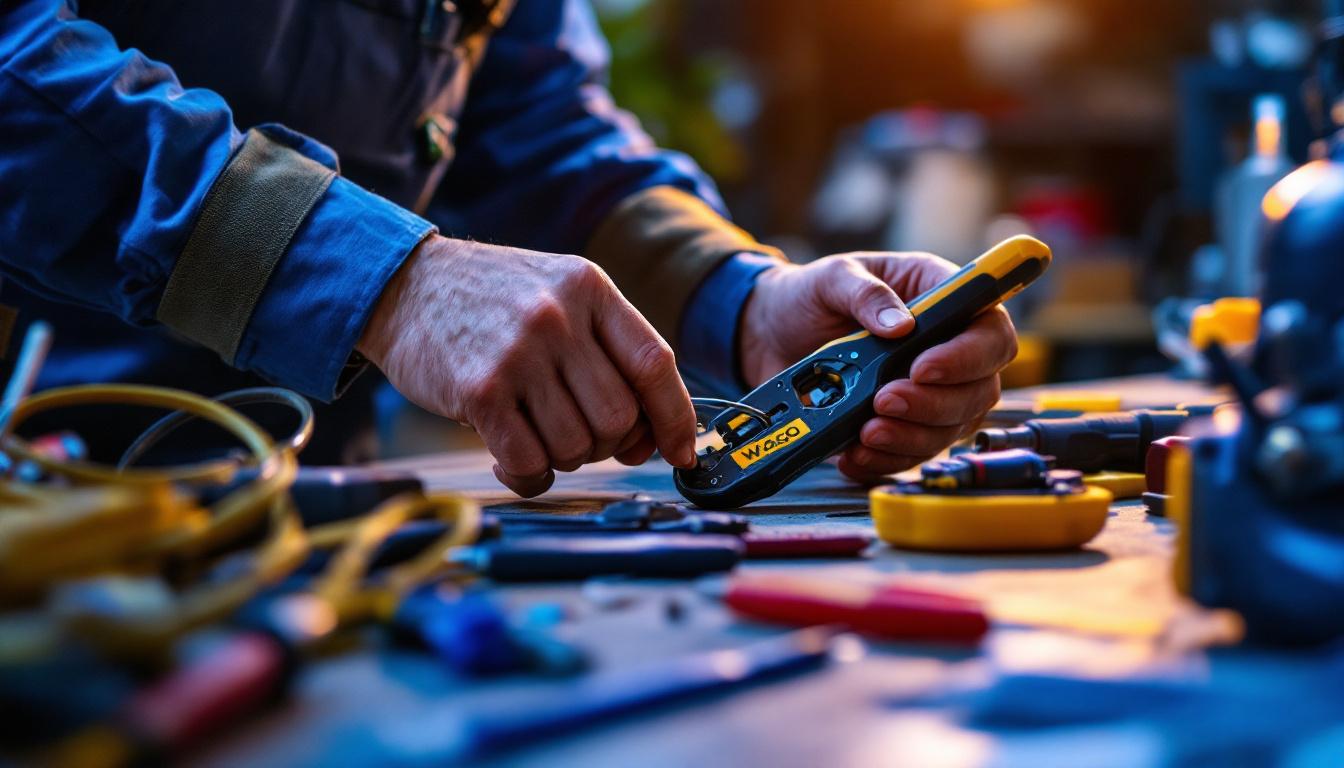
The Wago splicer is a type of lever-operated wire connector designed to join multiple conductors quickly and securely. Its innovative design allows for tool-free installation, using spring pressure to maintain a firm grip on the wire. The most common models accommodate solid, stranded, and fine-stranded wires, and support a range of wire gauges.
Wago connectors are often made from durable polycarbonate housing with clear sides, enabling visual inspection of wire insertion. The lever mechanism simplifies the connection process, reducing installation time and minimizing the risk of loose or faulty connections.
Key Advantages of Using Wago Splicers
One of the primary benefits of Wago splicers is their ease of use. Lighting contractors can connect wires quickly without the need for twisting or specialized tools. This is especially advantageous in tight spaces or complex lighting fixtures where maneuverability is limited.
Additionally, Wago connectors provide consistent, reliable connections thanks to their spring-clamp technology. Unlike traditional wire nuts that rely on twisting wires together, Wago splicers maintain constant pressure, which reduces the risk of connection loosening over time due to vibration or thermal expansion.
Another important advantage is safety. The secure, insulated housing reduces the risk of accidental contact with live wires, and many Wago splicers are rated for use in damp or wet locations, expanding their applicability in various lighting environments.
Comparing Wago Splicers with Alternative Wire Connectors
Traditional Wire Nuts
Wire nuts have been the go-to wire splicing solution for decades. They work by twisting wires together and securing them with a plastic cap containing an internal metal coil. Wire nuts are inexpensive and widely available, making them a staple in many lighting projects.
However, wire nuts require a certain level of skill to ensure a secure connection. Improper twisting can lead to loose connections, which may cause arcing or overheating. Furthermore, wire nuts can be bulky, making them less ideal for compact junction boxes or fixtures.
Push-In Connectors
Push-in connectors allow wires to be inserted directly into a terminal without twisting or tools. They are often used in residential lighting installations for their speed and simplicity. While push-in connectors are convenient, they can sometimes be less reliable with stranded wires, which may slip out if not properly seated.
Additionally, push-in connectors generally lack the visual confirmation that Wago splicers provide, making it harder to verify the quality of the connection at a glance.
Crimp Connectors
Crimp connectors involve using a crimping tool to compress a metal sleeve around the wires, creating a permanent connection. This method is highly secure and resistant to vibration, making it popular in automotive and industrial applications.
However, crimping requires specialized tools and training, which can increase labor costs and time. Once crimped, the connection is permanent, so any mistakes require cutting and redoing the splice. This inflexibility can be a drawback in lighting installations where adjustments are common.
Factors Lighting Contractors Should Consider When Choosing Wire Splicing Methods
Project Complexity and Environment
Lighting contractors must assess the complexity of the wiring system and the environmental conditions of the installation site. For example, in commercial buildings with frequent maintenance needs, connectors that allow easy disconnection and reconnection, like Wago splicers, are advantageous.
In outdoor or damp environments, connectors with high ingress protection ratings and corrosion resistance are essential. Wago splicers often meet these requirements better than traditional wire nuts or push-in connectors.
Safety and Code Compliance
Compliance with electrical codes and standards is non-negotiable. Many jurisdictions specify the types of connectors that are approved for certain applications. Wago splicers are UL-listed and comply with NEC requirements for various wiring scenarios, providing contractors with confidence in their safety and legality.
Contractors should also consider the risk of future inspections and the ease with which connections can be verified. The transparent housing of Wago splicers facilitates quick visual checks, which can be a significant advantage during inspections.
Installation Speed and Labor Costs
Time is money, especially in the competitive field of lighting installation. Wago splicers can reduce installation time significantly by eliminating the need for twisting wires or using crimping tools. This can translate into lower labor costs and faster project completion.
While wire nuts are inexpensive per unit, the additional time required to ensure proper twisting and secure connections can offset those savings. Push-in connectors are fast but may compromise reliability, leading to potential rework.
Longevity and Reliability
Lighting systems are expected to function reliably for years without issues. The durability of the wire splice is therefore critical. Wago splicers’ spring-clamp mechanism maintains constant pressure, reducing the risk of connection degradation over time.
In contrast, wire nuts can loosen with vibration or thermal cycling, and push-in connectors may not hold stranded wires securely in the long term. Crimp connectors offer excellent reliability but at the cost of flexibility.
Case Studies: Real-World Applications of Wago Splicers
Commercial Office Lighting Retrofit
In a large-scale office lighting retrofit, contractors opted for Wago splicers to connect LED fixtures to existing wiring. The project involved tight ceiling spaces and frequent fixture changes. The lever-operated connectors allowed quick, tool-free installation, reducing labor time by approximately 30% compared to wire nuts.
Furthermore, the ability to easily disconnect and reconnect wires facilitated fixture maintenance without disturbing the entire circuit, minimizing downtime for building occupants.
Outdoor Stadium Lighting Installation
For stadium lighting, exposure to moisture and vibration is a significant concern. Contractors selected Wago splicers with weatherproof ratings to ensure reliable connections. The connectors’ robust design and secure clamping mechanism provided peace of mind against corrosion and loosening, critical for safety in such high-profile venues.
Residential Smart Lighting Upgrade
In residential smart lighting upgrades, push-in connectors were initially considered for speed. However, the contractor switched to Wago splicers after encountering issues with stranded wire retention. The Wago connectors ensured stable connections compatible with the delicate wiring of smart fixtures, preventing flickering and intermittent faults.
Cost Analysis: Wago Splicers vs. Alternatives
While Wago splicers typically have a higher upfront cost per unit compared to wire nuts or push-in connectors, the total cost of ownership often favors Wago in the long run. Savings in labor time, reduced call-backs, and enhanced safety minimize overall expenses.
Crimp connectors, while durable, require investment in crimping tools and training, which may not be justified for standard lighting work. Wire nuts, although cheap, can lead to costly rework if connections fail.
Ultimately, the choice depends on the scale and nature of the project, but many contractors find that Wago splicers offer the best balance of cost, efficiency, and reliability.
Conclusion: Making the Right Choice for Lighting Contractors
Lighting contractors face a variety of splicing options, each with unique advantages and limitations. The Wago splicer stands out for its ease of use, safety, reliability, and versatility across different wiring types and environments. While traditional wire nuts and push-in connectors remain relevant for certain applications, Wago splicers often provide superior performance, especially in complex or demanding lighting installations.
When selecting a wire splicing method, contractors should consider project requirements, environmental conditions, safety standards, labor costs, and long-term reliability. Incorporating Wago splicers into the toolkit can enhance installation quality, reduce risk, and improve client satisfaction, making them a valuable choice in modern lighting contracting.
Discover Unmatched Quality and Value with LumenWholesale
Ready to elevate your lighting installations with the best tools and materials in the industry? Look no further than LumenWholesale for all your lighting needs. Our commitment to providing spec-grade lighting products at wholesale prices ensures that you can confidently choose Wago splicers and other premium solutions for your projects. With free shipping on bulk orders and a promise of no hidden fees, LumenWholesale is your go-to source for high-performance lighting that meets the highest industry standards. Don’t compromise on quality or value — Wholesale Lighting at the Best Value is just a click away.