Introduction to Sports Court Lighting
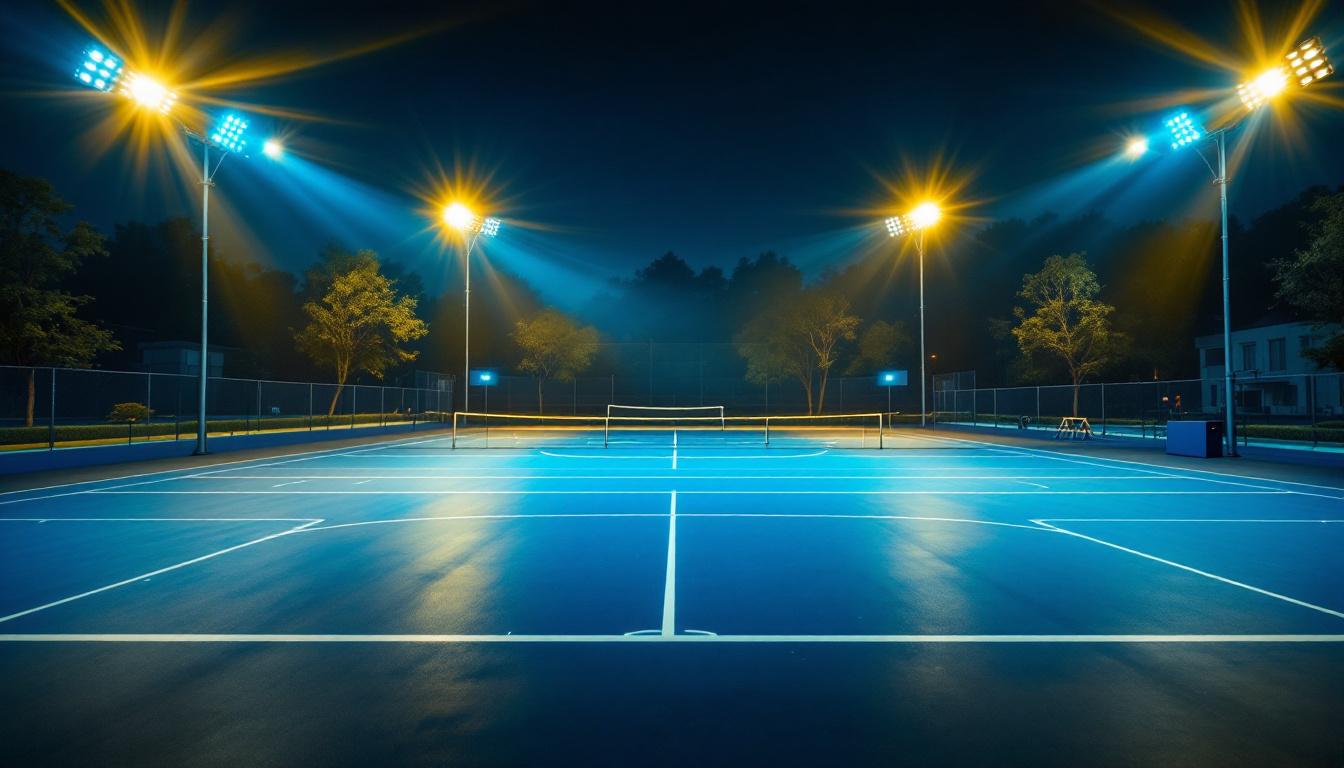
Lighting a sports court is a specialized task that requires a deep understanding of both the technical and practical aspects of illumination. For lighting contractors, mastering the nuances of sports court lighting is essential to deliver installations that meet performance standards, ensure player safety, and enhance spectator experience.
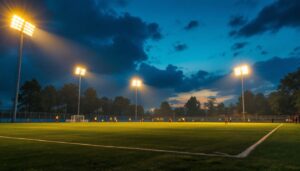
Unlike general outdoor lighting, sports court lighting demands precise control over brightness, uniformity, glare, and color rendering. These factors directly impact gameplay visibility and the overall atmosphere of the venue. This article breaks down the key considerations and best practices that lighting contractors should know to excel in sports court projects.
One of the primary considerations in sports court lighting is the type of sport being played. Different sports have varying requirements for lighting intensity and distribution. For instance, basketball courts typically require higher illumination levels, often around 100-150 foot-candles, to ensure that players can see the ball and each other clearly, while also accommodating the fast-paced nature of the game. In contrast, tennis courts may require slightly lower levels, but still need to minimize shadows and provide consistent lighting across the entire playing surface. Understanding these specific needs is crucial for contractors to tailor their designs effectively.
Moreover, the choice of lighting technology plays a significant role in the overall effectiveness of sports court illumination. LED lighting has become increasingly popular due to its energy efficiency, longevity, and ability to provide high-quality light with minimal glare. Unlike traditional halogen or metal halide lights, LEDs can be dimmed and adjusted to suit different events, making them versatile for multi-purpose venues. Additionally, the placement and angle of fixtures are critical; improper positioning can lead to uneven lighting and distracting shadows, which can hinder both player performance and viewer enjoyment. Therefore, a thorough understanding of photometric data and lighting layout is essential for achieving optimal results.
Key Lighting Requirements for Sports Courts
Illuminance Levels and Uniformity
One of the primary factors in sports court lighting is achieving the correct illuminance levels, measured in lux. Different sports and levels of play require varying brightness. For example, recreational basketball courts typically require around 200 lux, while professional-level courts may demand upwards of 500 lux or more to ensure optimal visibility for players and broadcast quality.
Uniformity of light distribution is equally important. Uneven lighting can create shadows and dark spots that hinder player performance and increase the risk of injury. The recommended uniformity ratio (minimum to average illuminance) should generally be at least 0.7 to 0.8. Lighting contractors must carefully position fixtures and select appropriate beam angles to achieve this balance. Additionally, advanced lighting control systems can be implemented to adjust illuminance levels dynamically based on the time of day or specific events, ensuring that the court remains adequately lit at all times. This adaptability not only enhances player performance but also contributes to energy efficiency, reducing operational costs in the long run.
Glare Control and Visual Comfort
Glare is a common challenge in sports court lighting. Excessive glare can distract players and spectators, reducing the quality of the experience and potentially causing safety concerns. Contractors should focus on fixture placement and shielding techniques to minimize direct glare.
Using luminaires with cut-off angles and glare control accessories helps direct light precisely where it is needed. Additionally, mounting heights and aiming angles should be optimized to prevent light from shining directly into players’ eyes or into neighboring properties, which can also mitigate light pollution complaints. Incorporating smart lighting solutions, such as adaptive lighting that responds to the presence of players or spectators, can further enhance visual comfort. By adjusting brightness levels in real-time, these systems can create a more enjoyable environment, allowing players to focus on their performance without the distraction of harsh lighting conditions.
Color Temperature and Color Rendering Index (CRI)
Color temperature and CRI play a significant role in how the court appears under artificial lighting. A color temperature between 4000K and 5700K is typically preferred for sports courts, offering a natural daylight appearance that enhances visibility and color differentiation.
High CRI values (above 80) ensure that colors on the court, such as lines, balls, and uniforms, appear vivid and true to life. This is particularly critical for televised or streamed events, where accurate color representation improves viewer experience. Furthermore, the choice of lighting technology, such as LED versus traditional fluorescent fixtures, can also impact the overall aesthetic and functionality of the court. LEDs not only provide superior color rendering and energy efficiency but also have a longer lifespan, reducing maintenance needs and ensuring consistent performance over time. As sports technology continues to evolve, the integration of advanced lighting solutions will become increasingly essential in creating optimal playing conditions and enhancing the overall spectator experience.
Types of Lighting Technologies for Sports Courts
LED Lighting: The Industry Standard
LED technology has become the preferred choice for sports court lighting due to its energy efficiency, longevity, and superior controllability. LEDs can deliver high lumen output with lower power consumption compared to traditional lighting sources such as metal halide or high-pressure sodium lamps.
Another advantage of LEDs is their instant-on capability, which eliminates warm-up times and allows for dynamic lighting controls, including dimming and zoning. This flexibility supports energy savings and tailored lighting scenarios for different events or practice sessions. Moreover, the ability to adjust brightness levels can enhance the visibility of the playing surface, ensuring that athletes can perform at their best regardless of the time of day or weather conditions. The reduced heat output of LEDs also minimizes the risk of overheating, creating a more comfortable environment for players and spectators alike.
Additionally, the long lifespan of LED fixtures—often exceeding 50,000 hours—means less frequent replacements and lower maintenance costs. This durability is particularly beneficial for facilities that host a variety of sports, as it reduces downtime and ensures that the courts are always ready for use. Furthermore, many LED systems are now designed with smart technology integration, allowing for remote monitoring and control, which can streamline operations and enhance the overall user experience.
Metal Halide and Other Traditional Options
While LEDs dominate the market, some existing installations still use metal halide or high-pressure sodium lamps. These technologies provide good brightness but suffer from shorter lifespans, higher energy consumption, and longer warm-up periods. For contractors involved in retrofit projects, understanding the limitations and upgrade paths to LED systems is crucial.
Metal halide lights, for instance, can produce a high-quality light that closely resembles natural daylight, which can be beneficial for certain sports that require precise color differentiation. However, the drawbacks of these traditional options often outweigh the benefits, especially as energy costs continue to rise and sustainability becomes a priority for many organizations. Facilities may find themselves facing increased operational costs due to the inefficiency of these older systems, prompting a shift towards more sustainable lighting solutions. As sports organizations increasingly prioritize eco-friendly practices, the transition to LED lighting not only aligns with these goals but also enhances the overall experience for athletes and fans alike.
Design Considerations and Installation Best Practices
Fixture Placement and Mounting Heights
Proper fixture placement is fundamental to achieving the desired lighting performance. Lighting contractors should conduct thorough site assessments, considering court dimensions, surrounding structures, and potential obstructions.
Mounting heights typically range from 20 to 40 feet, depending on the sport and court size. Higher mounting heights allow for broader light distribution but require fixtures with higher lumen outputs. Conversely, lower mounting heights can reduce glare but may necessitate more fixtures to maintain uniformity.
Beam Angles and Aiming Techniques
Selecting the correct beam angle is essential for controlling light spread and minimizing spill light. Narrow beam angles concentrate light on the playing surface but may create hotspots, while wider angles provide more uniform coverage but risk light trespass.
Contractors should use photometric planning tools to simulate lighting layouts and optimize aiming angles. This process helps balance illuminance, uniformity, and glare control before installation.
Electrical and Control Systems Integration
Modern sports court lighting systems often incorporate advanced controls, including motion sensors, timers, and remote management platforms. These features enable energy-efficient operation and allow facility managers to customize lighting for various scenarios.
Lighting contractors must ensure that wiring, control interfaces, and power supplies are installed according to manufacturer specifications and local electrical codes. Proper integration enhances system reliability and user satisfaction.
Compliance with Standards and Regulations
Industry Standards and Guidelines
Adhering to recognized standards is vital for sports court lighting projects. Organizations such as the Illuminating Engineering Society (IES) provide detailed recommendations for illuminance levels, uniformity, glare control, and other parameters tailored to different sports.
Contractors should familiarize themselves with these guidelines to ensure installations meet or exceed minimum requirements. Compliance not only guarantees optimal lighting performance but also supports safety and liability considerations.
Local Codes and Environmental Considerations
Many municipalities have regulations governing outdoor lighting to reduce light pollution and protect neighboring properties. Sports court lighting installations must comply with such ordinances, which may dictate fixture types, shielding, curfews, and maximum allowable light trespass.
Incorporating environmentally responsible practices, such as using energy-efficient LEDs and implementing smart controls, helps contractors deliver sustainable solutions that align with community expectations.
Maintenance and Longevity of Sports Court Lighting
Routine Inspection and Cleaning
Maintaining sports court lighting systems is essential to preserve performance and extend fixture lifespan. Regular inspections should check for damaged fixtures, loose connections, and dirt accumulation on lenses, which can reduce light output.
Cleaning schedules vary depending on environmental conditions but typically occur biannually or annually. Contractors can offer maintenance contracts to clients, ensuring ongoing system reliability and customer satisfaction.
Upgrading and Retrofitting Existing Installations
As lighting technology evolves, many sports facilities seek to upgrade older systems to LED or incorporate advanced controls. Lighting contractors play a critical role in evaluating existing setups, recommending cost-effective retrofit solutions, and executing installations with minimal disruption.
Retrofitting can significantly reduce energy costs, improve lighting quality, and extend system life, providing long-term value to clients.
Conclusion
Sports court lighting is a complex yet rewarding specialty within the lighting industry. For contractors, understanding the critical factors such as illuminance, uniformity, glare control, and technology options is key to delivering high-quality installations that meet client expectations and industry standards.
By combining technical expertise with careful design, compliance awareness, and ongoing maintenance, lighting contractors can ensure sports courts are safe, visually appealing, and energy-efficient. This knowledge ultimately supports better athletic performance and enhanced spectator experiences, solidifying the contractor’s reputation in this competitive market.
Illuminate Your Sports Court Projects with LumenWholesale
Ready to elevate your sports court lighting installations? Choose LumenWholesale for your lighting needs and gain the competitive edge with our spec-grade lighting products. Our unbeatable wholesale prices mean you can provide your clients with top-quality lighting solutions that meet the highest industry standards. With free shipping on bulk orders, LumenWholesale is your go-to source for reliable, high-performance lighting that won’t break the bank. Don’t compromise on quality or value—explore our selection and start saving today.