Understanding Big Flood Lights: An Overview for Lighting Contractors
Big flood lights are indispensable tools in the arsenal of lighting contractors, widely used across commercial, industrial, and outdoor applications. Their primary function is to provide broad, intense illumination over large areas, enhancing visibility, safety, and aesthetic appeal. Whether illuminating sports arenas, construction sites, parking lots, or building facades, big flood lights play a critical role in modern lighting design.
For lighting contractors, mastering the use of these powerful fixtures involves more than just installation. It requires a deep understanding of their technical specifications, energy efficiency considerations, and compliance with safety and environmental regulations. This foundational knowledge ensures that projects meet client expectations while adhering to industry standards.
Types of Big Flood Lights
Big flood lights come in various types, each suited to different applications and performance needs. High-intensity discharge (HID) lamps, such as metal halide and high-pressure sodium, have traditionally dominated the market due to their high lumen output and long lifespan. However, the advent of LED technology has revolutionized flood lighting by offering superior energy efficiency, longer service life, and improved color rendering.
LED flood lights also provide greater flexibility in terms of beam angles and dimming capabilities, allowing contractors to tailor lighting solutions precisely to project requirements. Understanding these differences helps contractors recommend the most appropriate technology for each job, balancing upfront costs with long-term operational savings.
Another important aspect to consider is the mounting options available for big flood lights. These fixtures can be installed on poles, walls, or even on the ground, depending on the specific lighting needs of the area. For instance, when illuminating a sports field, lights mounted on tall poles can provide optimal coverage and minimize shadows. Conversely, for parking lots, wall-mounted flood lights can enhance security while ensuring that light is directed where it is most needed. This versatility in mounting options allows contractors to maximize the effectiveness of the lighting design while also considering aesthetic factors.
Moreover, advancements in smart lighting technology are beginning to influence the landscape of flood lighting. With the integration of sensors and automation, contractors can now offer solutions that adjust lighting levels based on real-time conditions, such as ambient light or motion detection. This not only enhances energy efficiency but also adds a layer of convenience and safety for users. As the industry evolves, staying informed about these innovations will be crucial for contractors looking to provide cutting-edge solutions that meet the demands of modern projects.
Design Considerations for Effective Flood Lighting
Effective flood lighting design is a blend of art and science. Lighting contractors must consider multiple factors to ensure optimal illumination while minimizing light pollution and energy waste.
Assessing the Site and Lighting Needs
Before selecting and installing big flood lights, a thorough site assessment is essential. This includes evaluating the size and shape of the area, existing ambient light levels, and the specific tasks or activities requiring illumination. For example, a sports field demands uniform, glare-free lighting to support player performance and spectator comfort, whereas a construction site prioritizes safety and security with bright, focused beams.
Contractors should also account for environmental conditions such as weather exposure and potential obstructions that could affect light distribution. Incorporating photometric analysis tools can aid in simulating lighting patterns and intensities, ensuring that the design meets both functional and regulatory criteria. Additionally, understanding the seasonal variations in daylight and the potential for changing site conditions over time is critical. For instance, a site that is open and unobstructed in summer may face new challenges in winter due to snow accumulation or foliage growth, which can impact the effectiveness of the flood lighting.
Choosing the Right Lumen Output and Color Temperature
Big flood lights vary widely in lumen output, which directly impacts the brightness of the illuminated area. Selecting the appropriate lumen level is crucial to avoid under- or over-lighting, both of which can compromise safety and visual comfort. Industry guidelines and standards, such as those from the Illuminating Engineering Society (IES), provide valuable benchmarks for different applications.
Color temperature also plays a significant role in the quality of light. Cooler temperatures (5000K to 6500K) mimic daylight and are often preferred for outdoor security and industrial settings, enhancing visibility and alertness. Warmer temperatures (2700K to 3500K) can create a more inviting atmosphere for architectural lighting or public spaces. Lighting contractors must balance these factors to achieve the desired ambiance and functionality. Furthermore, the choice of color rendering index (CRI) should not be overlooked, as a higher CRI can reveal true colors more accurately, which is particularly important in settings like art galleries or retail environments where product presentation is key. This attention to detail not only improves the aesthetic appeal but also enhances the overall experience for users and visitors alike.
Installation Best Practices for Big Flood Lights
Proper installation is critical to the performance and longevity of big flood lights. Lighting contractors must follow best practices to ensure safety, compliance, and optimal operation.
Mounting and Positioning
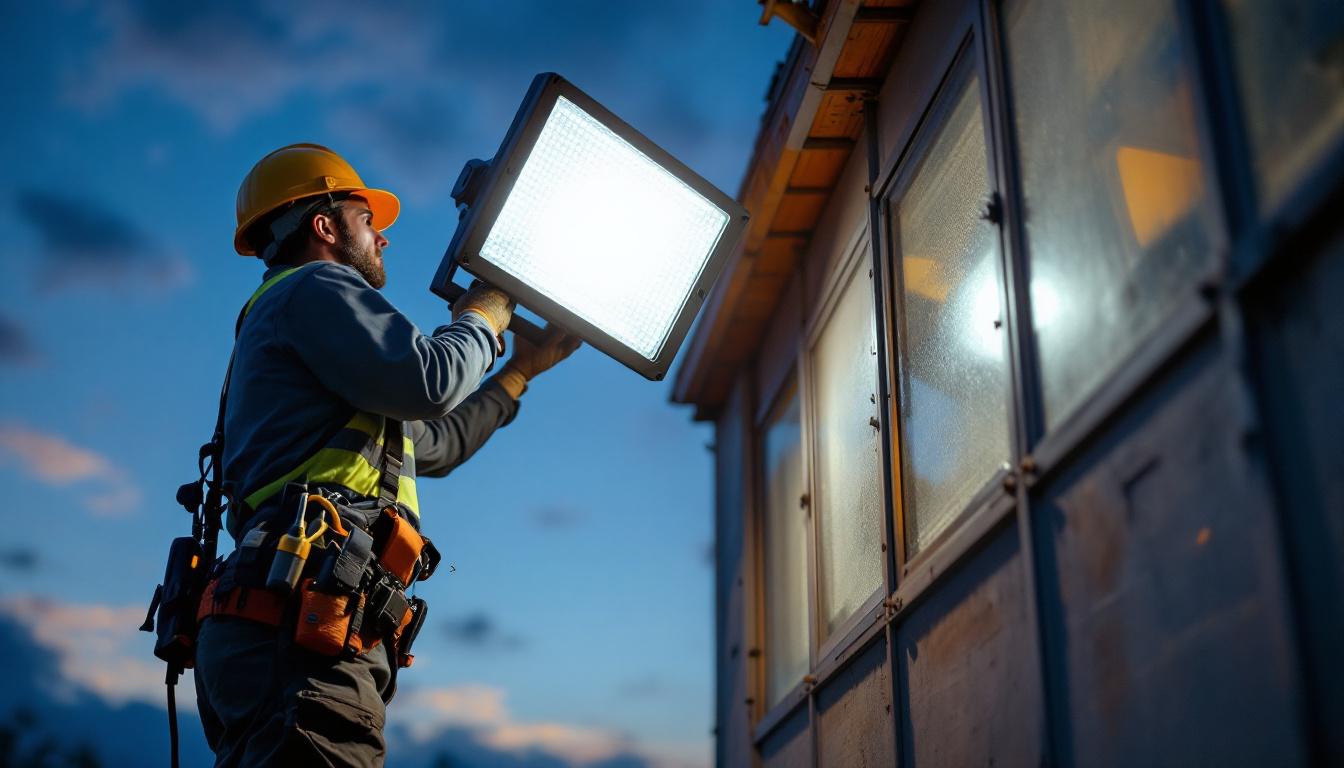
Big flood lights are typically mounted on poles, building exteriors, or specialized rigs. The height and angle of installation significantly influence light coverage and intensity. Positioning fixtures too low can cause glare and shadows, while excessively high mounts may reduce effective illumination.
Contractors should use adjustable brackets and aim flood lights to maximize coverage while minimizing light trespass onto neighboring properties. Secure mounting is essential to withstand wind loads and vibrations, especially in exposed outdoor environments. Additionally, it’s important to consider the surrounding landscape and potential obstacles that may block light distribution. Trees, buildings, and other structures can create unwanted shadows, so a thorough site assessment is crucial before installation.
Furthermore, the choice of flood light type—LED, halogen, or metal halide—can also impact the installation process. LED flood lights, for instance, offer longer lifespans and lower energy consumption, making them a popular choice for many contractors. However, they may require specific mounting techniques to ensure optimal heat dissipation and performance. Understanding the unique characteristics of each type of flood light can guide contractors in making informed decisions about installation.
Electrical Considerations and Safety Compliance
Electrical wiring for big flood lights must comply with local codes and standards to prevent hazards such as short circuits or electrical fires. Using weatherproof connectors, conduit, and proper grounding techniques enhances system reliability and safety. Lighting contractors should also consider surge protection to guard against voltage spikes, particularly in outdoor installations prone to lightning strikes.
Integrating control systems like timers, photocells, or smart lighting controls can improve energy efficiency and operational convenience. These systems enable automatic switching based on ambient light levels or schedules, reducing unnecessary energy consumption. Moreover, the implementation of motion sensors can further enhance security and efficiency by ensuring that lights are only activated when needed, thus extending the lifespan of the fixtures and reducing energy costs.
In addition to these technical considerations, contractors should also prioritize regular maintenance checks post-installation. This includes inspecting for any signs of wear or damage, ensuring that all electrical connections remain secure, and cleaning the fixtures to maintain optimal light output. A proactive maintenance schedule not only enhances the performance of big flood lights but also ensures compliance with safety regulations, ultimately providing peace of mind for both the contractor and the property owner.
Maintenance and Troubleshooting for Longevity
Maintaining big flood lights is essential to sustaining their performance and extending service life. Lighting contractors often provide ongoing maintenance services or guidance to facility managers and property owners.
Routine Inspection and Cleaning
Regular inspections help identify issues such as damaged lenses, corroded fixtures, or loose connections before they escalate. Cleaning lenses and reflectors removes dirt and debris that can diminish light output and cause uneven illumination. For outdoor installations, checking seals and gaskets prevents moisture ingress that could damage internal components.
Replacing Components and Upgrading Technology
While LED flood lights have longer lifespans compared to traditional HID lamps, eventual replacement of drivers, lenses, or entire fixtures may be necessary. Lighting contractors should advise clients on the benefits of upgrading to newer technologies, which often offer improved efficiency and enhanced features like dimming and color tuning.
Proactive maintenance and timely upgrades reduce downtime and ensure that lighting systems continue to meet evolving standards and user expectations.
Energy Efficiency and Environmental Responsibility
Energy consumption is a major consideration in flood lighting projects, both from cost and environmental perspectives. Lighting contractors play a pivotal role in promoting sustainable practices.
Implementing Energy-Saving Technologies
LED flood lights inherently consume less power than traditional alternatives, but additional strategies can further reduce energy use. Incorporating motion sensors and daylight harvesting controls ensures lights operate only when needed. Zoned lighting allows selective illumination of specific areas, minimizing waste.
Contractors should also recommend fixtures with high efficacy ratings (lumens per watt) and low maintenance requirements to optimize lifecycle costs.
Minimizing Light Pollution
Excessive or poorly directed flood lighting contributes to light pollution, which disrupts ecosystems and obscures night skies. Lighting contractors must design systems that focus illumination precisely where required, using shielding and appropriate beam angles to prevent glare and skyglow.
Adhering to dark-sky friendly guidelines not only benefits the environment but also improves community relations and compliance with local ordinances.
Case Studies: Successful Big Flood Light Installations
Real-world examples illustrate how best practices translate into effective lighting solutions.
Sports Complex Lighting Upgrade
A municipal sports complex recently underwent a lighting retrofit, replacing outdated metal halide flood lights with state-of-the-art LED fixtures. The project involved detailed photometric analysis to ensure uniform field illumination and minimize glare for players and spectators. The new system reduced energy consumption by over 50%, cut maintenance costs, and enhanced nighttime visibility, enabling extended facility usage.
Industrial Facility Security Lighting
An industrial plant required robust flood lighting to secure its perimeter and loading docks. Lighting contractors installed high-output LED flood lights with integrated motion sensors and smart controls. This configuration provided bright, responsive illumination only when activity was detected, significantly lowering energy bills while maintaining high security standards.
Conclusion: Elevating Flood Lighting Through Expertise
Big flood lights are powerful tools that, when applied skillfully, enhance safety, functionality, and aesthetics across diverse environments. Lighting contractors who embrace best practices—from thorough site assessments and thoughtful design to meticulous installation and proactive maintenance—deliver superior outcomes that satisfy clients and respect environmental responsibilities.
Staying abreast of technological advancements and regulatory developments empowers contractors to recommend innovative, efficient solutions. Ultimately, expertise in big flood lighting not only elevates project quality but also reinforces the contractor’s reputation as a trusted lighting professional.
Illuminate Your Projects with LumenWholesale
Ready to take your flood lighting projects to the next level? LumenWholesale is here to light the way. With our extensive selection of top-quality, spec-grade lighting products, you can trust that you’re getting the best value for your investment. Say goodbye to local distributor markups and hello to unbeatable wholesale prices, free shipping, and the convenience of hassle-free bulk buying. Elevate your lighting solutions today by visiting Wholesale Lighting at the Best Value and discover how we can help you shine brighter with every project.