Understanding the Importance of Outdoor Tall Lights in Modern Projects
Outdoor tall lights have become indispensable in a wide range of projects, from commercial parking lots and sports arenas to large-scale industrial sites and public spaces. For lighting contractors, mastering the nuances of these fixtures is essential to delivering safe, efficient, and aesthetically pleasing lighting solutions.
These lights serve multiple purposes beyond mere illumination. They enhance security by deterring criminal activity, improve visibility for both pedestrians and vehicles, and contribute to the overall ambiance and usability of outdoor environments after dark. Given the increasing demand for energy-efficient and environmentally responsible lighting, contractors must stay informed about the latest technologies and best practices.
Key Applications and Their Unique Requirements
Each project type presents distinct challenges and requirements. For example, parking lots typically require uniform light distribution to minimize shadows and dark spots, which can pose safety risks. Sports facilities demand high-intensity lighting with precise beam control to ensure optimal visibility without glare for both players and spectators.
Industrial sites often necessitate rugged, durable fixtures capable of withstanding harsh environmental conditions such as extreme temperatures, moisture, and dust. Meanwhile, public spaces like parks and plazas benefit from lighting that balances functionality with aesthetic appeal, often incorporating design elements that complement the surrounding architecture.
In addition to these considerations, the integration of smart lighting technology is becoming increasingly prevalent in outdoor tall light installations. This technology allows for adaptive lighting solutions that can adjust brightness based on the time of day or the presence of people, enhancing energy efficiency and reducing operational costs. Moreover, the incorporation of sensors and smart controls can facilitate remote monitoring and management, providing contractors with valuable data on usage patterns and maintenance needs.
Furthermore, the choice of materials and finishes for outdoor tall lights plays a critical role in their longevity and effectiveness. Fixtures made from corrosion-resistant materials, such as aluminum or stainless steel, are essential for ensuring durability in challenging outdoor environments. Additionally, the use of LED technology not only offers significant energy savings but also provides a longer lifespan compared to traditional lighting options, making it a preferred choice for many modern projects. As such, staying abreast of innovations in both materials and lighting technologies is vital for contractors aiming to deliver top-tier solutions that meet the evolving demands of outdoor lighting applications.
Technical Considerations for Selecting Outdoor Tall Lights
Choosing the right outdoor tall light involves a careful assessment of several technical factors. Lighting contractors must evaluate these parameters to ensure that the installed system meets project specifications and client expectations.
Height and Mounting Options
The height of outdoor tall lights significantly affects light distribution and coverage area. Typically, these fixtures range from 20 to 60 feet or more, depending on the application. Taller poles allow for broader coverage but may require higher wattage fixtures to maintain adequate illumination levels at ground level.
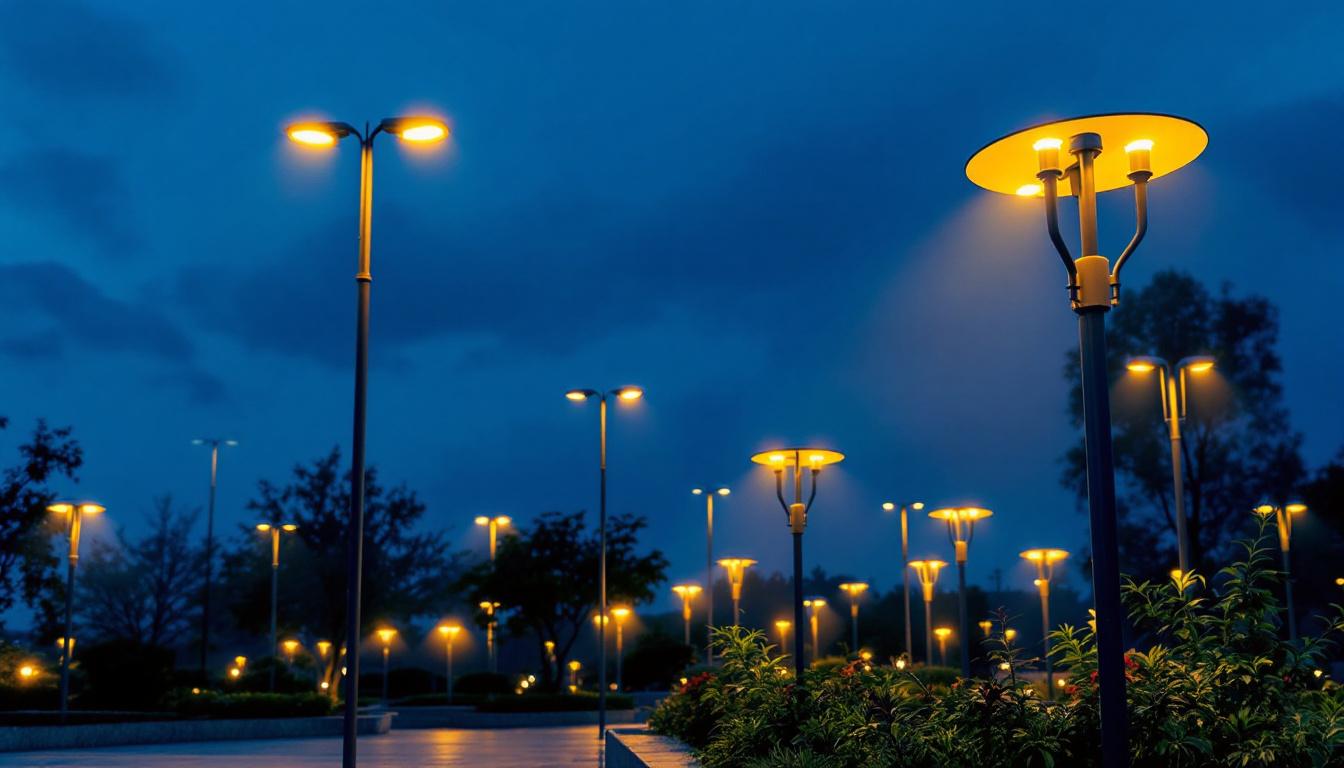
Mounting options vary, including single-arm, double-arm, and multi-arm configurations. The choice depends on the layout and lighting requirements of the site. For instance, multi-arm poles are common in large parking areas where multiple light sources are needed to eliminate shadows and ensure uniform brightness.
Light Source Technologies
Advancements in lighting technology have transformed outdoor tall lights. While traditional high-intensity discharge (HID) lamps such as metal halide and high-pressure sodium were once standard, LED technology now dominates the market due to its superior energy efficiency, longer lifespan, and improved controllability.
LED fixtures offer instant-on capabilities, reduced maintenance costs, and better color rendering, which enhances visibility and safety. Additionally, LEDs can be integrated with smart controls for dimming and scheduling, allowing for further energy savings and adaptability to changing conditions.
Optics and Beam Control
Effective optics are crucial for directing light precisely where it is needed, minimizing light pollution and glare. Lighting contractors should consider fixtures with adjustable beam angles and high-quality lenses or reflectors to tailor the light distribution to the specific site layout.
Cutoff optics help prevent light spillover into adjacent properties or the night sky, addressing community concerns and complying with dark-sky regulations. This is particularly important in residential areas or locations near protected natural habitats.
Energy Efficiency and Sustainability
Energy consumption is a major consideration for clients aiming to reduce operational costs and environmental impact. Lighting contractors should prioritize fixtures with high lumens-per-watt (lm/W) ratings and compatibility with energy management systems.
Incorporating solar-powered options or integrating with renewable energy sources can further enhance sustainability. Additionally, selecting fixtures with recyclable materials and low hazardous substance content aligns with green building standards and certification programs.
Installation Best Practices for Outdoor Tall Lights
Proper installation is critical to the performance and longevity of outdoor tall lights. Lighting contractors must adhere to industry standards and manufacturer guidelines to ensure safety and functionality.
Site Assessment and Planning
Before installation, a thorough site assessment is essential. This includes evaluating terrain, existing infrastructure, electrical supply, and potential obstructions. Accurate photometric analysis helps determine optimal pole placement and fixture specifications to achieve the desired lighting levels and uniformity.
Planning should also account for future maintenance access and potential expansion. Coordinating with other trades and stakeholders during this phase can prevent costly rework and delays.
Electrical and Structural Considerations
Outdoor tall lights require robust electrical connections capable of withstanding environmental stressors. Contractors should use weatherproof enclosures, corrosion-resistant wiring, and ensure proper grounding to prevent electrical hazards.
Structurally, poles must be securely anchored with foundations designed to handle wind loads and seismic activity in accordance with local building codes. Regular inspection of mounting hardware and pole integrity is vital to prevent failures.
Safety Protocols During Installation
Working at height presents inherent risks. Lighting contractors must implement comprehensive safety measures, including the use of personal protective equipment (PPE), fall arrest systems, and proper training for personnel.
Coordination with utility companies is necessary when working near power lines to avoid accidents. Additionally, traffic control measures may be required in public or high-traffic areas to protect workers and the public.
Maintenance Strategies to Maximize Performance and Lifespan
Regular maintenance extends the operational life of outdoor tall lights and ensures consistent performance. Lighting contractors play a key role in developing and executing maintenance plans tailored to each installation.
Routine Inspections and Cleaning
Periodic inspections help identify issues such as fixture damage, corrosion, or electrical faults before they escalate. Cleaning lenses and fixtures removes dirt and debris that can reduce light output and efficiency.
Scheduling maintenance during off-peak hours minimizes disruption to site activities and enhances safety for maintenance personnel.
Component Replacement and Upgrades
While LED fixtures have longer lifespans than traditional lamps, components such as drivers, photocells, and control modules may require replacement over time. Lighting contractors should monitor these elements and recommend timely upgrades to maintain system reliability.
Upgrading to newer technologies or integrating smart controls can provide clients with improved energy savings and operational flexibility.
Documentation and Client Communication
Maintaining detailed records of maintenance activities, fixture performance, and any repairs or replacements is essential. This documentation supports warranty claims and informs future service decisions.
Effective communication with clients about maintenance schedules, costs, and potential improvements fosters trust and positions contractors as knowledgeable partners.
Regulatory Compliance and Industry Standards
Adherence to regulatory requirements and industry standards is non-negotiable for lighting contractors. Compliance ensures safety, legal operation, and community acceptance of outdoor tall lighting installations.
Relevant Codes and Guidelines
Contractors must be familiar with national and local electrical codes, building regulations, and environmental guidelines. Standards such as those from the Illuminating Engineering Society (IES) provide valuable recommendations on lighting levels, uniformity, and glare control.
Environmental regulations may restrict light trespass and mandate dark-sky friendly lighting designs, especially in sensitive or residential areas.
Certification and Quality Assurance
Specifying fixtures with certifications such as UL, DLC, or Energy Star assures clients of product quality and performance. Lighting contractors should verify that all components meet these standards and that installation practices align with manufacturer requirements.
Quality assurance processes, including inspections and testing post-installation, help detect issues early and confirm that the system operates as intended.
Emerging Trends and Technologies in Outdoor Tall Lighting
Staying ahead of industry trends enables lighting contractors to offer innovative solutions that meet evolving client needs and regulatory landscapes.
Smart Lighting and IoT Integration
Smart outdoor lighting systems equipped with sensors and connected to the Internet of Things (IoT) allow for dynamic control based on occupancy, daylight availability, and weather conditions. These systems optimize energy use and enhance user experience.
Remote monitoring and diagnostics reduce maintenance costs and downtime by enabling proactive issue detection.
Adaptive and Human-Centric Lighting
Emerging research highlights the benefits of human-centric lighting, which adjusts color temperature and intensity to support circadian rhythms and improve well-being. Outdoor tall lights incorporating these principles can enhance public spaces by creating more comfortable and inviting environments.
Advanced Materials and Design Innovations
Innovations in materials, such as corrosion-resistant alloys and impact-resistant polymers, improve fixture durability and reduce maintenance. Modular designs facilitate easier upgrades and repairs, extending the functional lifespan of installations.
Conclusion: Elevating Expertise for Lighting Contractors
Outdoor tall lights are a critical component of many lighting projects, demanding a comprehensive understanding of technical specifications, installation practices, maintenance strategies, and regulatory compliance. For lighting contractors, investing in continuous education and embracing technological advancements is key to delivering superior outcomes.
By integrating energy-efficient fixtures, smart controls, and thoughtful design, contractors can meet client expectations while contributing to safer, more sustainable outdoor environments. Mastery of these crucial insights not only enhances professional reputation but also drives long-term business success in a competitive industry.
Illuminate Your Projects with LumenWholesale
Ready to elevate your lighting projects with the best in outdoor tall lights? Look no further than LumenWholesale, where we provide contractors with the highest quality, spec-grade lighting products at unbeatable wholesale prices. Say goodbye to local distributor markups and hello to a vast selection of industry-standard lighting solutions that promise reliability and high performance. With free shipping on bulk orders, LumenWholesale is your go-to source for premium lighting without hidden fees or compromises. Don’t miss out on the perfect blend of quality, affordability, and convenience. Discover Wholesale Lighting at the Best Value today and light up your projects with confidence.