Understanding the Unique Challenges of Staircase Lighting
Lighting a staircase isn’t just about illuminating a path; it’s about creating a safe, inviting transition between floors. However, staircases present unique challenges that can trip up even seasoned lighting contractors. The combination of angles, shadows, and varying heights demands a thoughtful approach to avoid both under- and over-lighting.
One common pitfall is neglecting the functional aspect in favor of aesthetics. While a beautifully lit staircase can elevate a space, insufficient lighting can lead to accidents. According to safety studies, poor lighting is a significant factor in home falls, especially on stairs. This makes it critical to balance design with safety requirements.
Why Staircase Lighting Requires Special Attention
Staircases are transitional spaces with complex geometry. They often feature turns, landings, and varying tread depths. This complexity means that a one-size-fits-all lighting approach rarely works. Shadows cast by railings or balusters can obscure steps, increasing the risk of trips and falls. Additionally, glare from overly bright fixtures can be just as hazardous as dim lighting.
Lighting contractors must also consider the type of staircase—open riser, spiral, or traditional closed riser—as each demands different lighting strategies. For example, open riser stairs benefit from lighting that highlights the tread edges to prevent missteps, while spiral staircases require uniform illumination to maintain spatial awareness. Moreover, the choice of light color temperature plays a crucial role; warmer tones can create a cozy ambiance, while cooler tones may enhance visibility but can feel stark and uninviting.
Another aspect to consider is the integration of technology into staircase lighting. Smart lighting systems can provide customizable options, allowing homeowners to adjust brightness levels based on the time of day or specific needs. Motion sensors can also be a game-changer, automatically illuminating the staircase when someone approaches, thus enhancing safety without the need for manual switches. Furthermore, the aesthetic appeal of LED strip lights along the edges of steps or under handrails can add a modern touch while serving a practical purpose. This blend of functionality and style not only enhances safety but also transforms the staircase into a visually striking feature of the home.
Key Design Principles for Effective Staircase Lighting
Effective staircase lighting hinges on a few core principles: uniformity, contrast, and layering. These principles ensure that every step is clearly visible without causing discomfort or visual confusion.
Uniformity and Contrast
Uniform lighting reduces harsh shadows that can obscure step edges. However, too much uniformity can flatten the space, making it difficult to perceive depth. Contrast is essential to delineate each step clearly. A well-lit stair should have enough contrast between the tread and riser to guide the eye naturally.
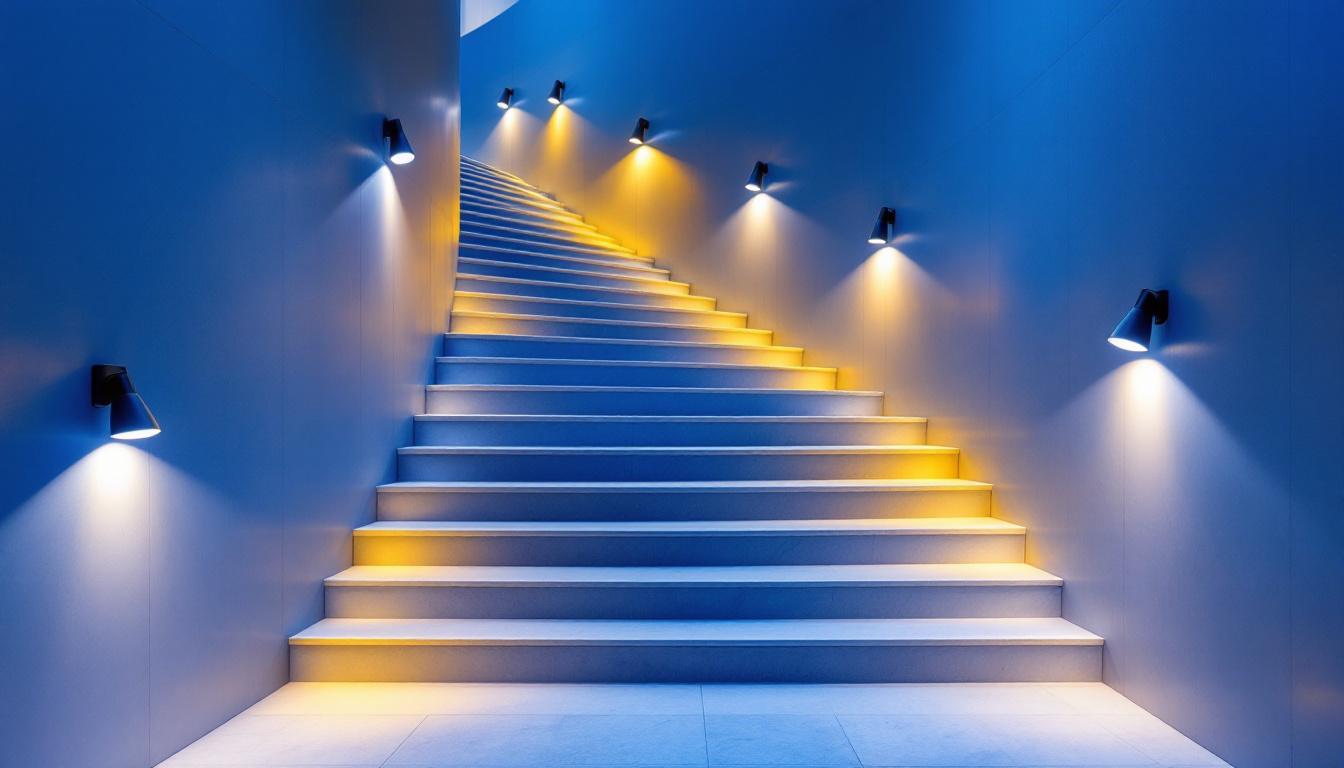
One technique is to use LED strip lights under the lip of each tread. This creates a subtle glow that defines each step without overwhelming the space. Another approach is wall-mounted sconces placed strategically to cast light across the stairs, enhancing texture and depth. Additionally, incorporating different colors of light can further enhance contrast; for instance, warm white lights can create a cozy atmosphere, while cooler tones can lend a more modern and crisp feel to the stairway.
Layered Lighting for Function and Ambiance
Layering different types of lighting—ambient, task, and accent—adds both function and style. Ambient lighting provides overall illumination, often via ceiling fixtures or recessed lights. Task lighting focuses on the steps themselves, ensuring safety. Accent lighting highlights architectural features like handrails or artwork.
For example, combining recessed downlights with LED handrail lighting can create a visually appealing and safe environment. Dimmers are also valuable, allowing occupants to adjust brightness based on time of day or mood. Furthermore, incorporating smart lighting systems can enhance the user experience; these systems can be programmed to automatically adjust based on natural light levels or even the time of day, ensuring that the staircase remains well-lit whenever it is in use. This not only adds convenience but also contributes to energy efficiency, making it a sustainable choice for modern homes.
Common Mistakes and How to Avoid Them
Even experienced lighting contractors can fall into traps when lighting staircases. Recognizing these common mistakes can save time, money, and client dissatisfaction.
Overlooking Code Requirements and Safety Standards
Building codes often specify minimum illumination levels for staircases to ensure safety. Ignoring these can lead to costly rework or liability issues. For instance, many codes require a minimum of 100 lux on stair treads. It’s essential to verify local regulations and incorporate them into the lighting design from the outset.
Another safety consideration is emergency lighting. Staircases often serve as evacuation routes, so backup lighting or battery-powered fixtures may be necessary. Ensuring these systems are integrated seamlessly is critical for compliance and safety. Additionally, it’s prudent to conduct regular maintenance checks on emergency lighting systems to ensure they are functional when needed. This proactive approach not only enhances safety but also builds trust with clients who prioritize the well-being of their occupants.
Ignoring Glare and Shadow Issues
Glare can cause discomfort and impair vision, while shadows can hide hazards. Both are common pitfalls in staircase lighting. Positioning fixtures incorrectly or using overly bright bulbs can create glare. Conversely, placing lights too far from the stairs or using directional lighting without proper diffusion can cast harsh shadows.
To avoid this, test lighting angles during installation. Use diffusers or frosted lenses to soften light and reduce glare. Adjustable fixtures can help fine-tune illumination after the initial setup. Furthermore, consider the use of wall-mounted sconces or recessed lighting along the staircase to provide a more even distribution of light, which can help minimize both glare and shadows. This approach not only enhances visibility but also adds an aesthetic element to the staircase design, creating a more inviting atmosphere.
Choosing the Wrong Fixtures or Bulbs
Fixture selection affects both the effectiveness and longevity of staircase lighting. Using fixtures that are too large or too small can disrupt the visual balance. Similarly, bulbs with the wrong color temperature can alter the mood or reduce visibility.
Warm white LEDs (around 2700K to 3000K) generally create a welcoming atmosphere, while cooler temperatures (4000K and above) offer crisp visibility but can feel sterile. Selecting dimmable LED fixtures with high CRI (Color Rendering Index) ensures colors appear natural, which is especially important in residential settings. Additionally, consider the energy efficiency of the chosen bulbs; opting for LED technology not only reduces energy consumption but also extends the lifespan of the fixtures. This can lead to significant cost savings over time, making it a smart choice for both contractors and clients alike. Moreover, integrating smart lighting controls can enhance user experience by allowing for personalized settings that adapt to different times of day or activities, further elevating the functionality of staircase lighting.
Advanced Techniques and Technologies for Staircase Lighting
Modern lighting technology offers contractors innovative tools to enhance staircase lighting beyond basic illumination.
Smart Lighting Controls
Integrating smart controls enables dynamic lighting that adapts to user needs. Motion sensors can activate lights only when someone approaches the stairs, conserving energy. Programmable dimmers allow for different lighting scenes-bright for daytime use, softer for evening ambiance.
Voice control and smartphone apps provide convenience and accessibility, especially in multi-story homes or commercial buildings. These systems also facilitate maintenance by alerting users to bulb failures or system malfunctions.
Architectural Integration with LED Strips and Cove Lighting
LED strips can be discreetly installed along handrails, under stair nosing, or within coves to provide indirect lighting that enhances safety and aesthetics. This approach minimizes fixture visibility, creating a clean, modern look.
Cove lighting uplights the ceiling or walls adjacent to the staircase, adding depth and softness. These indirect light sources reduce glare and create a welcoming environment. When combined with task lighting, they balance function and style effectively.
Energy Efficiency and Sustainability Considerations
Energy-efficient lighting not only reduces operational costs but also aligns with growing environmental concerns. LEDs are the preferred choice due to their low power consumption and long lifespan.
Contractors should educate clients on the benefits of energy-efficient fixtures and controls. Incorporating daylight sensors where possible can further reduce energy use by adjusting artificial lighting based on natural light availability.
Best Practices for Installation and Maintenance
Proper installation and ongoing maintenance are critical for staircase lighting to perform as intended over time.
Installation Tips for Optimal Performance
Ensure fixtures are securely mounted and wired according to manufacturer specifications and local codes. Pay special attention to moisture exposure in stairwells near entrances or basements, selecting fixtures rated for damp or wet locations as needed.
Test lighting from multiple angles during installation to identify any dark spots or glare issues. Use temporary lighting setups if necessary to simulate final conditions before committing to fixture placement.
Routine Maintenance and Troubleshooting
Regular cleaning of fixtures and lenses prevents dust buildup that can reduce light output. Inspect wiring and connections periodically to avoid electrical hazards.
When troubleshooting, check for flickering lights, which may indicate voltage issues or failing drivers. Replace bulbs with exact matches to maintain consistent color temperature and brightness.
Conclusion: Elevate Safety and Style with Thoughtful Staircase Lighting
Lighting a staircase is a nuanced task that demands attention to safety, aesthetics, and technology. Avoiding common pitfalls-such as ignoring code requirements, mismanaging glare, or choosing inappropriate fixtures-ensures a successful outcome that delights clients and protects users.
By applying core design principles, leveraging advanced technologies, and committing to quality installation and maintenance, lighting contractors can transform staircases into safe, beautiful focal points within any building. This expertise not only enhances reputation but also contributes to safer, more enjoyable spaces for everyone.
Illuminate Your Projects with LumenWholesale
Ready to elevate your staircase lighting projects with the perfect balance of safety, style, and cutting-edge technology? Look no further than LumenWholesale for all your lighting needs. Our spec-grade lighting products are designed to meet the highest industry standards, ensuring that every step you light is both beautiful and secure. With unbeatable wholesale prices and free shipping on bulk orders, you can provide your clients with premium lighting solutions that don’t break the bank. Take the next step in staircase lighting excellence and explore our collection at LumenWholesale today.