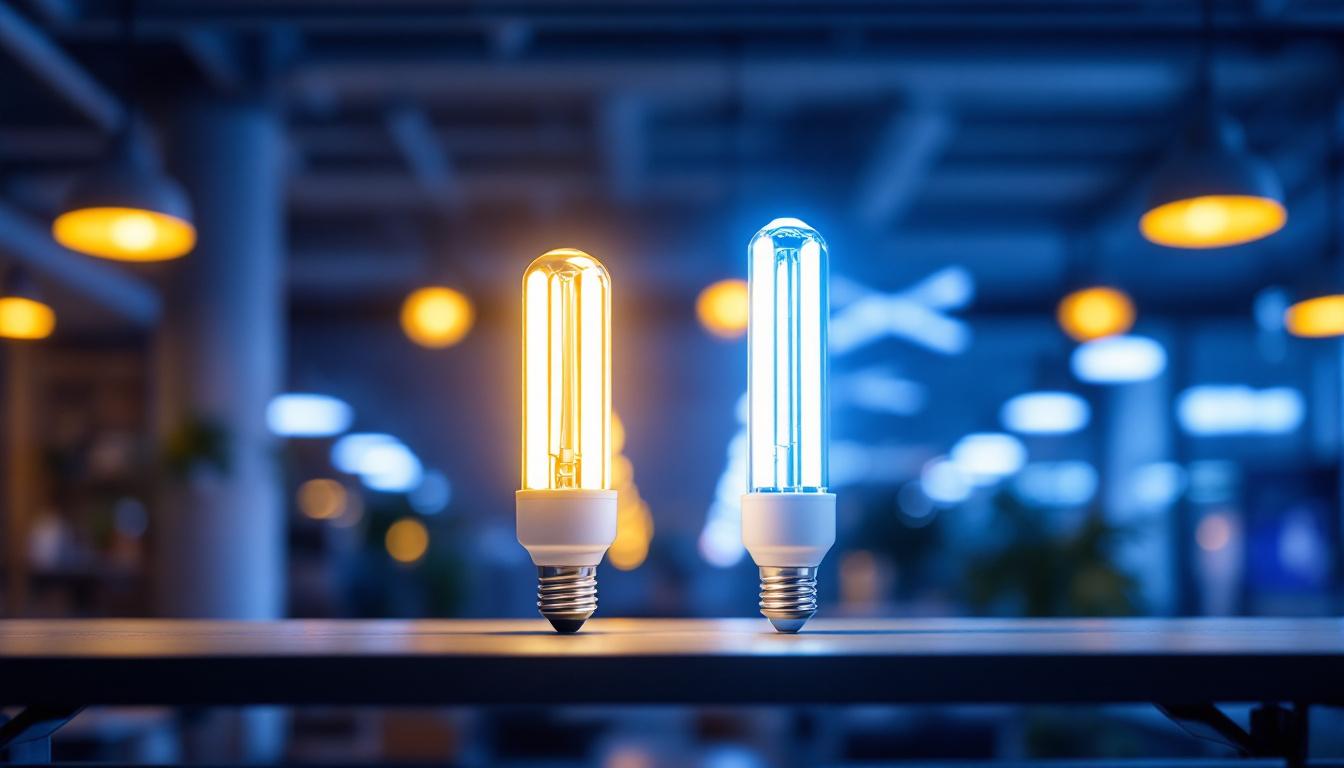
Introduction to T12 and T8 Bulbs in Commercial Lighting
Lighting contractors often face critical decisions when selecting fluorescent bulbs for their projects. Among the most common choices are T12 and T8 bulbs, each with its distinct characteristics, advantages, and limitations. Understanding the differences between these two types of bulbs is essential for optimizing installation efficiency, energy consumption, and ultimately, profitability.
Both T12 and T8 bulbs have been staples in commercial and industrial lighting for decades. However, advancements in lighting technology and evolving energy standards have shifted the landscape, making it crucial for contractors to stay informed about the best options for their clients.
The T12 bulb, with a diameter of 1.5 inches, has been widely used in various applications due to its availability and lower initial cost. However, it is important to note that T12 bulbs are less energy-efficient compared to their T8 counterparts, consuming more electricity and producing less light output per watt. This inefficiency not only leads to higher energy bills but also contributes to a larger carbon footprint, which is a growing concern for many businesses aiming to adopt sustainable practices. As energy regulations become stricter, many facilities are transitioning away from T12 bulbs to more efficient options.
On the other hand, T8 bulbs, measuring 1 inch in diameter, are designed to be more energy-efficient, providing greater lumens per watt. This efficiency translates into lower operating costs and reduced environmental impact, making T8 bulbs a preferred choice for modern commercial lighting solutions. Additionally, T8 bulbs often come with advanced technology such as electronic ballasts, which further enhance their performance and lifespan. With the increasing focus on energy conservation and cost-effectiveness, contractors are encouraged to consider the long-term benefits of T8 bulbs, not just in terms of energy savings but also in the potential for improved lighting quality and employee productivity in the workplace.
Technical Differences Between T12 and T8 Bulbs
Physical Dimensions and Design
The designations “T12” and “T8” refer to the diameter of the fluorescent tube. The “T” stands for tubular, and the number indicates the diameter in eighths of an inch. Specifically, T12 bulbs are 12/8 inches (1.5 inches) in diameter, while T8 bulbs are 8/8 inches (1 inch) thick.
This difference in size affects the bulb’s compatibility with fixtures and ballasts. T8 bulbs, being slimmer, allow for more modern, compact fixture designs that can improve light distribution and aesthetics in commercial spaces. Moreover, the reduced size of T8 bulbs also contributes to a lighter overall weight, making installation easier and allowing for a wider variety of mounting options. This is particularly beneficial in environments where space is at a premium, such as retail stores or office buildings, where sleek designs can enhance the overall ambiance.
Electrical Characteristics and Ballast Compatibility
T12 bulbs typically operate at a lower frequency and require magnetic ballasts, which are less energy-efficient and generate more heat and noise. In contrast, T8 bulbs are designed to work with electronic ballasts that operate at higher frequencies, improving energy efficiency and reducing flicker.
For lighting contractors, this means that installing T8 systems often involves upgrading ballasts, which can increase upfront costs but results in long-term savings and better lighting quality. Additionally, the electronic ballasts used with T8 bulbs often come with features such as dimming capabilities and longer lifespans, further enhancing their appeal. These advancements not only contribute to lower energy bills but also support sustainability initiatives by reducing overall energy consumption. As businesses increasingly prioritize eco-friendly practices, the shift from T12 to T8 bulbs aligns with broader goals of reducing carbon footprints while maintaining effective lighting solutions.
Energy Efficiency and Performance
Energy Consumption Comparison
One of the most significant differences between T12 and T8 bulbs lies in their energy efficiency. T8 bulbs generally consume about 30% less energy than T12 bulbs while providing the same or better light output. This efficiency gain translates into substantial cost savings on electricity bills, especially in large-scale commercial installations where lighting operates for extended hours.
For example, a typical 4-foot T12 bulb consumes around 40 watts, whereas a comparable T8 bulb uses approximately 32 watts. When multiplied across hundreds or thousands of fixtures, this reduction in energy use can significantly impact operational expenses. Moreover, the longevity of T8 bulbs, which can last up to 30,000 hours compared to the 20,000 hours of T12 bulbs, further enhances their cost-effectiveness. This extended lifespan not only reduces the frequency of replacements but also minimizes maintenance costs, making T8 bulbs a more economical choice in the long run.
Light Quality and Color Rendering
T8 bulbs tend to offer superior light quality with higher color rendering index (CRI) values, often exceeding 80, which means they render colors more accurately and vividly. This is particularly important in retail, healthcare, and office environments where visual clarity and ambiance affect customer experience and employee productivity.
T12 bulbs, by comparison, generally have lower CRI values and may produce a harsher, less uniform light. This can lead to increased eye strain and a less inviting atmosphere, factors that contractors should consider when advising clients. Additionally, T8 bulbs are available in a wider range of color temperatures, allowing for greater customization in lighting design. Whether a warm, inviting glow for a restaurant or a bright, energizing light for a workspace, T8 bulbs can be tailored to meet specific aesthetic and functional needs. This versatility not only enhances the overall environment but also contributes to improved mood and performance among occupants, making it a crucial consideration in lighting upgrades. Furthermore, the advent of LED T8 options has further revolutionized the market, offering even greater energy savings and longer lifespans, thus solidifying the T8 as the preferred choice for modern lighting solutions.
Installation and Maintenance Considerations
Fixture Compatibility and Retrofit Options
Many existing commercial lighting systems still use T12 fixtures. While T8 bulbs can sometimes be retrofitted into these fixtures, it often requires ballast replacement or complete fixture upgrades to maximize performance and efficiency. This retrofit process can be more labor-intensive but offers a compelling return on investment through energy savings. Furthermore, the shift from T12 to T8 or even T5 fixtures can significantly enhance light quality, providing a brighter and more uniform illumination that is particularly beneficial in work environments where visibility is crucial.
Lighting contractors must evaluate the condition of existing infrastructure and client budgets to recommend the most cost-effective approach, whether that means a simple bulb replacement or a full fixture overhaul. In many cases, the initial investment in new fixtures can be offset by lower energy bills and reduced maintenance costs over time. Additionally, many utility companies offer rebates or incentives for upgrading to more energy-efficient lighting systems, making the transition even more financially attractive for businesses looking to modernize their facilities.
Lifespan and Maintenance Costs
T8 bulbs typically have a longer rated lifespan, often around 20,000 to 30,000 hours, compared to T12 bulbs, which usually last about 15,000 to 20,000 hours. Longer lifespan reduces the frequency of replacements, lowering maintenance costs and minimizing downtime. This is particularly important in commercial settings where constant light availability is essential for productivity and safety. Moreover, the reduced need for replacements not only cuts costs but also lessens the environmental impact associated with manufacturing and disposing of lighting products.
Additionally, the electronic ballasts used with T8 bulbs tend to be more reliable and generate less heat, which can extend the overall system life and reduce the risk of premature failures. This increased efficiency also contributes to a more sustainable operation, as less energy is wasted in the form of heat. Regular maintenance checks can further enhance the longevity of these systems, allowing businesses to monitor performance and address any issues before they escalate. Implementing a proactive maintenance schedule can ensure that lighting systems remain at peak performance, ultimately supporting a safe and productive work environment.
Regulatory and Environmental Impacts
Energy Regulations and Incentives
Many regions have implemented energy efficiency standards that phase out or restrict the use of less efficient lighting technologies like T12 bulbs. Compliance with these regulations is not only mandatory but can also unlock financial incentives such as rebates and tax credits for upgrading to T8 or LED systems.
Contractors who are knowledgeable about these regulations can provide added value to clients by guiding them through the compliance process and helping them access available incentives, thereby enhancing project profitability.
Environmental Benefits of Upgrading to T8
Switching from T12 to T8 bulbs reduces energy consumption and associated greenhouse gas emissions. Moreover, T8 bulbs contain less mercury than older T12 models, making disposal and recycling less hazardous and more environmentally friendly.
For businesses aiming to improve their sustainability profiles, these environmental benefits can be a strong selling point, helping contractors position themselves as responsible and forward-thinking partners.
Maximizing Profitability in Lighting Installations
Cost-Benefit Analysis for Clients
When advising clients, contractors should present a clear cost-benefit analysis that includes initial investment, energy savings, maintenance costs, and potential incentives. While T8 installations may have higher upfront costs due to ballast and fixture upgrades, the long-term savings and improved lighting quality often justify the investment.
Providing detailed projections helps clients make informed decisions and fosters trust, which can lead to repeat business and referrals.
Leveraging T8 Technology for Competitive Advantage
Adopting T8 lighting solutions allows contractors to differentiate themselves in a competitive market. Offering energy-efficient, high-quality lighting installations aligns with current industry trends and client expectations.
Additionally, contractors who stay updated on emerging technologies, such as LED replacements for T8 bulbs, can further enhance profitability by expanding their service offerings and addressing a broader range of client needs.
Conclusion
Understanding the differences between T12 and T8 bulbs is fundamental for lighting contractors aiming to maximize profitability in their installations. T8 bulbs offer superior energy efficiency, better light quality, longer lifespan, and compliance with modern regulations, making them the preferred choice for new projects and retrofits.
While the transition from T12 to T8 may involve higher initial costs, the long-term benefits in energy savings, reduced maintenance, and environmental impact provide compelling reasons for contractors to advocate for T8 solutions. By leveraging these advantages and educating clients effectively, lighting contractors can enhance their project outcomes and strengthen their market position.
Illuminate Your Projects with LumenWholesale
Ready to elevate your lighting installations with the efficiency and profitability of T8 bulbs? At LumenWholesale, we provide lighting contractors with the highest quality, spec-grade lighting products at unbeatable wholesale prices. Say goodbye to local distributor markups and hello to superior lighting solutions that meet the strictest industry standards. With our hassle-free bulk buying and free shipping, you can secure premium lighting at the best value — ensuring your projects shine without hidden fees or compromises. Don’t miss out on the perfect blend of quality, affordability, and convenience. Discover wholesale lighting at the best value today and make the switch to a brighter, more profitable future with LumenWholesale.