Understanding the Role of LED Lighting in Security
For lighting contractors, integrating LED technology into security systems is not just about illumination—it’s about enhancing safety, deterring crime, and creating environments where people feel secure. LEDs have revolutionized security lighting due to their energy efficiency, longevity, and versatility. However, successful implementation requires a deep understanding of how LED lighting interacts with security needs and environments.
Security lighting serves multiple purposes: it deters potential intruders, improves visibility for surveillance cameras, and provides safe pathways for residents or employees. LED lights, with their instant-on capability and customizable brightness, are uniquely suited to meet these demands. For contractors, this means designing systems that maximize these benefits while addressing site-specific challenges.
Why LEDs Are Ideal for Security Applications
LEDs consume significantly less energy than traditional incandescent or halogen bulbs, often using up to 75% less power. This efficiency translates into cost savings for clients and reduces the environmental footprint of security installations. Additionally, LEDs have a longer lifespan—often exceeding 50,000 hours—minimizing maintenance needs and downtime, which is crucial for continuous security operations.
Another advantage is the ability to precisely control light distribution. LEDs can be directed to illuminate specific areas without causing light pollution or glare, which can be counterproductive to security. This directional lighting helps focus on entry points, walkways, and vulnerable zones, enhancing the effectiveness of the security system.
Moreover, the adaptability of LED technology allows for integration with smart systems, enabling features such as motion detection and automated dimming. This means that lights can be programmed to activate only when movement is detected, further conserving energy while ensuring that areas remain illuminated when necessary. Such features not only bolster security by providing real-time responses to potential threats but also offer an added layer of convenience for users, who can monitor and control their lighting remotely through mobile applications. The ability to customize settings according to specific security protocols and environmental conditions makes LEDs an indispensable tool in modern security solutions.
In addition to their practical applications, the aesthetic versatility of LED lighting can enhance the overall appeal of a property. With a wide range of color temperatures available, contractors can choose warmer tones for residential areas to create a welcoming atmosphere while opting for cooler, brighter lights in commercial settings to convey professionalism and alertness. This dual functionality of LED lighting not only serves to protect but also to beautify spaces, making them more inviting and secure for all who enter.
Designing LED Security Lighting Systems: Best Practices
Lighting contractors must approach security lighting design with a strategic mindset. It’s not simply about installing bright lights but creating a balanced system that integrates with the site’s architecture, landscape, and security objectives.
Assessment and Planning
Begin with a thorough site assessment. Identify high-risk areas such as entrances, parking lots, alleys, and blind spots. Understanding the layout, natural light sources, and existing security measures helps tailor the LED lighting design to actual needs.
Consider the type of property—residential, commercial, industrial, or public spaces—as each has unique security requirements. For instance, commercial properties may require lighting that supports surveillance cameras’ night vision, while residential areas might prioritize softer lighting that deters intruders without disturbing residents. Additionally, the surrounding environment can significantly influence the design; for example, properties near wooded areas may need enhanced illumination to counteract shadows cast by trees, while urban settings might benefit from fixtures that minimize light pollution and comply with local regulations.
Choosing the Right LED Fixtures
Not all LED fixtures are created equal. For security purposes, contractors should select fixtures with appropriate lumen output, color temperature, and beam angle. Brightness levels must be sufficient to illuminate the area without causing glare or discomfort.
Color temperature plays a critical role in visibility and perception. Neutral white light (around 4000K) is often ideal for security lighting because it provides clear visibility without the harshness of cooler temperatures or the dimness of warmer tones. Additionally, LEDs with high Color Rendering Index (CRI) values improve object recognition and color differentiation, which is beneficial for surveillance and identification. When selecting fixtures, consider options that offer adjustable beam angles, allowing for customization based on specific site conditions and security needs. This flexibility can enhance the effectiveness of the lighting by directing illumination precisely where it’s needed most.
Implementing Smart Controls and Sensors
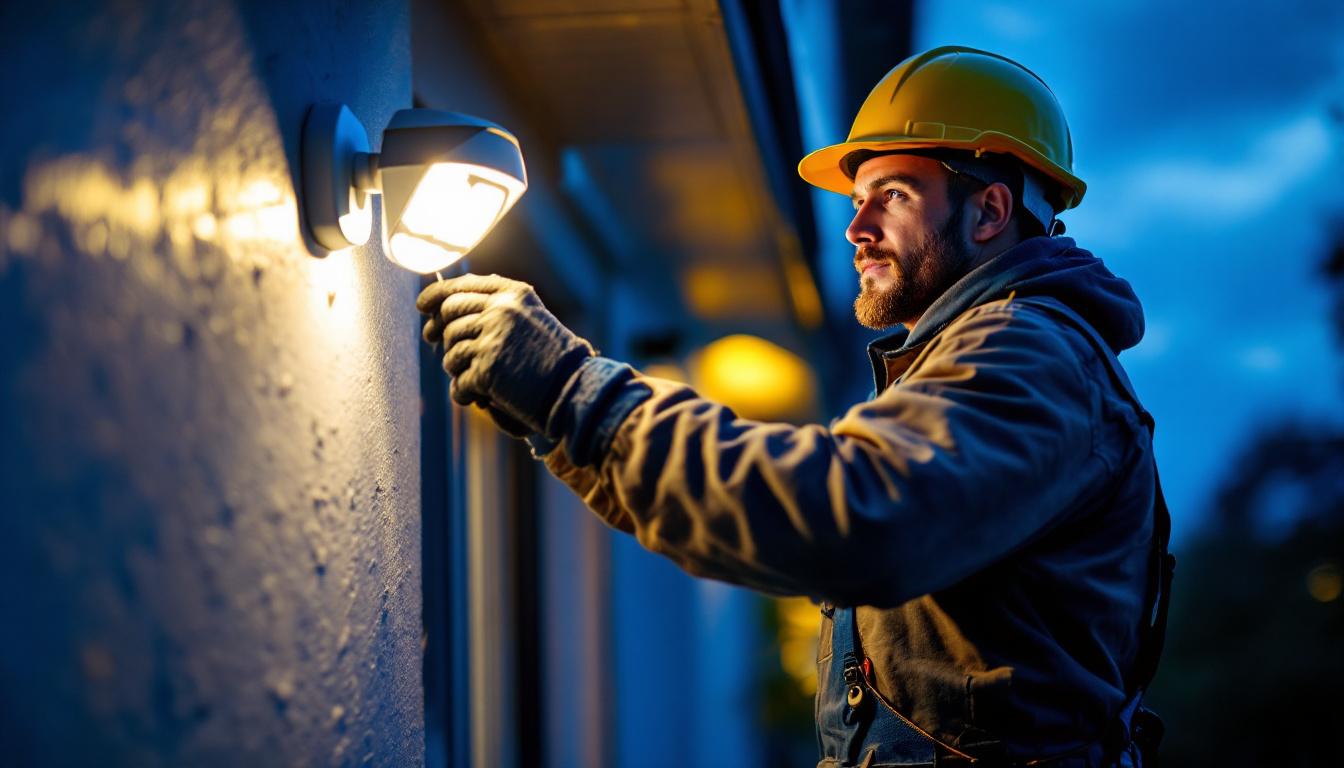
Modern LED security lighting systems increasingly incorporate smart controls such as motion sensors, timers, and dimmers. Motion-activated lighting is highly effective in deterring intruders by suddenly illuminating an area when movement is detected. This not only saves energy but also draws attention to unusual activity.
Timers and photoelectric sensors ensure lights operate only when needed, reducing unnecessary energy consumption. Advanced systems can integrate with security alarms and cameras, creating a cohesive security network that lighting contractors can offer as part of comprehensive solutions. Furthermore, the integration of smart technology allows for remote monitoring and control via mobile applications, enabling property owners to manage their security lighting from anywhere. This feature is particularly advantageous for businesses that may have fluctuating occupancy levels, as it allows for real-time adjustments to lighting based on current security assessments or operational hours. Additionally, incorporating features such as adaptive lighting, which adjusts brightness based on ambient light levels, can enhance both safety and energy efficiency, making the system even more effective in protecting properties.
Installation Techniques for Optimal Security Performance
Proper installation is as important as design in achieving effective LED security lighting. Contractors must follow best practices to ensure the system performs reliably and meets safety standards.
Mounting and Positioning
Position LED fixtures to maximize coverage and minimize shadows. Mount lights at heights that prevent tampering but still provide sufficient illumination. For example, placing lights at 10 to 15 feet above ground level is common for outdoor security lighting.
Use multiple fixtures to eliminate dark zones and ensure overlapping light patterns. Avoid placing lights directly in front of surveillance cameras to prevent lens flare and washed-out images. Instead, position lights to complement camera angles and enhance image clarity.
Wiring and Power Considerations
Ensure wiring is secure, weatherproof, and compliant with electrical codes. Use conduit and protective covers to prevent damage or vandalism. For outdoor installations, select fixtures with appropriate IP ratings to withstand environmental conditions such as rain, dust, and temperature fluctuations.
Consider power sources carefully. Solar-powered LED security lights offer flexibility and sustainability, especially in remote locations without easy access to electrical grids. However, contractors must evaluate solar panel placement and battery capacity to guarantee consistent performance.
Testing and Commissioning
After installation, conduct thorough testing to verify that all fixtures operate correctly and cover the intended areas. Adjust angles and brightness levels as needed to optimize performance. Test smart controls and sensors to ensure responsiveness and integration with other security components.
Document the installation and provide clients with maintenance guidelines and operational instructions. This transparency builds trust and supports long-term satisfaction with the security lighting system.
Maintenance Strategies for Longevity and Reliability
LED security lighting systems require less maintenance than traditional lighting but are not maintenance-free. Lighting contractors should advise clients on routine checks and upkeep to maintain optimal security performance.
Regular Inspections
Schedule periodic inspections to identify and address issues such as dirt accumulation on lenses, fixture damage, or sensor malfunctions. Dirty or obstructed fixtures can reduce light output and compromise security effectiveness.
Check for signs of wear or corrosion, especially in outdoor environments exposed to harsh weather. Early detection of problems prevents costly repairs and downtime.
Software and Firmware Updates
For systems with smart controls, keep software and firmware up to date. Manufacturers often release updates that improve functionality, security, and compatibility. Contractors can offer maintenance contracts that include these updates, adding value to their services.
Client Education
Educate clients on the importance of maintaining their security lighting systems. Provide clear instructions on cleaning, reporting issues, and scheduling professional maintenance. Empowered clients are more likely to preserve the integrity of their security investments.
Emerging Trends and Technologies in LED Security Lighting
The field of LED security lighting continues to evolve, offering new opportunities for lighting contractors to enhance their offerings and stay competitive.
Integration with IoT and Smart Building Systems
Internet of Things (IoT) technology enables LED security lights to communicate with other building systems, such as access control, alarms, and surveillance cameras. This integration allows for automated responses to security events, such as increasing lighting intensity when an alarm is triggered.
Lighting contractors who understand IoT protocols and integration techniques can design advanced security systems that provide clients with greater control and situational awareness.
Adaptive and Human-Centric Lighting
Adaptive lighting adjusts brightness and color temperature based on time of day, occupancy, and environmental conditions. Human-centric lighting considers the biological and psychological effects of light, enhancing comfort and alertness while maintaining security.
Incorporating these concepts into security lighting can improve user experience and reduce energy consumption, appealing to clients seeking innovative and sustainable solutions.
Enhanced Sensor Technologies
Advancements in sensor technology, including thermal imaging and AI-powered motion detection, are improving the precision and reliability of security lighting activation. These sensors reduce false alarms and optimize lighting responses, making security systems more effective and efficient.
Conclusion: Delivering Value Through Expertise in LED Security Lighting
Lighting contractors play a critical role in shaping safe and secure environments through expertly designed and installed LED security lighting systems. By understanding the unique advantages of LED technology, adhering to best design and installation practices, and staying informed about emerging trends, contractors can deliver solutions that meet the evolving needs of clients.
Proven methods—such as thorough site assessments, smart control integration, and diligent maintenance—ensure that LED security lighting systems perform reliably and provide lasting value. Embracing innovation and client education further strengthens contractor-client relationships and positions contractors as trusted experts in the security lighting domain.
Illuminate Your Projects with LumenWholesale
Ready to elevate your LED security lighting installations with products that blend quality, affordability, and convenience? Look no further than LumenWholesale. Our spec-grade lighting solutions are designed to meet the highest industry standards, ensuring your projects shine with reliability and performance. Say goodbye to inflated markups and hello to unbeatable wholesale prices, complemented by the ease of bulk buying and free shipping. Don’t compromise on your lighting needs—choose LumenWholesale for the best value in every beam of light. Explore our selection and start transforming spaces with confidence at Wholesale Lighting at the Best Value.