Why Stairwell Wall Lighting Matters More Than You Think
Stairwells are often overlooked spaces when it comes to lighting design, yet they are critical for safety and functionality. For lighting contractors, understanding the nuances of stairwell wall lighting is essential. These areas are high-traffic zones where proper illumination can prevent accidents and enhance the overall building experience.
Lighting in stairwells isn’t just about visibility; it’s about creating a sense of security and comfort. Poorly lit stairwells can lead to trips, falls, and a general feeling of unease. For commercial buildings, inadequate lighting can even violate safety codes, leading to costly fines or insurance complications.
Contractors who master stairwell wall lighting not only improve safety but also add value to their projects by delivering installations that meet both aesthetic and regulatory demands. The choice of fixtures, their placement, and even the color temperature of the light can significantly impact how users perceive and navigate these spaces. For instance, warm white lighting can create a welcoming atmosphere, while cooler tones may enhance visibility and alertness, making it easier for individuals to traverse the stairs safely.
Moreover, integrating smart lighting solutions can further elevate the functionality of stairwell wall lighting. Motion sensors can automatically activate lights as individuals approach, ensuring that the area is well-lit without wasting energy when unoccupied. Additionally, the use of LED technology not only provides brighter illumination but also offers longevity and energy efficiency, reducing maintenance costs over time. This combination of safety, efficiency, and aesthetic appeal makes stairwell wall lighting a vital consideration for any building project, ultimately contributing to a more pleasant and secure environment for all users.
Key Considerations When Planning Stairwell Wall Lighting
Compliance with Safety Codes and Standards
Every lighting contractor must be familiar with the local building codes and safety standards that govern stairwell illumination. These codes typically specify minimum light levels, uniformity ratios, and emergency lighting requirements. For example, the Illuminating Engineering Society (IES) recommends a minimum of 5 foot-candles (approximately 54 lux) on stair treads and landings to ensure safe navigation.
Emergency lighting is another critical factor. Stairwells often serve as emergency egress routes, so lighting must remain operational during power outages. This usually means integrating battery-backed or generator-powered fixtures that activate automatically when the main power fails. Additionally, it’s essential to conduct regular testing of these emergency systems to ensure their reliability. This testing not only confirms that the lights function correctly but also helps identify any potential maintenance needs, ensuring that safety remains a top priority at all times.
Light Levels and Uniformity
Uniform lighting is crucial in stairwells to avoid shadows that can obscure steps or create visual confusion. Contractors should aim for consistent illumination along the entire stairwell, minimizing dark spots. This often requires a combination of wall-mounted fixtures spaced evenly and positioned at the right height. Furthermore, the choice of light color temperature can significantly influence visibility; cooler temperatures (around 4000K to 5000K) can enhance clarity and alertness, making them ideal for stairwell applications.
Light levels should be bright enough to clearly define each step but not so intense that they cause glare. Using diffusers or frosted lenses can help achieve a softer, more even light distribution. In addition, incorporating smart lighting controls can enhance the functionality of stairwell lighting. For instance, motion sensors can automatically adjust light levels based on occupancy, ensuring that energy is conserved when the stairwell is not in use while still providing adequate illumination when needed.
Fixture Placement and Mounting Height
The placement of wall lights in stairwells directly affects both safety and aesthetics. Fixtures should be mounted at a height that illuminates the stair treads without shining directly into the eyes of users. Typically, this means positioning lights between 5 and 7 feet above the stair nosing. However, the architectural design of the stairwell can influence this height; for instance, in narrow or uniquely shaped stairwells, adjustments may be necessary to optimize light distribution.
Spacing between fixtures depends on the lumen output and beam angle of the chosen light source. Contractors should calculate spacing carefully to maintain uniformity and avoid overlapping shadows. Additionally, considering the use of wall sconces or recessed lighting can enhance the visual appeal of the stairwell while providing functional illumination. Decorative fixtures can also contribute to the overall design theme of the building, making the stairwell not just a passageway but an integral part of the interior aesthetic.
Choosing the Right Fixtures for Stairwell Wall Lighting
Types of Fixtures Commonly Used
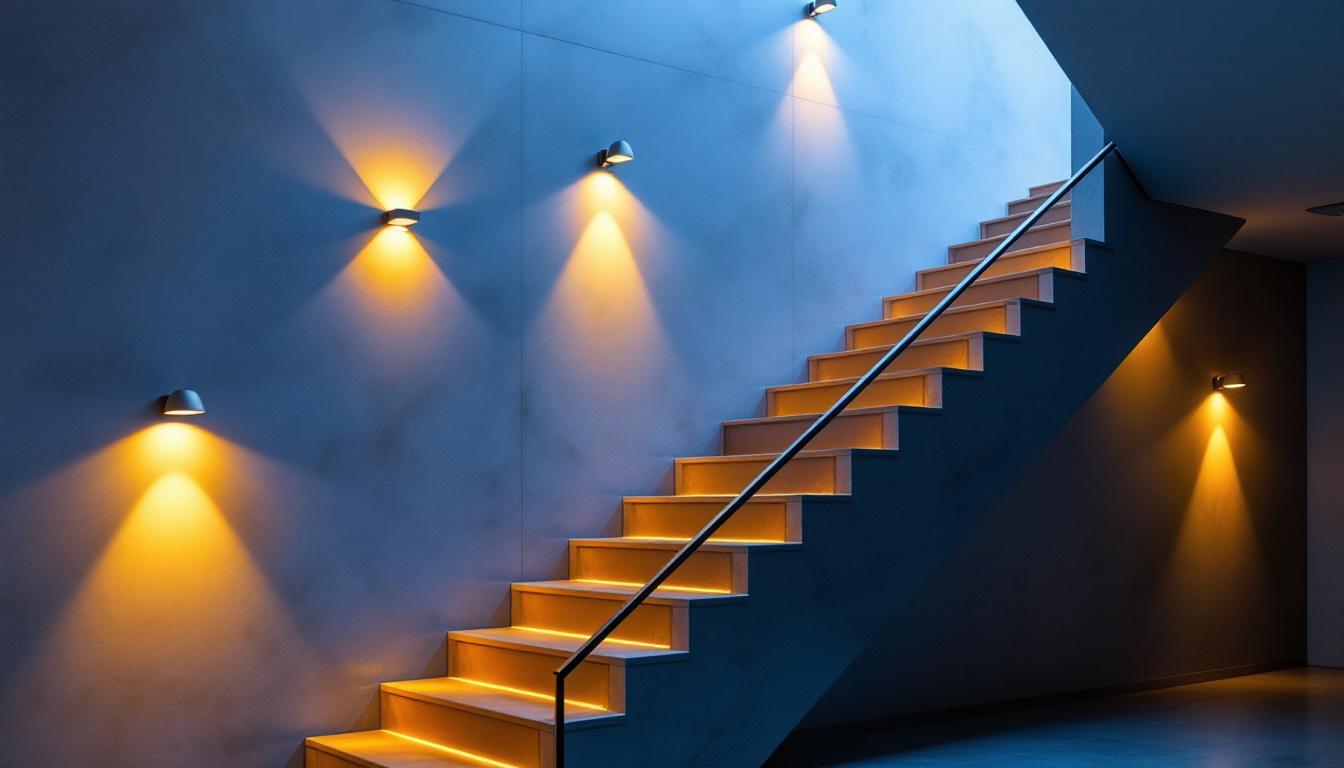
Wall sconces and linear LED wall washers are popular choices for stairwell lighting. Sconces provide localized illumination and can add architectural interest, while linear fixtures offer continuous, even light along the wall.
Recessed wall lights installed near the stair risers are another option. These fixtures cast light downward onto each step, enhancing safety without overwhelming the space.
LED vs. Traditional Lighting
LED technology has become the industry standard for stairwell lighting due to its energy efficiency, longevity, and versatility. LEDs consume significantly less power than incandescent or fluorescent bulbs and have a lifespan that can exceed 50,000 hours.
Additionally, LEDs offer better control over color temperature and beam angles, allowing contractors to tailor the lighting to the specific needs of the stairwell environment. Warm white LEDs (around 3000K) are often preferred for their inviting glow, while cooler temperatures (4000K-5000K) may be used in commercial or industrial settings for a brighter, more clinical appearance.
Durability and Maintenance
Stairwell lighting fixtures should be durable and easy to maintain. Since stairwells are often enclosed spaces, fixtures must be resistant to dust and moisture. Look for fixtures with an IP (Ingress Protection) rating of at least IP44 to ensure protection against splashing water and dust ingress.
Maintenance accessibility is another consideration. Fixtures installed in hard-to-reach locations can increase labor costs and downtime. Choosing wall lights with easily replaceable components or modular designs can simplify future maintenance.
Advanced Features Lighting Contractors Should Know
Motion Sensors and Occupancy Controls
Incorporating motion sensors in stairwell lighting systems can significantly reduce energy consumption. Lights can automatically turn on when someone enters the stairwell and switch off after a preset period of inactivity. This is especially beneficial in buildings with low foot traffic during certain hours.
Occupancy controls also enhance safety by ensuring the stairwell is never left in darkness when in use. Modern sensors can be adjusted for sensitivity and delay times, providing flexibility to meet client needs.
Emergency and Backup Lighting Integration
Lighting contractors must ensure that emergency lighting systems are seamlessly integrated with the primary stairwell lighting. This includes battery backups or connection to centralized emergency power systems that activate during outages.
Testing and certification of emergency lighting are vital. Contractors should advise clients on regular maintenance schedules to verify that backup systems function correctly when needed.
Smart Lighting and IoT Capabilities
Smart lighting solutions are gaining traction in commercial and residential stairwells. These systems allow remote monitoring and control, enabling facility managers to adjust lighting levels, monitor energy usage, and receive alerts about fixture failures.
Internet of Things (IoT) integration can also facilitate predictive maintenance, reducing downtime and extending fixture lifespan. For contractors, offering smart lighting options can differentiate their services and provide added value to clients.
Installation Best Practices for Stairwell Wall Lighting
Pre-Installation Planning
Successful stairwell lighting installation begins with thorough planning. Contractors should conduct a detailed site survey to assess dimensions, existing electrical infrastructure, and potential obstacles. Understanding the building’s use patterns helps determine the most effective lighting strategy.
Coordination with other trades, such as electricians and architects, ensures that wiring, mounting points, and fixture types align with the overall design and safety requirements.
Wiring and Power Considerations
Stairwell lighting circuits often require dedicated wiring to support emergency backup systems. Contractors must ensure compliance with electrical codes, including proper grounding and circuit protection.
Low-voltage wiring may be used for LED fixtures, but this requires transformers or drivers that must be installed in accessible locations for maintenance. Proper labeling and documentation of wiring layouts are essential for future troubleshooting.
Quality Control and Testing
After installation, thorough testing is critical. This includes verifying light levels, uniformity, sensor operation, and emergency backup functionality. Contractors should use light meters to measure illumination and ensure it meets specified standards.
Documenting test results and providing clients with detailed reports supports transparency and helps with ongoing maintenance planning.
Common Challenges and How to Overcome Them
Dealing with Limited Space and Architectural Constraints
Stairwells often have tight spaces or unusual shapes that complicate fixture placement. Contractors can overcome these challenges by selecting compact, low-profile fixtures or custom mounting solutions that blend with the architecture.
Using adjustable fixtures allows fine-tuning of light direction to maximize coverage without cluttering the space.
Balancing Aesthetics and Functionality
Clients frequently want stairwell lighting that complements the building’s style while meeting strict safety requirements. Striking this balance requires careful fixture selection and creative design.
Lighting contractors should collaborate with designers and architects early in the project to align on goals and explore options such as decorative sconces with LED technology or concealed linear lighting that highlights architectural features.
Ensuring Long-Term Reliability
Stairwell lighting must perform consistently over time, often in environments with temperature fluctuations and humidity. Choosing high-quality fixtures and components, along with proper installation techniques, reduces the risk of premature failure.
Contractors should educate clients on maintenance best practices and recommend periodic inspections to catch issues before they become serious problems.
Final Thoughts on Stairwell Wall Lighting for Contractors
Mastering stairwell wall lighting is a mark of professionalism for any lighting contractor. It requires a deep understanding of safety codes, technical specifications, and design principles. By focusing on uniform illumination, energy efficiency, and smart controls, contractors can deliver solutions that protect users and enhance the built environment.
Stairwell lighting projects may seem straightforward at first glance, but they demand attention to detail and thoughtful planning. Those who invest the effort will find that their work stands out for quality and reliability, earning client trust and repeat business.
Illuminate Your Projects with LumenWholesale
Ready to elevate your stairwell wall lighting installations with the finest products on the market? Look no further than LumenWholesale for a vast array of spec-grade lighting solutions that promise to meet your every need. Our commitment to quality, affordability, and convenience ensures that you can access the best lighting products at wholesale prices, with the added benefit of free shipping on bulk orders. Don’t let local distributor markups dim your project’s potential. Choose LumenWholesale and experience the difference that premium lighting can make. Start enhancing your lighting projects today by visiting Wholesale Lighting at the Best Value.