Introduction: The Growing Demand for Tennis Court Lighting
Tennis, as a sport, continues to enjoy widespread popularity across communities, schools, clubs, and recreational centers worldwide. With increasing participation and the rise of evening and night play, the demand for high-quality tennis court lighting has surged. For lighting contractors, this trend represents a significant opportunity to showcase expertise, innovate with new technologies, and deliver solutions that enhance player experience and safety.
Lighting a tennis court is not merely about illuminating the playing surface; it involves understanding specific standards, player needs, and environmental considerations. This article explores real-world success stories that demonstrate how lighting contractors have effectively addressed these challenges, delivering outstanding results that benefit players, facility owners, and the broader community.
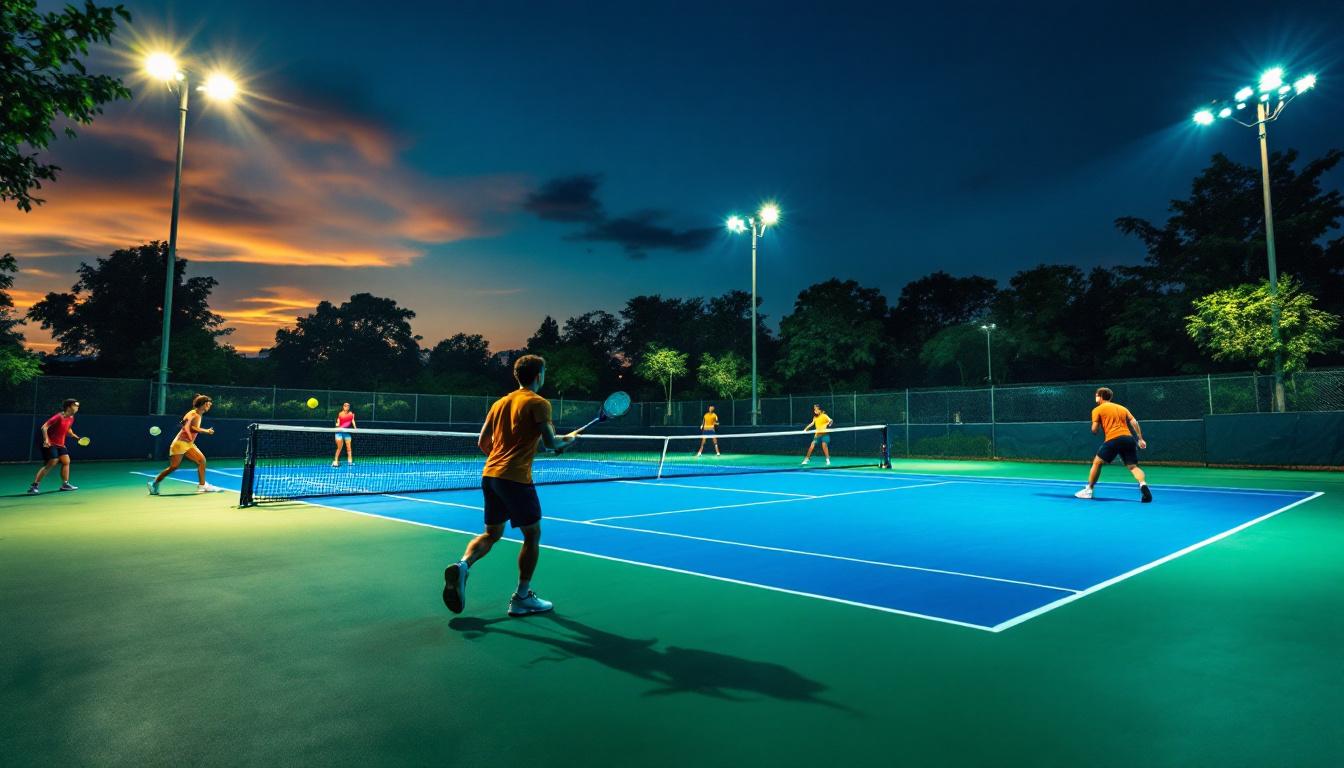
One of the key factors driving the demand for enhanced lighting solutions is the increasing number of tournaments and events held after dark. As clubs and facilities strive to attract more players and spectators, having well-lit courts becomes essential. Advanced lighting technologies, such as LED systems, not only provide superior illumination but also offer energy efficiency and reduced maintenance costs. These systems can be tailored to meet the specific needs of each court, ensuring that players can perform at their best regardless of the time of day.
Moreover, the integration of smart lighting controls has revolutionized how tennis courts are illuminated. These systems allow for adjustable brightness levels and automated scheduling, providing flexibility for different types of play and events. For instance, during casual practice sessions, lower lighting levels can be employed, while competitive matches may require full illumination. This adaptability not only enhances the playing experience but also contributes to energy conservation, aligning with the growing emphasis on sustainability in sports facilities.
Understanding Tennis Court Lighting Requirements
Standards and Guidelines for Optimal Illumination
Before diving into success stories, it is crucial to understand the technical requirements that govern tennis court lighting. The International Tennis Federation (ITF) and other governing bodies provide detailed guidelines on illumination levels, uniformity, glare control, and color rendering. For recreational courts, a minimum average illuminance of around 200 lux is recommended, while professional or tournament-level courts may require upwards of 500 lux.
Uniformity is equally important; uneven lighting can create shadows and affect players’ perception of the ball, leading to poor performance or even injury. Lighting contractors must ensure that the ratio of average to minimum illuminance stays within recommended limits, typically around 0.6 or higher. Additionally, glare control is essential to prevent discomfort and distractions for players and spectators. The layout of the lighting fixtures plays a crucial role in achieving these standards, as proper positioning can help mitigate glare and ensure a consistent playing environment.
Moreover, the choice of lighting color temperature can significantly impact visibility and player comfort. A color temperature of around 4000K to 5000K is often preferred, as it closely resembles natural daylight, enhancing players’ ability to track the ball and react quickly. This aspect becomes particularly vital during evening matches or tournaments, where players rely heavily on artificial lighting to perform at their best.
Technological Advances Impacting Tennis Court Lighting
Advancements in LED technology have revolutionized sports lighting. LEDs offer superior energy efficiency, longer lifespan, and enhanced controllability compared to traditional metal halide or halogen lamps. Modern LED fixtures can deliver precise beam angles, reducing light spill and minimizing environmental impact. Furthermore, smart lighting controls allow facility managers to adjust brightness levels based on usage patterns, contributing to energy savings and extended equipment life.
For lighting contractors, staying abreast of these technological developments is vital. Incorporating LEDs and intelligent control systems into tennis court projects not only meets client expectations but also positions contractors as forward-thinking professionals in a competitive market. Additionally, the integration of automated lighting systems can enhance the user experience by allowing for pre-set lighting configurations tailored to specific events or time slots. This flexibility can be particularly beneficial for multi-use facilities that host various sports or community events, ensuring that the lighting adapts seamlessly to each activity’s unique requirements.
Furthermore, the trend towards sustainability in sports facility management is pushing the adoption of solar-powered lighting solutions. These systems harness renewable energy to power court lights, significantly reducing operational costs and carbon footprints. As more facilities seek to align with eco-friendly practices, lighting contractors who can offer innovative, sustainable solutions will likely find themselves in high demand, paving the way for a greener future in sports infrastructure.
Case Study 1: Revitalizing a Community Tennis Complex with LED Lighting
Project Overview and Challenges
A municipal recreation department sought to upgrade the lighting at a popular community tennis complex featuring six outdoor courts. The existing metal halide fixtures were outdated, energy-intensive, and provided inconsistent illumination. The goal was to improve lighting quality, reduce operational costs, and extend usable hours for players, especially during evening leagues and tournaments.
Lighting Contractor’s Approach and Solutions
The lighting contractor conducted a thorough site assessment, measuring existing light levels and identifying problem areas. They proposed a retrofit solution using high-efficiency LED fixtures with asymmetric optics to focus light precisely on the courts. The design emphasized uniformity and glare reduction, ensuring compliance with ITF recommendations.
Additionally, the contractor integrated a centralized lighting control system, enabling facility managers to schedule lighting based on court bookings and ambient daylight sensors. This approach maximized energy savings without compromising player experience.
Outcomes and Benefits
The retrofit resulted in a 60% reduction in energy consumption compared to the previous system. Players reported improved visibility and comfort, with fewer complaints about glare or dark spots. The municipality appreciated the lower maintenance requirements and the ability to extend court availability into later hours, boosting community engagement and revenue from evening programs.
Case Study 2: Lighting a High-Performance Tennis Academy
Project Requirements and Constraints
A private tennis academy specializing in elite athlete development required state-of-the-art lighting for its four outdoor courts. The lighting needed to meet stringent performance standards suitable for training and competitive play, including television broadcasting capabilities for live-streamed matches. The site also had strict environmental regulations limiting light pollution and energy use.
Innovative Lighting Design and Implementation
The lighting contractor collaborated closely with architects, engineers, and academy stakeholders to develop a custom lighting solution. They selected premium LED fixtures with high color rendering index (CRI) values to ensure accurate ball visibility and natural color perception under artificial light.
To address environmental concerns, the contractor implemented full cutoff fixtures and precise beam control to minimize light spill beyond the court boundaries. The system incorporated dimmable drivers and programmable scenes to adapt lighting intensity for different activities, from casual practice to televised matches.
Results and Client Feedback
The academy reported exceptional lighting quality that enhanced player performance and spectator experience. The lighting system’s flexibility allowed seamless transitions between various use cases, optimizing energy consumption without sacrificing functionality. The contractor’s attention to environmental compliance earned praise from local authorities and set a benchmark for sustainable sports lighting projects.
Case Study 3: Upgrading Lighting for a University Tennis Facility
Background and Objectives
A university athletic department aimed to upgrade its tennis facility lighting to support varsity competitions and community events. The existing lighting was insufficient for night matches and did not meet broadcast standards. Additionally, the university sought to improve energy efficiency and reduce maintenance costs.
Execution and Technical Highlights
The lighting contractor designed a comprehensive lighting plan featuring LED pole-mounted fixtures with adjustable tilt angles. The design ensured uniform coverage across all courts while minimizing glare for players and spectators. The system included wireless control modules, enabling remote operation and real-time monitoring of fixture performance.
To support broadcast requirements, the contractor incorporated high-intensity lighting zones with enhanced color temperature and CRI, ensuring clear video quality for live streaming. The installation was completed with minimal disruption to ongoing university activities.
Impact and Long-Term Advantages
Post-installation, the university experienced a significant uplift in facility utilization, with increased scheduling of night matches and tournaments. Energy consumption dropped by nearly half, and maintenance intervals extended due to the durability of LED fixtures. The lighting upgrade contributed to the university’s sustainability goals and improved its reputation as a premier sports venue.
Best Practices for Lighting Contractors in Tennis Court Projects
Comprehensive Site Assessment and Client Consultation
Successful tennis court lighting projects begin with detailed site evaluations. Contractors should measure existing light levels, assess pole placements, and consider surrounding environmental factors such as nearby residences or vegetation. Engaging clients early to understand their specific needs—whether recreational, competitive, or broadcast—is essential to tailor solutions appropriately.
Prioritizing Energy Efficiency and Sustainability
With rising energy costs and environmental awareness, incorporating energy-efficient technologies like LEDs and smart controls is no longer optional. Contractors should emphasize these benefits during proposals, highlighting long-term cost savings and reduced carbon footprints. Utilizing fixtures with precise optics and adaptive controls can also minimize light pollution, aligning with community expectations and regulations.
Ensuring Compliance with Standards and Regulations
Adherence to ITF lighting standards and local ordinances is critical. Contractors must stay current with evolving guidelines and incorporate best practices for uniformity, glare control, and illuminance levels. Proper documentation and testing post-installation can validate compliance and provide clients with confidence in the system’s performance.
Leveraging Technology for Enhanced Control and Maintenance
Integrating advanced control systems offers multiple advantages, including scheduling, dimming, fault detection, and remote management. These features not only improve operational efficiency but also extend fixture lifespan and reduce downtime. Lighting contractors should recommend and implement such technologies to differentiate their services and add value for clients.
Conclusion: Lighting Contractors Driving Success in Tennis Court Projects
Lighting tennis courts effectively requires a blend of technical knowledge, innovative design, and client-focused execution. The real-world success stories highlighted here demonstrate how lighting contractors can transform facilities, improve player experiences, and contribute to sustainable community development.
By embracing modern LED technologies, adhering to rigorous standards, and adopting smart control solutions, lighting contractors position themselves as indispensable partners in the sports lighting industry. As tennis continues to thrive as a global sport, the demand for expertly lit courts will only grow, offering abundant opportunities for contractors to shine.
Illuminate Your Tennis Court Projects with LumenWholesale
Ready to elevate your tennis court lighting projects and exceed client expectations? At LumenWholesale, we provide lighting contractors with the cutting-edge, spec-grade lighting solutions you need to make every serve and volley shine. Our commitment to quality and affordability ensures you have access to the best LED technologies and smart control systems at wholesale prices that simply can’t be beaten. Say goodbye to middleman markups and hello to hassle-free bulk purchases with free shipping. Don’t compromise on quality or cost—choose LumenWholesale for your next project and experience the ultimate in lighting excellence. Start browsing our selection now and secure Wholesale Lighting at the Best Value.