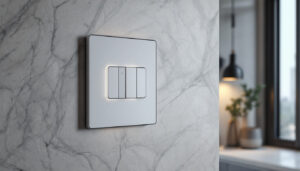
Understanding Hall Sensor Lights: Technology and Applications
Hall sensor lights utilize the Hall effect, a principle discovered by physicist Edwin Hall, which involves detecting magnetic fields to trigger electronic responses. In lighting systems, Hall sensors act as precise switches or dimmers, responding to the presence or absence of a magnetic field to control illumination. This technology has gained traction in various lighting applications, from industrial environments to smart home systems, due to its durability and reliability.
For lighting contractors, understanding the mechanics of Hall sensor lights is crucial. These sensors are contactless, meaning they do not rely on physical switches that wear out over time. Instead, they detect magnetic fields generated by magnets embedded in switches or moving parts. This results in a longer lifespan and reduced maintenance needs, which can be a significant advantage in commercial or outdoor lighting installations where access for repairs is limited.
Moreover, Hall sensor lights often feature enhanced resistance to dust, moisture, and mechanical shock. This robustness makes them ideal for harsh environments such as warehouses, factories, or outdoor public spaces. Their ability to provide precise control over light activation and dimming also supports energy efficiency initiatives, a growing priority for many clients.
In addition to their practical applications, Hall sensor lights are becoming increasingly integrated into smart technology ecosystems. With the rise of the Internet of Things (IoT), these lights can be connected to home automation systems, allowing users to control their lighting remotely via smartphones or voice commands. This integration not only enhances user convenience but also enables advanced features such as scheduling, where lights can automatically turn on or off based on user-defined parameters, further optimizing energy consumption.
Furthermore, the versatility of Hall sensor lights extends to their aesthetic applications in architectural and landscape lighting. Designers are leveraging this technology to create dynamic lighting solutions that can change intensity and color based on environmental cues or user preferences. This adaptability not only enhances the visual appeal of spaces but also contributes to creating mood and ambiance, making Hall sensor lights a valuable asset in both residential and commercial design projects.
Comparing Hall Sensor Lights with Traditional Lighting Controls
Mechanical Switches
Mechanical switches have been the standard for decades, offering straightforward on/off control. However, they are prone to wear and tear due to physical contact, which can lead to failure or inconsistent performance over time. For lighting contractors, this translates to higher maintenance costs and potential customer dissatisfaction.
In contrast, Hall sensor lights eliminate mechanical wear by using magnetic fields for activation. This contactless operation significantly extends the functional lifespan of lighting controls, reducing the frequency of service calls and replacements. Additionally, Hall sensors provide silent operation, an advantage in environments where noise reduction is desirable. Furthermore, the installation of Hall sensor lights can often be simpler and less invasive, as they do not require the same wiring complexity as traditional switches, making them an attractive option for both new builds and retrofitting projects.
Infrared and Motion Sensors
Infrared (IR) and motion sensors are popular alternatives that detect presence or movement to control lighting. While effective for energy savings, these sensors can sometimes be overly sensitive or fail to detect occupants accurately, leading to lights turning off prematurely or remaining on unnecessarily.
Hall sensor lights, by comparison, offer more precise control since they respond to specific magnetic triggers rather than general motion or heat signatures. This precision is particularly valuable in settings where lighting needs to remain stable regardless of occupant movement, such as in manufacturing lines or display lighting. Moreover, Hall sensors can be integrated into smart home systems, allowing for advanced features like remote control and programmable settings, enhancing user experience and energy efficiency even further.
Capacitive Touch Controls
Capacitive touch controls provide a modern, sleek interface for lighting activation and dimming. They rely on detecting changes in electrical charge caused by a user’s touch. While aesthetically appealing, these controls can be sensitive to environmental factors such as moisture or dirt, potentially leading to malfunctions.
Hall sensor lights, being magnetically activated, are less susceptible to environmental interference. This reliability is a key consideration for lighting contractors working in outdoor or industrial settings where exposure to elements is unavoidable. Additionally, Hall sensor technology can be seamlessly integrated with other smart technologies, allowing for features like dimming and color temperature adjustments without the need for physical contact. This can enhance user convenience and adaptability, making Hall sensor lights a versatile choice for various applications, from residential to commercial spaces.
Energy Efficiency and Cost Implications
Energy efficiency is a top priority for many clients, driven by rising energy costs and sustainability goals. Hall sensor lights contribute to energy savings by enabling precise control over lighting activation and dimming levels. The ability to integrate with automated systems allows for optimized lighting schedules and reduced wastage. This not only minimizes energy consumption but also helps in creating a more comfortable and productive environment for occupants, as lighting can be tailored to specific needs and activities throughout the day.
From a cost perspective, Hall sensor lights may have a higher upfront price compared to traditional mechanical switches or basic motion sensors. However, their durability and low maintenance requirements often result in lower total cost of ownership over the lifespan of the installation. For lighting contractors, this presents an opportunity to offer clients a value proposition that balances initial investment with long-term savings. Additionally, the longevity of Hall sensors reduces the frequency of replacements, which can further decrease labor costs associated with installation and upkeep.
Furthermore, Hall sensor technology supports integration with smart lighting systems, which can further enhance energy management through remote control and data analytics. This capability aligns with the growing demand for intelligent building solutions, positioning contractors to meet evolving market expectations. By leveraging these advanced technologies, clients can gain insights into their energy usage patterns, allowing them to make informed decisions about further improvements and investments in energy efficiency. Moreover, the integration of Hall sensors with other smart devices, such as occupancy sensors and environmental controls, can create a holistic approach to energy management that maximizes efficiency across the entire building ecosystem.
In addition to cost savings and energy efficiency, Hall sensor lights also contribute to improved safety and security in various environments. Their ability to detect motion and adjust lighting accordingly can deter potential intruders and provide adequate illumination in critical areas, such as stairwells and parking lots. This added layer of security can be particularly appealing to clients in commercial and industrial sectors, where safety is a paramount concern. Furthermore, as businesses increasingly prioritize corporate social responsibility, the adoption of energy-efficient technologies like Hall sensors can enhance their reputation and appeal to environmentally conscious consumers.
Installation and Maintenance Considerations for Lighting Contractors
Installing Hall sensor lights requires a different approach compared to traditional lighting controls. Contractors must account for the placement of magnets and sensors to ensure reliable operation. Proper alignment is critical, as the sensor’s activation depends on the magnetic field’s proximity and orientation.
While initial installation may involve additional planning and precision, the long-term benefits include fewer service calls and reduced downtime. Hall sensor lights are less prone to failure caused by mechanical wear or environmental factors, which translates into lower maintenance burdens for contractors and clients alike.
Additionally, the modular nature of many Hall sensor lighting components allows for easier upgrades and replacements without extensive rewiring. This flexibility can be a selling point when proposing lighting solutions to clients who anticipate future expansions or technology updates.
Case Studies: Real-World Applications of Hall Sensor Lights
Industrial Facilities
In industrial settings, lighting must withstand harsh conditions such as dust, vibration, and temperature fluctuations. Hall sensor lights have been successfully deployed in manufacturing plants where traditional switches frequently failed due to mechanical stress. The contactless operation and robust design reduced maintenance downtime by a significant margin, improving overall operational efficiency.
Outdoor Public Lighting
Municipalities have adopted Hall sensor lights in outdoor public lighting projects to enhance durability and reduce vandalism. Since the sensors are sealed and activated magnetically, they are less vulnerable to tampering compared to exposed mechanical switches. This has resulted in longer service intervals and improved public safety through consistent lighting performance.
Smart Home Integration
Home automation enthusiasts have incorporated Hall sensor lighting controls to achieve seamless, silent operation with precise dimming capabilities. The integration with smart home hubs allows users to customize lighting scenes based on occupancy and time of day, contributing to both convenience and energy savings.
Making the Choice: What Lighting Contractors Should Consider
When deciding whether to specify Hall sensor lights or alternative technologies, lighting contractors should evaluate several factors:
- Environment: Consider exposure to dust, moisture, temperature extremes, and mechanical stress.
- Longevity and Maintenance: Assess the expected lifespan and maintenance requirements of the lighting control system.
- Precision and Control: Determine the level of control needed over lighting activation and dimming.
- Energy Efficiency: Evaluate how the system supports energy-saving initiatives and integration with smart controls.
- Cost: Balance upfront costs against long-term savings and client budget constraints.
Ultimately, Hall sensor lights offer a compelling option for many applications, especially where durability, precision, and low maintenance are priorities. However, they may not be the best fit for all scenarios, such as simple residential projects where cost sensitivity is paramount and environmental conditions are mild.
Lighting contractors should engage with clients to understand their specific needs and constraints, then recommend solutions that optimize performance, reliability, and value. Staying informed about evolving sensor technologies and industry trends will enable contractors to provide expert guidance and maintain a competitive edge.
Conclusion: Embracing Innovation in Lighting Control
Hall sensor lights represent a sophisticated advancement in lighting control technology, combining durability, precision, and energy efficiency. For lighting contractors, they offer an opportunity to deliver superior solutions that meet the demands of modern commercial, industrial, and smart home environments.
While alternatives like mechanical switches, infrared sensors, and capacitive touch controls remain relevant, Hall sensor technology addresses many of their limitations, particularly in challenging environments. By carefully considering project requirements and client goals, contractors can make informed choices that enhance satisfaction and foster long-term partnerships.
As the lighting industry continues to evolve, embracing innovative technologies such as Hall sensor lights will be essential for contractors seeking to lead in quality, reliability, and sustainability.
Discover Superior Hall Sensor Lighting Solutions at LumenWholesale
Ready to elevate your lighting projects with the advanced technology of Hall sensor lights? Look no further than LumenWholesale, where we specialize in providing contractors with the highest quality, spec-grade lighting products at the most competitive wholesale prices. Say goodbye to local distributor markups and hello to a vast selection of reliable, high-performance lighting that meets rigorous industry standards. With the convenience of free shipping on bulk orders, LumenWholesale is your go-to source for premium lighting solutions that blend quality, affordability, and ease. Don’t compromise on your lighting needs—choose LumenWholesale for the best value in Wholesale Lighting at the Best Value.