Understanding the Role of Industrial Ceiling Fans in Commercial Spaces
Industrial ceiling fans are a critical component in large commercial and industrial environments, playing a vital role in enhancing air circulation, improving comfort, and optimizing energy efficiency. For lighting contractors, understanding the nuances of these fans is essential, as their installation often intersects with lighting design and electrical systems.
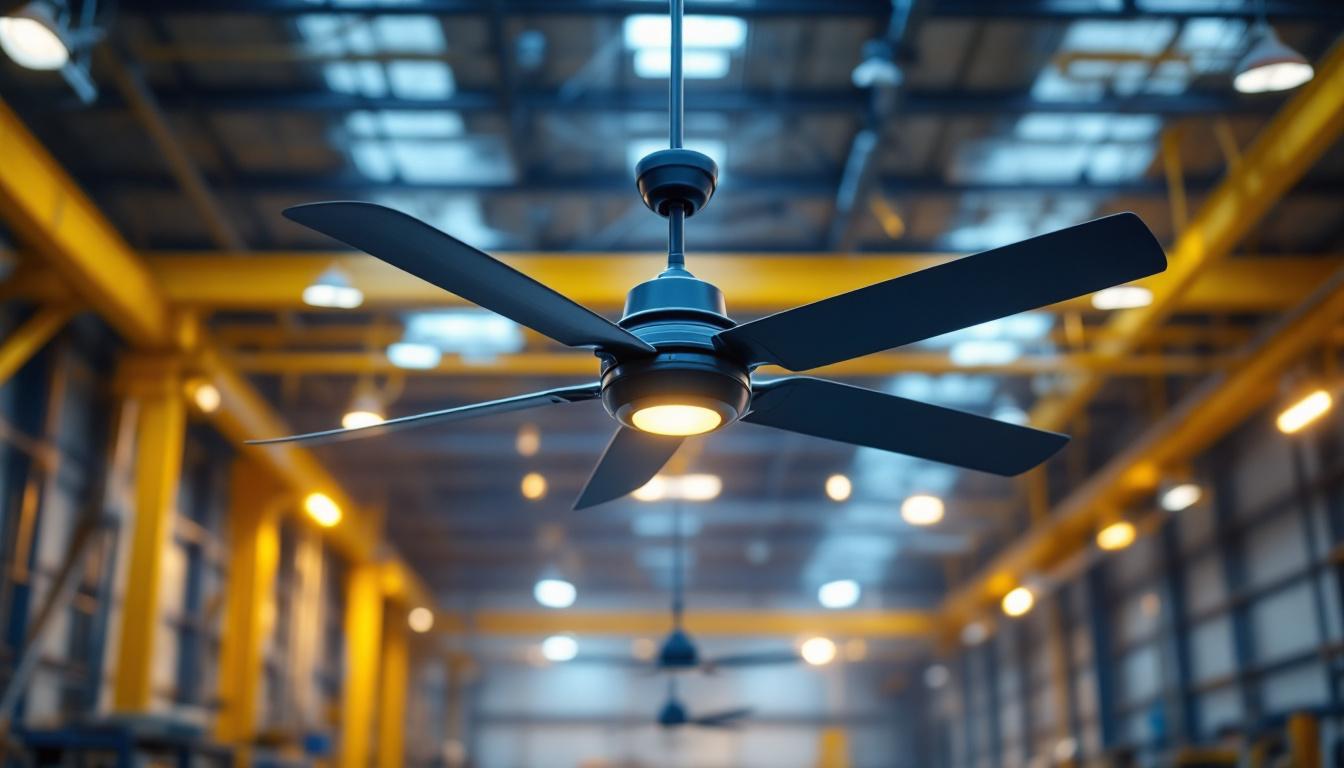
Unlike residential ceiling fans, industrial models are built to handle expansive spaces such as warehouses, factories, gymnasiums, and large retail stores. They feature robust motors, larger blade spans, and durable materials designed to withstand harsh conditions and continuous operation. These fans not only improve air quality but also contribute significantly to reducing heating and cooling costs by promoting better air distribution. Furthermore, they can help mitigate temperature stratification, where warm air rises to the ceiling, thus ensuring a more uniform temperature throughout the space.
Why Lighting Contractors Should Care About Industrial Ceiling Fans
Lighting contractors often work in tandem with HVAC and electrical teams, making knowledge of industrial ceiling fans invaluable. Proper integration of fans and lighting systems can lead to streamlined installations, reduced labor costs, and enhanced overall project efficiency. Additionally, many modern industrial ceiling fans come with integrated lighting options or are designed to accommodate lighting fixtures, making them a natural consideration during the planning and installation phases. This synergy not only maximizes the functionality of the space but also enhances the aesthetic appeal, as well-placed lighting can highlight the sleek design of the fans themselves.
Moreover, the advent of smart technology has transformed industrial ceiling fans into intelligent systems capable of adjusting their speed and operation based on real-time environmental data. This feature allows for even greater energy savings and comfort levels, as fans can be programmed to operate at different speeds depending on the occupancy of the space or the time of day. For lighting contractors, understanding these advancements can provide an edge in offering comprehensive solutions that meet the evolving needs of commercial clients, ensuring that both lighting and airflow are optimized for performance and sustainability.
Key Features of the Best Industrial Ceiling Fans
When selecting industrial ceiling fans, lighting contractors should prioritize features that align with the specific needs of the space and the client’s operational requirements.
Blade Span and Airflow Capacity
The blade span of industrial ceiling fans typically ranges from 60 inches to over 84 inches. Larger blade spans move more air, which is crucial in high-ceiling environments where air stagnation is common. Airflow capacity is measured in cubic feet per minute (CFM), and top-tier industrial fans can deliver airflow exceeding 20,000 CFM, ensuring effective circulation even in vast spaces. This high airflow not only helps in maintaining a comfortable temperature but also aids in reducing humidity levels, which can be particularly beneficial in manufacturing facilities or warehouses where moisture can lead to product spoilage or equipment damage.
Durability and Material Quality
Industrial fans must withstand rigorous use, exposure to dust, moisture, and sometimes corrosive environments. Materials such as anodized aluminum, stainless steel, and reinforced polymers are common in high-quality fans. These materials provide resistance to rust and wear, extending the fan’s operational lifespan and reducing maintenance needs. Additionally, some manufacturers offer fans with protective coatings that enhance durability, making them suitable for outdoor installations or environments with high levels of airborne particulates. This focus on durability not only ensures longevity but also translates to lower total cost of ownership for businesses, as less frequent replacements and repairs are required.
Energy Efficiency and Motor Technology
Energy consumption is a significant concern in industrial settings. Fans equipped with brushless DC motors (BLDC) offer superior energy efficiency compared to traditional AC motors. BLDC motors consume up to 70% less energy, generate less heat, and provide quieter operation, which can be a crucial factor in noise-sensitive environments. Furthermore, many modern fans are designed with variable speed settings, allowing operators to adjust the airflow based on real-time needs, further optimizing energy use. This adaptability not only contributes to cost savings on electricity bills but also aligns with sustainability goals, making it easier for companies to reduce their carbon footprint.
Control Systems and Integration
Modern industrial ceiling fans often come with advanced control options, including wireless remote controls, wall-mounted panels, and compatibility with building automation systems. For lighting contractors, the ability to integrate fan controls with lighting controls can simplify system management and enhance user convenience. Some systems even allow for smart technology integration, enabling users to control fans via mobile apps or voice commands. This level of integration not only streamlines operations but also allows for data collection and analysis, giving businesses insights into their energy usage patterns and helping them make informed decisions about further efficiency improvements. Additionally, programmable timers and sensors can be employed to automatically adjust fan operation based on occupancy or time of day, maximizing both comfort and energy savings.
Comparing Industrial Ceiling Fans with Alternative Air Circulation Solutions
Several alternatives to industrial ceiling fans exist, including HVAC systems, pedestal fans, and wall-mounted fans. Each has its advantages and limitations, which lighting contractors should consider when advising clients.
HVAC Systems vs. Industrial Ceiling Fans
HVAC systems provide comprehensive climate control, including heating, cooling, and ventilation. However, they are often expensive to install and operate, especially in large, open spaces. Industrial ceiling fans complement HVAC systems by promoting even air distribution, reducing the workload on heating and cooling units, and lowering energy costs. In some cases, fans alone can provide sufficient air movement to maintain comfort, offering a more cost-effective solution. Furthermore, the installation of industrial ceiling fans can lead to significant energy savings over time, as they help maintain a consistent temperature throughout the space, preventing hot and cold spots that can lead to inefficient HVAC operation.
Pedestal and Wall-Mounted Fans
While pedestal and wall-mounted fans are portable and easy to install, they lack the efficiency and coverage of ceiling fans in large spaces. They can create localized airflow but do not facilitate the broad air circulation necessary for industrial environments. Additionally, these fans may pose safety risks in busy work areas due to their placement and potential for obstruction. Moreover, the reliance on these types of fans can lead to inconsistent temperature regulation, as they often fail to address the needs of the entire workspace, leaving some areas uncomfortably warm or cool. This inconsistency can impact worker productivity and comfort, making it essential for contractors to weigh these factors when recommending air circulation solutions.
High-Velocity Fans
High-velocity fans are designed to deliver powerful airflow in targeted areas. Although effective for spot cooling, they are not ideal for general air circulation across expansive ceilings. Their noise levels can also be higher, which may be undesirable in certain commercial settings. Additionally, high-velocity fans can create drafts that may be uncomfortable for workers if not strategically placed. In environments where precision and comfort are paramount, such as in manufacturing or assembly lines, the use of high-velocity fans may require careful planning to ensure that the airflow does not disrupt operations or employee focus. Ultimately, while high-velocity fans can serve specific purposes, they should be considered as part of a broader air management strategy that includes other solutions for optimal results.
Installation Considerations for Lighting Contractors
Proper installation of industrial ceiling fans requires careful planning, especially when combined with lighting fixtures. Lighting contractors must consider several factors to ensure safety, performance, and compliance with regulations.
Electrical Load and Wiring Requirements
Industrial ceiling fans with integrated lighting or advanced motor technology may require dedicated circuits and specific wiring configurations. Ensuring that the electrical infrastructure can support the fans’ power demands is crucial to prevent overloads and maintain system reliability.
Mounting and Structural Support
Given their size and weight, industrial ceiling fans need secure mounting points, often requiring reinforcement of ceiling joists or beams. Lighting contractors should coordinate with structural engineers or facility managers to verify that the mounting surfaces can safely support the fans.
Coordination with Lighting Layouts
Integrating fans with lighting layouts involves strategic positioning to avoid shadows, glare, or interference with light distribution. Fans with built-in lighting can simplify this process, but when separate fixtures are used, careful alignment is necessary to maintain optimal illumination and airflow.
Compliance with Safety Standards
Industrial installations are subject to strict safety codes and standards, including those from OSHA and the National Electrical Code (NEC). Lighting contractors must ensure that fan installations meet these requirements, including proper grounding, clearances, and emergency shutoff provisions.
Top Recommendations for Lighting Contractors
Based on industry trends, performance metrics, and contractor feedback, several industrial ceiling fans stand out as excellent choices for commercial projects.
High-Performance, Energy-Efficient Models
Fans equipped with BLDC motors and aerodynamic blade designs offer the best combination of airflow and energy savings. These models often feature smart controls compatible with building automation systems, allowing seamless integration with lighting and HVAC controls.
Durable, Low-Maintenance Fans
For facilities with challenging environments, fans made from corrosion-resistant materials and sealed motors reduce downtime and maintenance costs. Lighting contractors should prioritize these features when working in manufacturing plants, food processing facilities, or outdoor-covered areas.
Fans with Integrated Lighting Options
Combining lighting and air circulation in a single fixture can reduce installation complexity and improve aesthetic coherence. These fans typically use LED lighting, which aligns with energy efficiency goals and offers long service life.
Conclusion: Making the Right Choice for Industrial Applications
For lighting contractors, selecting the best industrial ceiling fans involves balancing airflow performance, energy efficiency, durability, and integration capabilities. While alternatives like HVAC systems and portable fans have their place, industrial ceiling fans often provide the most practical and cost-effective solution for large commercial spaces.
By understanding the technical specifications, installation requirements, and operational benefits of industrial ceiling fans, lighting contractors can offer informed recommendations that enhance client satisfaction and project success. Emphasizing energy-efficient models with smart controls and durable construction ensures that installations meet the demands of modern industrial environments while supporting sustainable building practices.
Get Your Industrial Ceiling Fans from LumenWholesale
Ready to elevate your commercial projects with the best industrial ceiling fans on the market? Look no further than LumenWholesale, where we provide contractors with exceptional, spec-grade lighting products at unbeatable wholesale prices. Our selection of industrial ceiling fans is designed to meet the highest industry standards, ensuring you get reliable and high-performance air circulation solutions. With LumenWholesale, bulk buying is a breeze, and with free shipping, you can rest assured that you’re getting premium products at the best value — without any hidden fees. Take the next step in optimizing your commercial spaces for airflow and energy efficiency. Visit Wholesale Lighting at the Best Value and experience the LumenWholesale difference today.