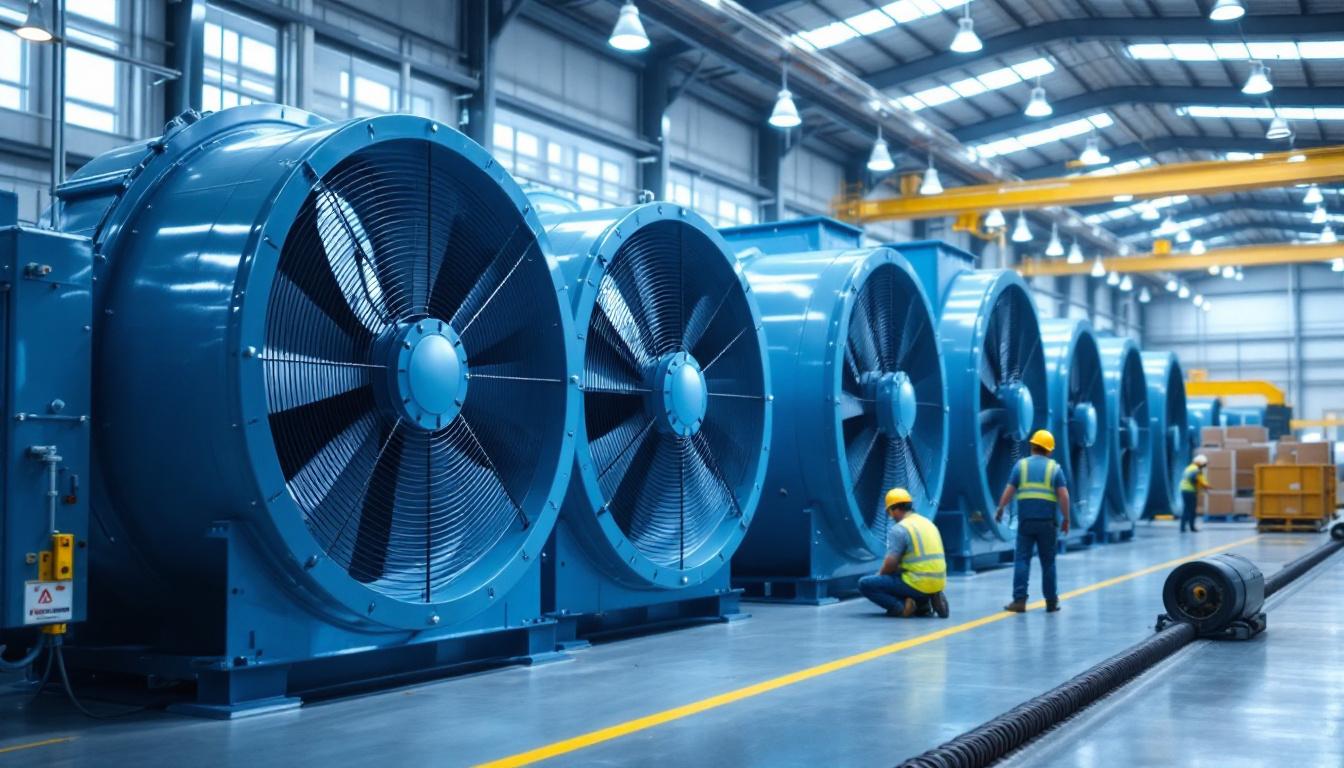
Why Large Fans Matter in Warehouse Environments
Warehouses often span thousands of square feet, with high ceilings and vast open spaces. This architectural setup creates unique challenges for maintaining air circulation and temperature control. Large fans, often called high-volume low-speed (HVLS) fans, have become essential tools in these environments. They move significant amounts of air efficiently, improving comfort, reducing energy costs, and even protecting stored goods.
For lighting contractors stepping into warehouse projects, understanding the role and benefits of large fans is crucial. While your primary focus is lighting, these fans impact the overall workspace environment, which can influence lighting performance, worker productivity, and equipment longevity.
One of the key advantages of HVLS fans is their ability to create a more uniform temperature throughout the warehouse. In large spaces, warm air tends to rise, leaving cooler air at ground level. By circulating the air effectively, these fans help to eliminate temperature stratification, ensuring that workers are comfortable regardless of their position within the facility. This uniformity not only enhances employee satisfaction but can also lead to increased efficiency, as workers are less likely to experience fatigue or discomfort due to temperature fluctuations.
Moreover, the integration of large fans can lead to significant energy savings. Traditional heating and cooling systems often struggle to maintain consistent temperatures in expansive spaces, leading to higher utility bills. HVLS fans complement these systems by redistributing heated or cooled air more effectively, allowing for lower thermostat settings without sacrificing comfort. This synergy not only reduces energy consumption but also extends the lifespan of HVAC equipment, resulting in lower maintenance costs and fewer interruptions in warehouse operations.
How Large Fans Complement Warehouse Lighting
Improved Worker Comfort and Productivity
Warehouse lighting is designed to provide clear visibility, reduce shadows, and minimize glare. However, without proper airflow, workers may feel uncomfortable due to heat buildup, especially near heat-generating lighting fixtures. Large fans help by circulating air gently but effectively, reducing heat pockets and preventing stagnant air zones.
Comfortable workers are more alert and productive. When combined with well-planned lighting, large fans contribute to a safer, more efficient workspace. This synergy between lighting and air movement is often overlooked but can make a significant difference in operational efficiency. In addition to enhancing comfort, the presence of large fans can also improve the overall air quality within the warehouse. By promoting better air circulation, they help to disperse airborne dust and contaminants, which is particularly beneficial in environments where materials are frequently handled. This not only creates a healthier workspace but also reduces the likelihood of respiratory issues among employees, further boosting morale and productivity.
Reducing Heat Stress on Lighting Fixtures
Industrial LED fixtures have become the standard for warehouses due to their energy efficiency and long lifespan. However, even LEDs generate some heat. Large fans help dissipate this heat by improving air circulation around fixtures, potentially extending their operational life and maintaining consistent light output.
By preventing overheating, large fans reduce the risk of premature fixture failure, which in turn lowers maintenance costs and downtime. For lighting contractors, this means fewer callbacks and a more satisfied client. Additionally, the integration of large fans can also lead to energy savings. By maintaining optimal temperatures around lighting fixtures, the fans can help reduce the overall energy consumption of the warehouse. This is particularly relevant in facilities that operate around the clock, where even minor improvements in efficiency can translate into significant cost savings over time. Moreover, the strategic placement of fans can enhance the effectiveness of lighting systems, ensuring that light is evenly distributed across the workspace, which is crucial for tasks requiring precision and attention to detail.
Key Considerations When Specifying Large Fans for Warehouses
Size and Airflow Capacity
Large fans come in various diameters, typically ranging from 8 to 24 feet. The size you choose depends on the warehouse’s ceiling height, square footage, and layout. A fan that’s too small won’t move enough air, while one that’s too large might create uncomfortable drafts. Additionally, the fan’s placement is crucial; fans should be strategically positioned to maximize airflow across the entire space, ensuring that no areas are left stagnant. This is particularly important in warehouses that store temperature-sensitive goods, where uniform air distribution can help maintain product integrity.
Airflow capacity is measured in cubic feet per minute (CFM). For warehouses, the goal is to achieve gentle, uniform airflow rather than strong gusts. Most HVLS fans move between 100,000 and 300,000 CFM, which is sufficient for large open spaces. It’s also essential to consider the specific activities taking place in the warehouse. For instance, areas with high levels of human activity or machinery may require fans with higher airflow rates to mitigate heat buildup and maintain a comfortable working environment. Understanding the operational dynamics of the warehouse can guide the selection of the most appropriate fan size and airflow capacity.
Mounting and Installation Challenges
Ceiling height and structure play critical roles in fan installation. Lighting contractors often work alongside mechanical and electrical teams to coordinate mounting points and power supply. Fans require secure mounting to support their weight and operational vibrations. The structural integrity of the ceiling must be assessed to ensure it can handle the fan’s load, which may involve reinforcing existing beams or installing additional supports. This collaborative approach not only enhances safety but also ensures that the fans operate efficiently without causing undue stress on the building’s framework.
Clearance is another factor. Fans must be installed at a safe distance from lighting fixtures, sprinklers, and other ceiling-mounted equipment. Coordination during the design phase prevents costly rework and ensures both lighting and fans function optimally. Furthermore, considering maintenance access is vital; fans should be positioned to allow easy access for cleaning and repairs, which can prolong their lifespan and maintain performance. A well-planned installation can save time and resources in the long run, creating a more efficient warehouse environment.
Energy Efficiency and Controls Integration
Large fans can significantly reduce heating and cooling costs by improving air distribution. Many modern fans come with variable speed controls and smart sensors that adjust airflow based on temperature and occupancy. This adaptability not only enhances comfort but also promotes energy conservation, which is increasingly important in today’s eco-conscious market. By optimizing airflow, these fans can help maintain consistent temperatures, reducing the workload on HVAC systems and leading to lower energy bills.
Lighting contractors can leverage this by integrating fan controls with lighting control systems. For example, when a zone is unoccupied, both lights and fans can be dimmed or turned off, maximizing energy savings. This integration requires careful planning but offers long-term operational benefits. Additionally, advanced control systems can provide real-time data on energy consumption and environmental conditions, allowing warehouse managers to make informed decisions about their energy use. The combination of intelligent fan systems and lighting controls not only enhances operational efficiency but also contributes to a more sustainable warehouse environment, aligning with broader corporate sustainability goals.
Common Types of Large Fans Used in Warehouses
High-Volume Low-Speed (HVLS) Fans
HVLS fans are the most popular choice for warehouses. Their large blades rotate slowly, moving a massive volume of air without creating disruptive noise or drafts. These fans improve air stratification, pushing warm air down during winter and creating a cooling breeze in summer.
Their quiet operation and energy efficiency make them ideal for environments where workers need concentration and comfort.
Industrial Ceiling Fans
Smaller than HVLS fans but still effective, industrial ceiling fans are often used in warehouses with lower ceilings or segmented areas. They provide targeted airflow and can be installed in multiples to cover larger spaces.
While they don’t move as much air as HVLS fans, they are easier to install and can complement existing ventilation systems.
Wall-Mounted and Pedestal Fans
In some warehouses, large ceiling fans aren’t feasible due to structural constraints. Wall-mounted or pedestal fans offer flexible alternatives. These fans provide directional airflow and can be repositioned as needed.
Though less efficient for large spaces, they are useful for spot cooling or improving air circulation in specific zones.
Installation Best Practices for Lighting Contractors
Coordinate Early with Mechanical and HVAC Teams
Large fan installation involves electrical wiring, structural support, and sometimes integration with HVAC systems. Lighting contractors should engage mechanical and HVAC professionals early to align on installation timelines, power requirements, and mounting locations.
This collaboration prevents conflicts and ensures that lighting and fans don’t interfere with each other’s performance or maintenance access.
Plan Power Supply and Controls Access
Large fans typically require dedicated power circuits and may have control panels or interfaces that need to be accessible. Lighting contractors should verify power availability and routing during the electrical design phase.
Ensuring that fan controls can be integrated with lighting controls or building management systems adds value to the project and simplifies ongoing operations.
Maintain Clearances and Safety Standards
Fans must be installed with adequate clearance from lighting fixtures, fire suppression systems, and signage. OSHA and local building codes provide guidelines on safe distances and mounting heights.
During installation, verify that fan blades have sufficient space to rotate freely without obstruction. This reduces wear and prevents accidents.
Maintenance and Troubleshooting Tips
Routine Inspection and Cleaning
Dust and debris can accumulate on fan blades and motors, reducing efficiency and increasing noise. Regular inspection and cleaning, scheduled alongside lighting maintenance, help keep fans operating smoothly.
Check for loose bolts, unusual vibrations, or wear on electrical components. Early detection of issues prevents costly repairs and downtime.
Addressing Noise and Vibration Issues
Unusual noises or vibrations often indicate imbalanced blades or loose mounting hardware. Balancing fan blades and tightening fasteners can resolve most problems.
If noise persists, consult the manufacturer’s guidelines or a professional technician. Proper maintenance extends fan life and maintains a comfortable warehouse environment.
Updating Controls and Integration
As warehouse technology evolves, updating fan controls to integrate with new lighting or building management systems can improve efficiency. Lighting contractors can offer clients upgrades that enhance automation and energy savings.
Training clients on control system use ensures they get the most from their investment in large fans and lighting.
Conclusion: Adding Value Beyond Lighting
Large fans are more than just mechanical devices; they are integral to creating a comfortable and efficient warehouse environment. For lighting contractors, understanding these fans’ role and installation requirements opens opportunities to provide comprehensive solutions that enhance client satisfaction.
By coordinating with other trades, planning power and control integration, and considering maintenance from the start, lighting contractors can ensure that large fans and lighting systems work hand in hand. This holistic approach not only improves the workspace but also strengthens your reputation as a knowledgeable, reliable partner in warehouse projects.
Illuminate Your Projects with LumenWholesale
Ready to elevate your warehouse lighting solutions? LumenWholesale is here to support lighting contractors like you with premium, spec-grade lighting products at unbeatable wholesale prices. Say goodbye to the middleman and hello to superior lighting products that meet the highest industry standards. With our hassle-free bulk buying and free shipping, you can ensure your projects shine with quality and affordability. Enhance your warehouse environments with lighting that works seamlessly with large fan systems, all while enjoying the convenience and cost savings that only LumenWholesale can offer. Discover wholesale lighting at the best value today and light up your next project with confidence.