Understanding Incandescent Grow Lights and Their Role in Lighting Projects
In the ever-evolving field of horticultural lighting, the choice of grow lights plays a pivotal role in the success of both commercial and residential installations. While LED and fluorescent grow lights have gained significant attention for their energy efficiency and spectrum customization, incandescent grow lights continue to hold a unique position in certain lighting installation projects. For lighting contractors, understanding the characteristics, benefits, and limitations of incandescent grow lights is essential to making informed decisions that enhance project outcomes.
Incandescent grow lights are traditional light bulbs that produce light by heating a tungsten filament until it glows. Unlike specialized horticultural LEDs or high-intensity discharge lamps, incandescent bulbs emit a broad spectrum of light with a strong emphasis on the red and infrared wavelengths. This spectral output can be particularly beneficial for specific stages of plant growth, making incandescent grow lights a valuable tool in certain contexts.
What Makes Incandescent Grow Lights Distinct?
Incandescent bulbs are known for their warm light, typically ranging from 2700K to 3000K in color temperature. This warmth corresponds closely to the red spectrum, which is crucial for flowering and fruiting phases in plants. The continuous spectrum of incandescent light also means there are no gaps in the wavelengths emitted, providing a natural light experience for plants.
For lighting contractors, this spectral quality can be leveraged to complement other light sources in a mixed lighting installation, creating balanced growth environments. Moreover, the simplicity of incandescent grow lights — requiring no ballasts or complex drivers — makes them easy to install and integrate into existing lighting systems.
Another noteworthy aspect of incandescent grow lights is their affordability and widespread availability. They are often less expensive than their LED counterparts, making them an attractive option for hobbyists or small-scale growers who may be working with limited budgets. Additionally, the instant-on capability of incandescent bulbs means that they reach full brightness immediately, which can be beneficial for plants that require immediate light exposure after periods of darkness. This characteristic can be particularly useful in environments where quick adjustments to lighting are necessary, such as in greenhouses or indoor gardens where conditions can change rapidly.
However, it is important to consider the energy consumption of incandescent grow lights, as they are less energy-efficient compared to modern alternatives. They convert a significant amount of energy into heat rather than light, which can lead to increased cooling costs in tightly controlled environments. Lighting contractors must weigh these factors when designing a lighting plan, ensuring that the benefits of using incandescent grow lights are maximized while mitigating potential downsides. Understanding the specific needs of the plants being cultivated, as well as the overall goals of the lighting project, will help in determining the appropriate application of incandescent technology alongside other lighting solutions.
Advantages of Using Incandescent Grow Lights in Installation Projects
Enhanced Flowering and Fruiting Support
One of the primary benefits of incandescent grow lights lies in their ability to promote flowering and fruiting. The red and infrared light emitted by these bulbs stimulates phytochrome receptors in plants, which regulate flowering cycles. Lighting contractors working on projects aimed at maximizing yield during the reproductive phase can use incandescent grow lights to supplement other lighting types, ensuring plants receive the optimal spectrum for these critical stages.
For example, in greenhouse installations where natural sunlight is supplemented with artificial lighting, incandescent grow lights can provide the necessary red spectrum during shorter daylight periods, encouraging robust flowering even in less-than-ideal natural conditions. Furthermore, the warmth generated by incandescent bulbs can also create a microclimate that is beneficial for flowering plants, as it helps to maintain optimal temperatures, particularly during cooler months. This added warmth can enhance the overall health of the plants, leading to more vibrant blooms and a higher quality of fruit production.
Cost-Effective and Simple Installation
From a contractor’s perspective, incandescent grow lights offer a straightforward installation process. Unlike some modern grow lights that require specialized fixtures, ballasts, or drivers, incandescent bulbs fit standard sockets and operate on common voltage levels. This simplicity reduces labor time and complexity, which can translate to cost savings on installation projects.
Additionally, incandescent bulbs are widely available and inexpensive compared to some high-tech grow lighting solutions. This affordability makes them a practical choice for small-scale projects or for clients with budget constraints who still require effective supplemental lighting. The ease of replacement is another significant advantage; should a bulb burn out, it can be quickly swapped out without the need for specialized tools or expertise, ensuring minimal downtime for the plants. This reliability is especially important in commercial setups where every moment counts toward maximizing growth and yield.
Compatibility with Existing Lighting Systems
Many lighting installations involve retrofitting or upgrading existing systems. Incandescent grow lights can be seamlessly integrated into these setups without the need for extensive rewiring or fixture replacement. Their compatibility with standard light sockets and dimmers allows contractors to create hybrid lighting environments that combine the benefits of multiple light sources.
This flexibility is particularly valuable in complex projects where different plant species or growth stages require varied lighting conditions. Contractors can design layered lighting solutions that optimize plant health and energy use. For instance, in a mixed-crop environment, incandescent grow lights can be strategically placed to cater specifically to flowering plants, while other types of lights can be used for leafy greens or seedlings, creating a tailored approach that maximizes the potential of each plant type. This adaptability not only enhances plant growth but also allows for a more efficient use of energy resources, aligning with sustainability goals in modern agricultural practices.
Considerations and Limitations for Lighting Contractors
Energy Efficiency and Heat Output
While incandescent grow lights offer several advantages, lighting contractors must carefully consider their energy consumption and heat generation. Incandescent bulbs are significantly less energy-efficient than LEDs or fluorescent lights, converting a large portion of electrical energy into heat rather than light.
This heat output can be a double-edged sword. In cooler environments, it may reduce heating costs by providing supplemental warmth. However, in controlled environments or warmer climates, excess heat can stress plants and increase cooling costs, complicating climate control strategies.
Shorter Lifespan and Maintenance Requirements
Incandescent bulbs generally have a shorter operational lifespan compared to modern grow lights, often lasting only around 1,000 hours. For lighting contractors managing large-scale or long-term installations, this means more frequent bulb replacements, which can increase maintenance costs and labor over time.
Planning for maintenance accessibility and budgeting for replacement bulbs is essential when incorporating incandescent grow lights into a project. Contractors should communicate these considerations clearly to clients to set appropriate expectations.
Limited Spectrum Control
Unlike LED grow lights, which can be engineered to emit specific wavelengths tailored to plant needs, incandescent grow lights emit a fixed, broad spectrum. This lack of spectral customization limits their use as a standalone solution for all growth stages.
Lighting contractors should view incandescent grow lights as complementary rather than primary light sources in projects that demand precise spectral control. Combining them with other lighting technologies can create balanced environments that meet diverse horticultural requirements.
Practical Applications and Project Examples
Greenhouse Supplemental Lighting
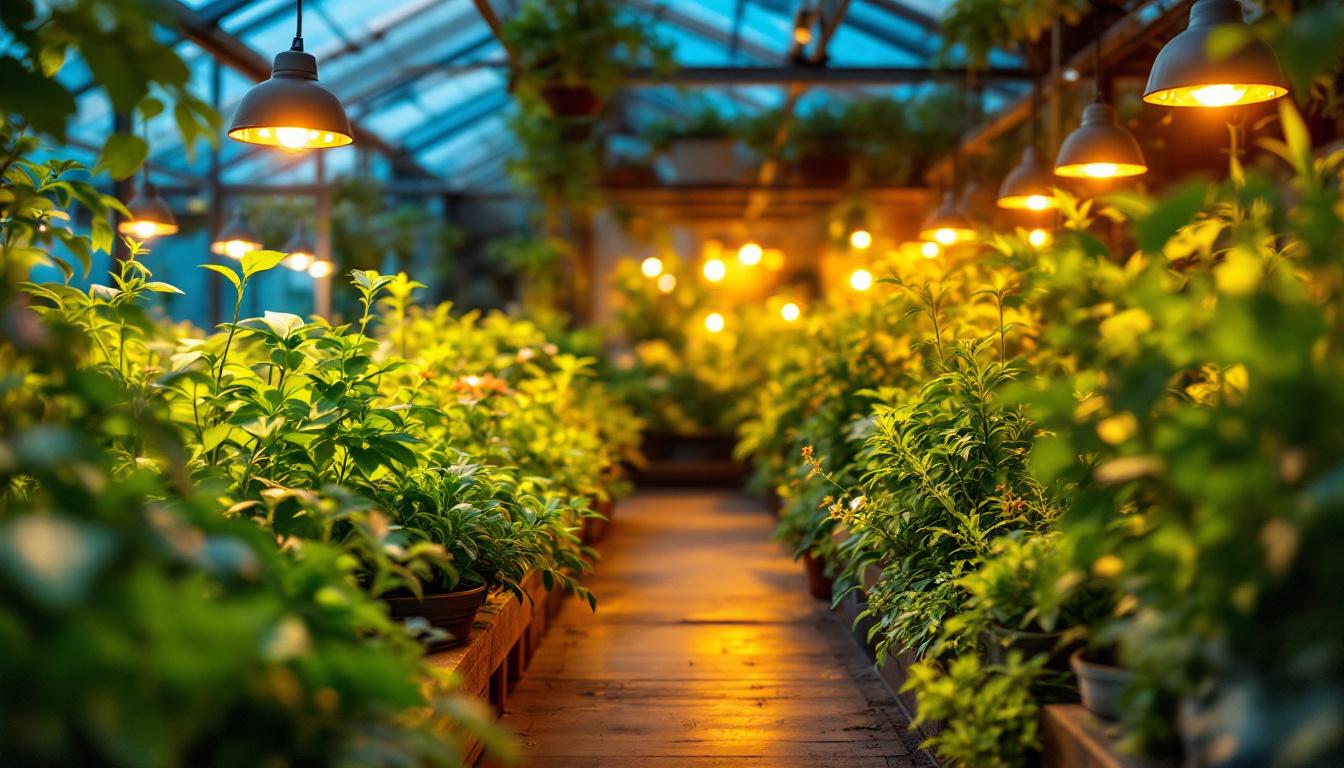
In greenhouse projects, incandescent grow lights serve as effective supplemental lighting during periods of low natural light. Their red spectrum output supports flowering and fruiting, especially in late-season crops or in regions with shorter daylight hours. Lighting contractors can install these bulbs strategically to enhance plant development without overhauling existing lighting infrastructure.
Small-Scale Indoor Gardens and Educational Projects
For smaller-scale installations such as home gardens, educational facilities, or research projects, incandescent grow lights provide an accessible and affordable lighting option. Their ease of installation and operation makes them ideal for environments where simplicity and cost control are priorities.
Contractors working on these projects can recommend incandescent grow lights as part of a mixed lighting strategy, ensuring plants receive adequate light for flowering without the complexity of advanced lighting systems.
Specialty Crop Cultivation
Certain specialty crops, such as flowering herbs or ornamentals, benefit from the warm light spectrum of incandescent bulbs. Lighting contractors involved in niche agricultural projects can leverage incandescent grow lights to fine-tune the lighting environment, enhancing crop quality and market value.
Integrating Incandescent Grow Lights with Modern Technologies
Hybrid Lighting Systems
One of the most effective ways to utilize incandescent grow lights is in hybrid lighting systems that combine multiple light sources. For example, pairing LEDs that provide blue and full-spectrum light with incandescent bulbs that emphasize red wavelengths can create a balanced spectrum that supports all plant growth stages.
Lighting contractors can design these systems to optimize energy efficiency while maintaining the spectral benefits of incandescent lighting. Advanced control systems and dimmers enable fine-tuning of light intensity and duration, further enhancing plant growth outcomes.
Smart Controls and Automation
Incorporating smart lighting controls allows contractors to automate the operation of incandescent grow lights, adjusting their output based on plant needs, time of day, or environmental conditions. This automation reduces energy waste and ensures plants receive consistent, optimal lighting.
Integrating incandescent grow lights into automated systems also simplifies maintenance scheduling by tracking bulb usage and signaling when replacements are due, improving overall project management.
Conclusion: Strategic Use of Incandescent Grow Lights in Lighting Installations
For lighting contractors, incandescent grow lights remain a valuable component in the toolkit for horticultural lighting projects. Their unique spectral qualities, ease of installation, and cost-effectiveness make them suitable for specific applications, particularly when used in conjunction with modern lighting technologies.
Understanding the strengths and limitations of incandescent grow lights enables contractors to design lighting installations that maximize plant health, improve project efficiency, and meet client objectives. By strategically integrating incandescent bulbs into hybrid systems and leveraging smart controls, contractors can deliver lighting solutions that are both effective and adaptable to diverse horticultural needs.
Ultimately, the thoughtful application of incandescent grow lights can enhance the quality and success of lighting installation projects, providing lasting value to both contractors and their clients.
Illuminate Your Projects with LumenWholesale
Ready to elevate your lighting installations with the strategic use of incandescent grow lights? At LumenWholesale, we provide lighting contractors with the highest quality, spec-grade lighting products at prices that can’t be beaten. Say goodbye to middleman markups and hello to a vast selection of reliable lighting solutions that meet rigorous industry standards. With our commitment to affordability and convenience, you’ll enjoy free shipping on bulk orders, ensuring you get the premium lighting you need at the best value. Don’t compromise on quality or cost—choose LumenWholesale for your next project. Wholesale Lighting at the Best Value.