Understanding the Importance of Outdoor Industrial Lighting
Outdoor industrial lighting plays a critical role in ensuring safety, security, and productivity in various commercial and industrial environments. For lighting contractors, selecting the right fixtures is not just about illumination—it’s about meeting stringent regulations, withstanding harsh conditions, and providing long-term value to clients.
Industrial environments such as warehouses, manufacturing plants, loading docks, and large outdoor storage areas require lighting solutions that are robust, energy-efficient, and easy to maintain. The complexity of these environments demands fixtures that can handle extreme temperatures, moisture, dust, and mechanical impact without compromising performance. Additionally, advancements in LED technology have revolutionized outdoor industrial lighting, offering longer lifespans and lower energy consumption compared to traditional lighting options. This not only reduces operational costs but also aligns with sustainability goals, which are increasingly important in today’s eco-conscious market.
Why Outdoor Industrial Lighting Matters to Contractors
Lighting contractors are often tasked with designing and installing systems that comply with occupational safety standards and client expectations. The right fixture choice can reduce installation time, minimize maintenance costs, and improve energy efficiency, all of which contribute to client satisfaction and repeat business. Furthermore, the aesthetic aspect of lighting should not be overlooked; well-designed outdoor lighting can enhance the overall appearance of an industrial site, creating a more welcoming environment for both employees and visitors.
Moreover, industrial lighting impacts worker productivity and safety directly. Poorly lit areas can lead to accidents, reduced operational efficiency, and increased liability. Contractors who understand the nuances of industrial outdoor lighting can advise clients effectively, positioning themselves as trusted experts in the field. They can also offer insights into smart lighting solutions that integrate with existing security systems, providing not only illumination but also surveillance capabilities. This multifaceted approach to lighting design can significantly enhance the overall safety and functionality of an industrial site, making it a vital consideration for any contractor aiming to deliver comprehensive solutions to their clients.
Key Features to Look for in Industrial Outdoor Light Fixtures
When selecting outdoor industrial light fixtures, contractors must consider several technical and practical features to ensure optimal performance and longevity.
Durability and Environmental Resistance
Industrial fixtures must endure exposure to rain, snow, dust, and corrosive substances. Look for fixtures with high ingress protection (IP) ratings, typically IP65 or higher, to guarantee resistance against water and dust intrusion. Materials such as die-cast aluminum or stainless steel housings enhance durability and corrosion resistance.
Additionally, fixtures should be rated for impact resistance (IK rating) to withstand accidental knocks or vibrations common in industrial settings. This resilience reduces the frequency of replacements and repairs, saving time and costs in the long run. Furthermore, consider the temperature tolerance of the fixtures, as extreme heat or cold can affect performance. Many industrial outdoor lights are designed to operate efficiently in a wide range of temperatures, ensuring reliable illumination regardless of seasonal changes.
Energy Efficiency and Lighting Quality
Energy consumption is a significant operational expense for industrial facilities. LED technology has become the standard for outdoor industrial lighting due to its superior energy efficiency, longer lifespan, and better light quality compared to traditional HID or fluorescent lamps.
Contractors should prioritize fixtures with high luminous efficacy (measured in lumens per watt) and excellent color rendering index (CRI) to ensure clear visibility and accurate color perception. These factors contribute to safer working environments and can enhance worker morale. Moreover, the ability to adjust the color temperature of LED fixtures can be particularly beneficial; warmer tones can create a more inviting atmosphere, while cooler tones can enhance alertness and focus, making it essential to choose fixtures that offer this flexibility to meet various operational needs.
Ease of Installation and Maintenance
Time is money for contractors. Fixtures designed for straightforward installation, with features like adjustable mounting brackets, quick-connect wiring, and modular components, can significantly reduce labor hours. Additionally, fixtures that allow easy access to LEDs or drivers simplify maintenance and minimize downtime.
Some modern fixtures also incorporate smart technologies such as remote monitoring and control, enabling predictive maintenance and energy management, which can be a selling point for contractors advising clients on future-proof solutions. The integration of sensors for motion detection and daylight harvesting can further optimize energy use, automatically adjusting light levels based on occupancy and natural light availability. This not only enhances efficiency but also contributes to sustainability goals, making it an attractive feature for environmentally conscious businesses.
Popular Types of Outdoor Industrial Light Fixtures
Understanding the common types of fixtures helps contractors tailor lighting solutions to specific industrial applications.
High Bay and Low Bay Lights
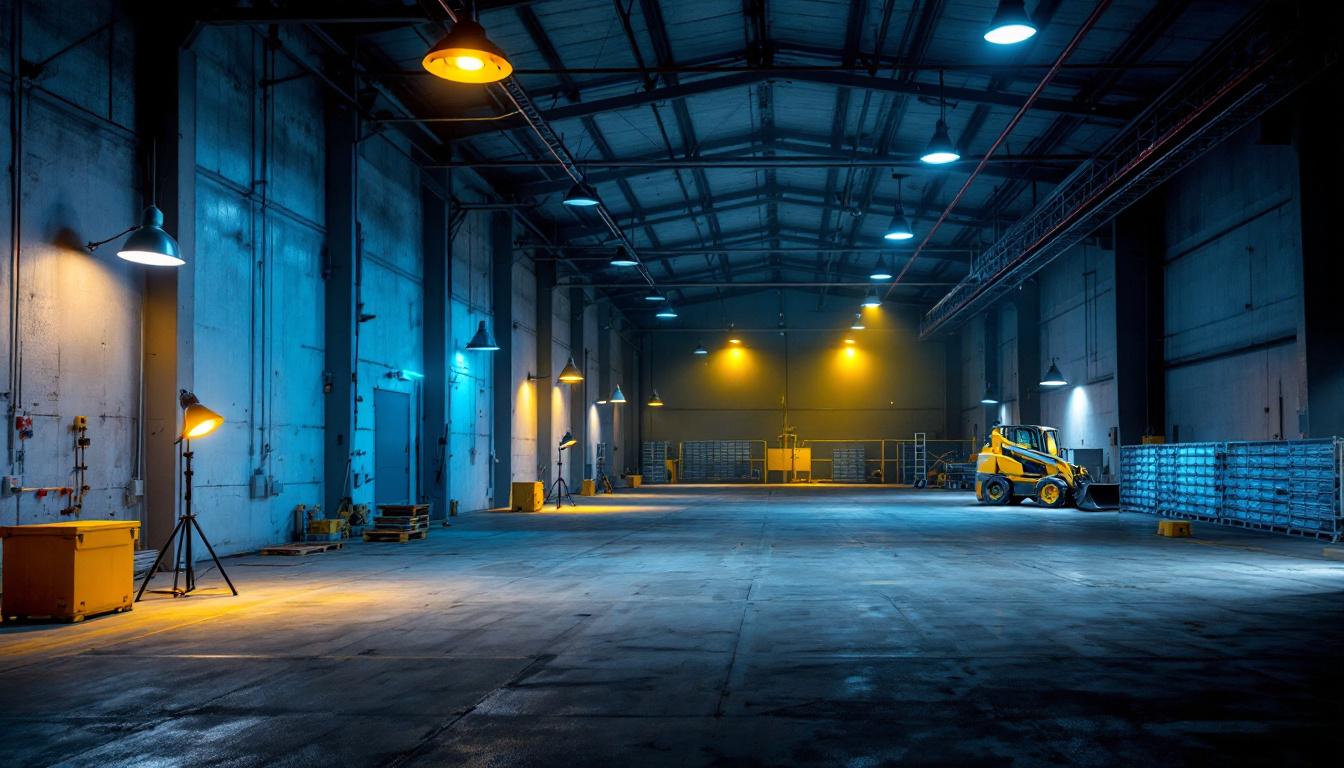
High bay lights are designed for spaces with ceilings typically above 20 feet, such as warehouses and manufacturing floors. They provide broad, uniform illumination over large areas. Low bay lights, on the other hand, are suited for ceiling heights below 20 feet, such as loading docks or covered outdoor areas.
LED high bay fixtures often come with adjustable beam angles and dimming options, offering flexibility to meet diverse lighting needs while optimizing energy use. Additionally, many high bay lights are designed with advanced thermal management systems, ensuring they operate efficiently even in high-temperature environments, which is crucial for maintaining longevity and performance in industrial settings.
Floodlights and Area Lights
Floodlights are ideal for illuminating large outdoor areas such as parking lots, yards, and building perimeters. They deliver high-intensity, wide-angle light that enhances security and visibility. Area lights, which are often mounted on poles or walls, provide focused illumination for pathways, entrances, and specific zones.
Both types benefit from LED technology’s longevity and energy savings, and many models include features like motion sensors and photocells for automated operation. Furthermore, the integration of smart technology allows for remote monitoring and control, enabling facility managers to adjust lighting based on real-time conditions, thus enhancing safety and reducing energy costs.
Wall Packs and Canopy Lights
Wall packs are mounted on exterior walls to illuminate building exteriors, walkways, and loading areas. They offer a compact design with directed light to minimize light pollution and glare. Canopy lights are installed under overhead structures such as gas station canopies or loading dock roofs, providing uniform downlighting in sheltered outdoor spaces.
Choosing fixtures with appropriate shielding and optics ensures compliance with local lighting ordinances and reduces light trespass, a growing concern in urban and suburban industrial zones. Additionally, many wall packs and canopy lights now feature enhanced durability ratings, making them resistant to harsh weather conditions, impacts, and corrosion, which is essential for maintaining consistent performance in outdoor environments. The use of energy-efficient LEDs in these fixtures not only lowers operational costs but also contributes to sustainability efforts by reducing the overall carbon footprint of industrial operations.
Best Practices for Lighting Contractors When Specifying Outdoor Industrial Fixtures
Lighting contractors can streamline their project workflows and enhance client satisfaction by following best practices during specification and installation.
Conduct Thorough Site Assessments
Understanding the unique characteristics of each site is essential. Contractors should evaluate ceiling heights, mounting options, ambient light levels, and environmental conditions. This information guides fixture selection, placement, and lighting levels.
Additionally, assessing client needs such as security requirements, operational hours, and energy budgets helps tailor solutions that align with business objectives.
Adhere to Relevant Standards and Codes
Compliance with standards such as the Illuminating Engineering Society (IES) guidelines and local electrical codes is non-negotiable. These standards ensure adequate illumination levels, uniformity, and safety.
Contractors should also be aware of energy codes and rebate programs that can influence fixture choices and project costs. Incorporating these considerations early can streamline approvals and maximize client incentives.
Leverage Technology for Enhanced Control and Efficiency
Integrating controls such as occupancy sensors, daylight harvesting, and programmable timers can significantly reduce energy consumption. These technologies also extend fixture life by reducing operating hours when full illumination is unnecessary.
Smart lighting systems enable remote monitoring and diagnostics, allowing contractors to offer value-added services such as maintenance alerts and performance reporting, strengthening client relationships.
Challenges and Solutions in Outdoor Industrial Lighting Projects
Lighting contractors often face challenges unique to outdoor industrial environments but can overcome them with informed strategies.
Managing Harsh Environmental Conditions
Extreme temperatures, moisture, and dust can degrade lighting fixtures prematurely. Selecting products with appropriate IP and IK ratings, as well as corrosion-resistant materials, is essential. Additionally, ensuring proper sealing and ventilation during installation prevents ingress of contaminants.
Balancing Cost and Quality
While budget constraints are common, compromising on fixture quality can lead to higher lifecycle costs. Contractors should emphasize total cost of ownership, highlighting energy savings, reduced maintenance, and longer warranties offered by premium LED fixtures.
Providing clients with clear, data-backed comparisons helps justify upfront investments and fosters trust.
Ensuring Proper Light Distribution and Minimizing Glare
Poorly designed lighting can cause glare, shadows, and light pollution, affecting worker comfort and neighboring properties. Utilizing fixtures with advanced optics and shielding helps direct light precisely where needed.
Contractors should also consider fixture placement and aiming angles during design to optimize lighting uniformity and minimize unwanted spill light.
Conclusion: Empowering Lighting Contractors with Knowledge and Tools
Outdoor industrial lighting is a specialized field that demands a deep understanding of technical specifications, environmental challenges, and client needs. By focusing on durable, energy-efficient fixtures with smart features, contractors can deliver solutions that enhance safety, reduce costs, and comply with regulations.
Staying informed about the latest technologies, standards, and best practices empowers contractors to simplify complex lighting projects and provide exceptional value to industrial clients. Ultimately, this expertise not only streamlines installations but also builds lasting professional reputations in a competitive market.
Get Your Industrial Outdoor Lighting at LumenWholesale
Ready to elevate your lighting projects with fixtures that promise durability, efficiency, and smart technology integration? Look no further than LumenWholesale for an exceptional range of industrial outdoor lighting solutions. Our spec-grade products are designed to meet the rigorous demands of any industrial environment, ensuring you can deliver on safety, performance, and cost-effectiveness for your clients. With unbeatable wholesale prices and the convenience of free shipping on bulk orders, LumenWholesale is your go-to source for premium lighting without the premium price tag. Discover wholesale lighting at the best value today and light up your projects with confidence.