Understanding the Basics: T8 vs. T12 Bulbs
Before diving into compatibility questions, it’s essential to grasp the fundamental differences between T8 and T12 bulbs. Both are fluorescent tubes, but their design, performance, and electrical requirements vary significantly.
T12 bulbs have a diameter of 1.5 inches (12 eighths of an inch, hence the name T12), while T8 bulbs are slimmer at 1 inch in diameter. This difference affects not only the physical fit but also the electrical characteristics and light output. The narrower design of T8 bulbs allows for a more efficient use of electricity, which can translate into lower energy costs over time.
Typically, T12 fixtures were designed for older technology ballasts and operate at a different current and voltage than T8 bulbs. This distinction is crucial when considering interchangeability. Moreover, T8 bulbs often provide a higher lumen output per watt, making them a more energy-efficient choice for many applications. This efficiency not only contributes to reduced electricity bills but also aligns with modern energy-saving initiatives and regulations aimed at minimizing environmental impact.
In addition to their physical and electrical differences, T8 and T12 bulbs also vary in terms of their color temperature and light quality. T8 bulbs are available in a wider range of color temperatures, from warm white to cool daylight, allowing for more versatility in lighting design. This flexibility can enhance the ambiance of a space, whether in a home, office, or retail environment. Furthermore, advancements in technology have led to the development of T8 LED replacements, which offer even greater energy savings and longer lifespans, further encouraging a shift away from the older T12 systems.
Another important aspect to consider is the environmental implications of using these bulbs. T12 bulbs contain higher levels of mercury compared to T8 bulbs, which can pose disposal challenges and environmental hazards. As awareness of sustainability grows, many businesses and homeowners are opting for T8 or LED options to reduce their ecological footprint. This shift not only supports a healthier planet but also aligns with government incentives and rebates aimed at promoting energy-efficient lighting solutions.
Physical Compatibility: Can a T8 Bulb Fit Into a T12 Fixture?
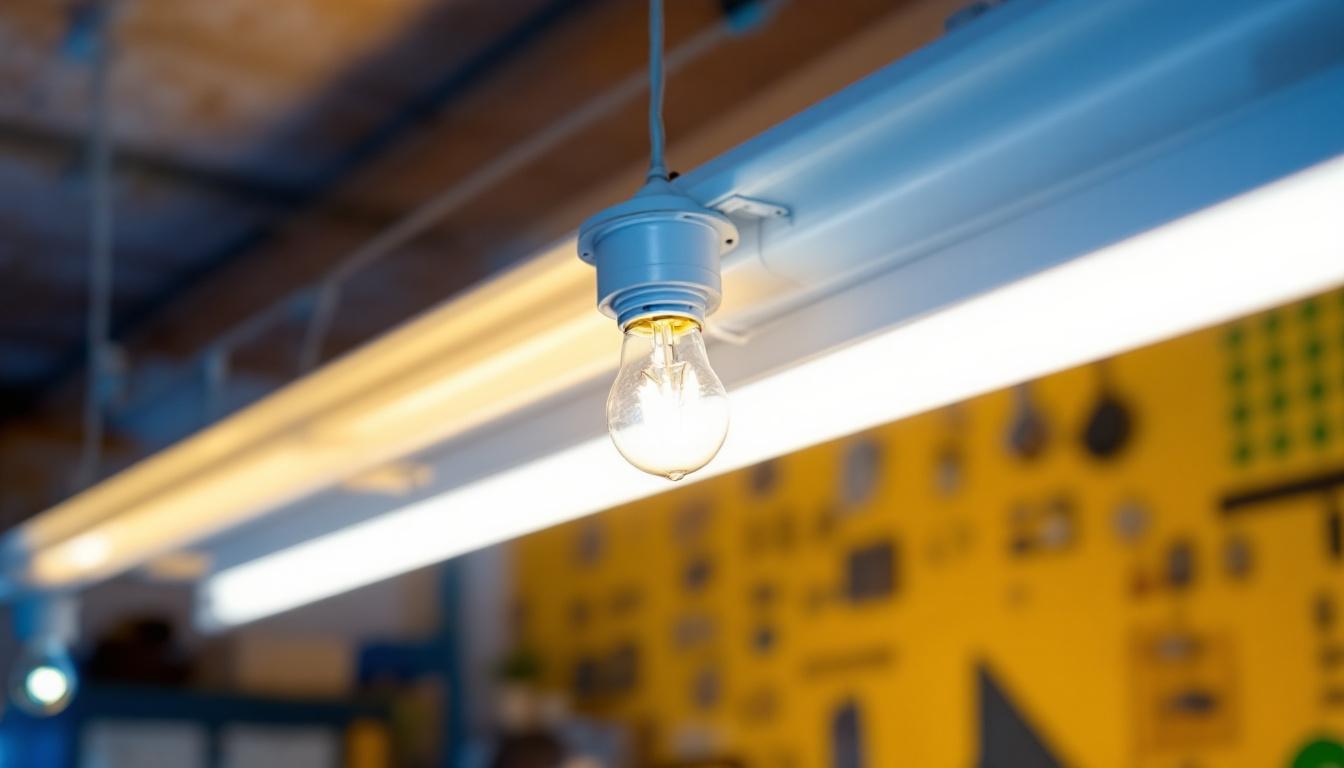
At first glance, the size difference suggests that a T8 bulb might not physically fit into a T12 fixture. However, many T12 fixtures use standard bi-pin sockets that can accept T8 bulbs. The smaller diameter of the T8 means it will fit into the socket, but there’s a catch: the bulb may not sit securely or align perfectly within the fixture’s reflector and housing.
Lighting contractors should inspect the fixture’s socket type and fixture design carefully. While T8 bulbs can often be inserted into T12 sockets, the fit might be loose, causing issues with electrical contact or mechanical stability.
Fixture Reflector and Aesthetic Considerations
The reflector inside a T12 fixture is typically designed to optimize the light distribution of a larger diameter tube. Using a slimmer T8 bulb can result in uneven light dispersion or unwanted shadows, which might affect the quality of illumination in commercial or industrial settings.
For projects where lighting quality and uniformity are critical, this factor alone can justify replacing the fixture entirely rather than just swapping bulbs. Additionally, the color temperature of the T8 bulb may differ from that of the T12, leading to potential mismatches in lighting aesthetics. For example, if a T12 fixture originally housed a warm white bulb, switching to a cooler T8 could create an unintentional contrast that might not be visually appealing in spaces such as retail environments or art galleries, where lighting plays a crucial role in the overall ambiance.
Moreover, energy efficiency is another aspect to consider. T8 bulbs are generally more energy-efficient than their T12 counterparts, which can lead to cost savings in the long run. However, if the fixture is not optimized for the T8 bulb, the potential energy savings may not be fully realized. Therefore, it is essential to weigh the benefits of energy efficiency against the possible drawbacks of improper fit and light quality when deciding whether to mix bulb types in existing fixtures.
Electrical Compatibility: Ballasts and Wiring
The most significant challenge in using T8 bulbs in T12 fixtures lies in the ballast. T12 fixtures generally come equipped with magnetic ballasts designed for the electrical characteristics of T12 tubes. T8 bulbs, on the other hand, are optimized for electronic ballasts that operate at higher frequencies and different voltages.
Attempting to use a T8 bulb with a T12 magnetic ballast can lead to several problems:
- Reduced bulb life: The mismatch stresses the bulb, shortening its operational lifespan.
- Flickering or dim lighting: The ballast may fail to provide the correct starting voltage or current.
- Energy inefficiency: The system will not run at optimal efficiency, leading to higher energy costs.
For lighting contractors, this means that simply swapping bulbs without addressing ballast compatibility is rarely advisable.
Options for Ballast Compatibility
There are two main approaches to ensure electrical compatibility when upgrading from T12 to T8 bulbs:
- Replace the ballast: Installing an electronic ballast designed for T8 tubes is the most straightforward and reliable solution. It ensures proper current regulation and improves energy efficiency.
- Use ballast bypass (direct wire) T8 bulbs: Some T8 tubes are designed to operate without a ballast. This requires rewiring the fixture to supply line voltage directly to the bulb’s pins. This method can be cost-effective but demands careful installation and adherence to electrical codes.
Both options require careful planning and execution. Contractors must evaluate the condition of existing fixtures and weigh the costs of ballast replacement or rewiring against the benefits of improved lighting performance and energy savings.
Energy Efficiency and Cost Implications
One of the primary motivations for switching from T12 to T8 lighting is energy efficiency. T8 bulbs typically consume less power while providing equal or better light output. Additionally, electronic ballasts used with T8 tubes are more efficient than the older magnetic ballasts found in T12 fixtures.
However, if a T8 bulb is used in a T12 fixture without upgrading the ballast, these energy savings are lost. The system may even consume more power due to inefficiencies and the need for higher starting voltages.
Lighting contractors should present clients with a clear cost-benefit analysis that includes:
- Initial costs of bulb and ballast replacement
- Projected energy savings over the bulb’s lifespan
- Maintenance and replacement frequency
- Potential rebates or incentives for upgrading to energy-efficient lighting
Properly executed upgrades can reduce energy consumption by up to 40% compared to legacy T12 systems, making the investment worthwhile in many commercial and industrial applications.
Safety and Code Compliance
Electrical safety is paramount when modifying lighting systems. Using T8 bulbs in T12 fixtures without addressing ballast compatibility can lead to overheating, electrical arcing, or premature failure-risks that compromise safety.
Moreover, many local electrical codes and industry standards have specific requirements for lighting upgrades. For example, some jurisdictions mandate the removal of T12 magnetic ballasts when switching to T8 tubes or require certain wiring practices for ballast bypass installations.
Lighting contractors must be familiar with these regulations to ensure compliance and avoid liability. Consulting the National Electrical Code (NEC) and local amendments is a necessary step before undertaking any retrofit.
Labeling and Documentation
When upgrading fixtures or bulbs, proper labeling is essential. This includes documenting the ballast type, bulb specifications, and any modifications made to the wiring. Clear labeling helps future maintenance personnel understand the system and prevents accidental mismatches.
When Is It Worthwhile to Retrofit T12 Fixtures with T8 Bulbs?
Retrofitting can be a cost-effective way to improve lighting performance without a full fixture replacement. However, success depends on several factors:
- Fixture condition: Older fixtures may have deteriorated sockets or reflectors, reducing the benefits of bulb upgrades.
- Ballast condition: If the existing ballast is nearing end-of-life or incompatible, replacement is necessary.
- Project budget and timeline: Retrofitting can be quicker and less expensive than full fixture replacement but may offer less long-term savings.
- Client goals: Whether the priority is energy savings, light quality, or aesthetics will influence the approach.
In many cases, contractors find that a full fixture upgrade to modern LED systems provides better performance, longer lifespan, and easier maintenance. Still, retrofitting with T8 bulbs and compatible ballasts remains a viable option in certain scenarios.
Practical Tips for Lighting Contractors
When advising clients or performing installations involving T8 and T12 systems, consider the following checklist:
- Inspect the fixture: Check socket type, reflector condition, and overall fixture integrity.
- Identify the ballast: Determine if it’s magnetic or electronic and whether it’s compatible with T8 bulbs.
- Evaluate bulb fit: Confirm that the T8 bulb will physically fit and operate safely within the fixture.
- Consider rewiring: If using ballast bypass T8 tubes, plan wiring modifications carefully.
- Check local codes: Ensure all work complies with electrical and safety regulations.
- Communicate with the client: Explain the benefits, limitations, and costs of different upgrade options.
- Document changes: Label fixtures and update maintenance records accordingly.
Following this approach helps avoid common pitfalls and ensures a successful lighting upgrade that meets client expectations.
Conclusion: Making the Right Choice
Using T8 bulbs in T12 fixtures is not a simple plug-and-play solution. While physical installation might be possible, electrical compatibility and lighting performance issues often require ballast replacement or rewiring. Contractors must assess each project individually, balancing cost, safety, energy efficiency, and client needs.
In many cases, investing in new fixtures or complete LED retrofits offers the best long-term value. However, when budgets or timelines are tight, upgrading ballasts and installing T8 bulbs can be a practical interim solution. The key is thorough evaluation and adherence to best practices.
Ultimately, the decision should prioritize safety, compliance, and optimal lighting quality-ensuring that every installation delivers reliable performance and satisfaction.
Upgrade Your Lighting with LumenWholesale
Ready to take your lighting projects to the next level? At LumenWholesale, we provide lighting contractors with the highest quality, spec-grade lighting products at unbeatable wholesale prices. Say goodbye to local distributor markups and hello to our extensive selection that meets the highest industry standards. Whether you’re retrofitting T12 fixtures with T8 bulbs or embarking on a complete LED overhaul, we have the reliable, high-performance lighting you need. Plus, with free shipping on bulk orders, you can stock up on premium lighting at the best value — all without hidden fees or compromises. Don’t wait to enhance your lighting solutions. Visit LumenWholesale now for Wholesale Lighting at the Best Value and experience the perfect blend of quality, affordability, and convenience.