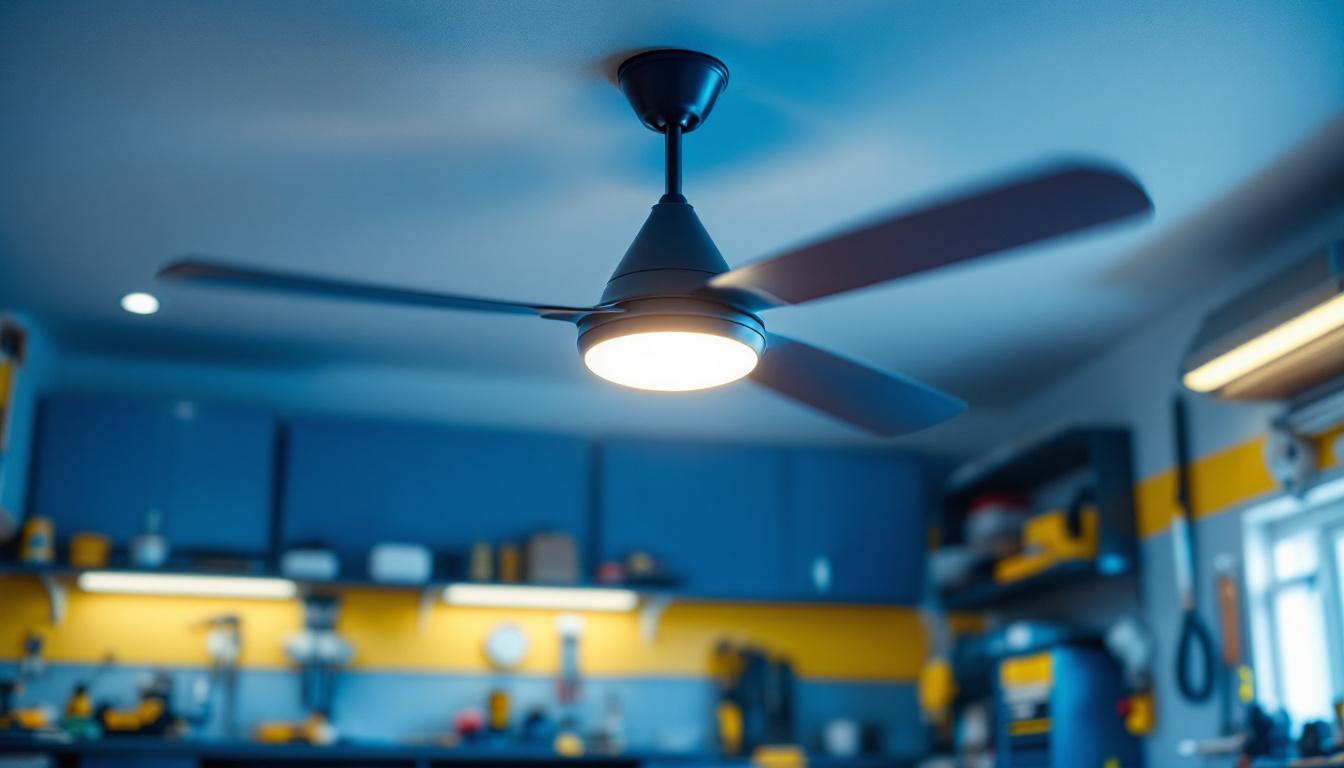
Introduction: Why Garage Ceiling Fans with Lights Matter
For lighting contractors, the garage space presents unique challenges and opportunities. Unlike typical residential or commercial rooms, garages often combine the need for effective illumination with ventilation and temperature control. Installing ceiling fans with integrated lighting in garages is a smart solution that addresses multiple needs simultaneously.
Garage ceiling fans with lights not only improve air circulation but also provide essential task lighting, enhancing both comfort and functionality. This dual-purpose fixture is increasingly popular among homeowners seeking to upgrade their garages into more usable spaces—whether for workshops, storage, or recreational areas. With the right ceiling fan, homeowners can transform their garages into inviting environments that are conducive to a variety of activities, from DIY projects to family gatherings.
Moreover, the versatility of these fixtures allows for customization in terms of design and functionality. Many models come with adjustable speeds, remote controls, and even smart home compatibility, enabling users to tailor their lighting and airflow to suit specific tasks or moods. This adaptability is particularly beneficial in garages, where different activities may require varying levels of light and air movement. For instance, a homeowner working on a detailed project may need bright, focused light, while a gathering with friends might call for softer, ambient lighting.
Understanding the technical, aesthetic, and safety considerations involved in these installations is crucial for contractors aiming to deliver high-quality, code-compliant, and customer-satisfying results. Proper installation not only ensures that the ceiling fan operates efficiently but also enhances the overall safety of the garage environment. Factors such as the fan’s height, the type of lighting used, and the electrical requirements must all be carefully evaluated to prevent potential hazards. Furthermore, selecting energy-efficient LED lights can significantly reduce electricity costs while providing long-lasting illumination, making it an eco-friendly choice that resonates with many homeowners today.
Key Considerations Before Installation
Assessing Garage Environment and Usage
Before selecting a garage ceiling fan with lights, contractors must evaluate the garage’s size, purpose, and environmental conditions. Garages can vary widely—from small single-car spaces to large multi-car workshops. The intended use directly influences the type and capacity of fan and lighting required.
For example, a garage used primarily for vehicle storage may require less powerful lighting but more effective ventilation to reduce humidity and fumes. Conversely, a garage converted into a workspace demands brighter, more focused lighting and a fan capable of maintaining consistent airflow during extended use. Additionally, if the garage serves as a hobby area for woodworking or automotive repairs, the need for specialized lighting that minimizes shadows becomes crucial, as this can significantly enhance precision and safety during intricate tasks.
Furthermore, the climate in which the garage is located plays a pivotal role in determining the fan’s efficiency and the type of lighting to install. In warmer climates, a fan with a higher CFM (cubic feet per minute) rating may be necessary to ensure adequate airflow, while in cooler regions, heaters integrated with lighting can provide both warmth and illumination, making the space usable year-round.
Understanding Electrical and Structural Constraints
Contractors must also consider the existing electrical wiring and ceiling structure. Garages often have limited electrical outlets and may lack ceiling-mounted junction boxes designed for fan installations. Ensuring that the electrical supply can safely handle the combined load of a fan and lighting fixture is essential.
Moreover, the ceiling height and framing affect fan placement and mounting options. Low ceilings may require flush-mount fans or those with shorter downrods, while higher ceilings might benefit from longer downrods to optimize airflow. It’s also important to assess the structural integrity of the ceiling; older garages may have beams or trusses that could limit the installation options. In such cases, reinforcement may be necessary to support the weight of heavier fixtures, ensuring both safety and functionality.
Compliance with Building Codes and Safety Standards
Adherence to local building codes and electrical standards is non-negotiable. Many jurisdictions have specific requirements regarding fan installation height, wiring methods, and lighting fixture types in garages. For instance, fans installed in garages must often be rated for damp or dusty environments and equipped with appropriate grounding.
Contractors should also verify that the lighting components meet energy efficiency standards and use bulbs compatible with dimmers or smart controls if requested by clients. This consideration not only enhances user experience but can also lead to significant energy savings over time. Additionally, integrating motion sensors or timers can provide added convenience and security, ensuring that lights are only on when needed, which is particularly beneficial in garages that may not be used daily.
Choosing the Right Garage Ceiling Fan with Lights
Fan Size and Airflow Capacity
Selecting the correct fan size is critical for effective ventilation. Fans are rated by blade span and airflow volume, measured in cubic feet per minute (CFM). For garages, a fan with a blade span between 42 and 52 inches is typically ideal, balancing airflow and clearance.
Higher CFM ratings are necessary for larger garages or those with poor natural ventilation. A fan capable of moving 4,000 to 6,000 CFM can significantly improve air quality and comfort.
Lighting Type and Brightness
Lighting integrated into garage ceiling fans should provide sufficient illumination for the space’s intended tasks. LED lighting is the preferred choice for its energy efficiency, longevity, and brightness. Contractors should aim for fixtures offering adjustable brightness levels to accommodate different activities.
Color temperature is another important factor. Cooler white light (4000K to 5000K) is generally better for garages, as it mimics daylight and enhances visibility, which is especially beneficial for detailed work.
Durability and Maintenance Features
Garages are often exposed to dust, humidity, and temperature fluctuations. Fans and lights designed for such environments should feature sealed motor housings, corrosion-resistant blades, and easy-to-clean surfaces. Maintenance-friendly designs reduce service calls and improve customer satisfaction.
Additionally, models with remote controls or wall switches that integrate fan speed and lighting control provide convenience and flexibility.
Installation Best Practices for Lighting Contractors
Pre-Installation Planning and Preparation
Thorough planning is essential to avoid costly mistakes. Contractors should begin by confirming power availability and verifying ceiling structure integrity. Installing a suitable mounting bracket or fan-rated electrical box is mandatory to support the weight and vibration of the fan.
Measuring the ceiling height and determining the optimal fan location ensures maximum airflow and lighting coverage. It is also advisable to discuss with the client any preferences regarding fan speed settings, lighting control options, and aesthetics.
Wiring and Safety Protocols
Proper wiring is critical for safety and functionality. Contractors must follow the National Electrical Code (NEC) guidelines, ensuring that fan and light circuits are correctly grounded and protected by appropriate breakers. Using wire connectors rated for the environment and securing all connections within junction boxes is standard practice.
When integrating lighting with fans, it’s important to separate fan and light controls if the client desires independent operation. This may require additional wiring or compatible fan/light combo units designed for dual control.
Mounting and Balancing the Fan
Secure mounting prevents wobbling and noise, which can be common complaints in garage fan installations. Contractors should use manufacturer-supplied mounting hardware and verify that the fan is level before finalizing installation.
Balancing kits are often included with fans and should be used to correct any blade imbalance. This step enhances performance and prolongs the fan’s lifespan.
Testing and Client Walkthrough
After installation, it is vital to test all functions—fan speeds, light brightness, and control responsiveness. Contractors should confirm that the fan operates quietly and that the lighting meets the client’s expectations.
Providing a walkthrough to demonstrate operation and maintenance tips helps build trust and ensures client satisfaction. Offering guidance on cleaning schedules and bulb replacement can also reduce future service calls.
Enhancing Garage Functionality with Smart Features
Integrating Smart Controls and Automation
Modern garage ceiling fans with lights increasingly offer smart technology integration. Lighting contractors can add value by installing fans compatible with Wi-Fi or Bluetooth controls, enabling clients to operate fans and lights via smartphone apps or voice assistants.
Smart features can include programmable schedules, motion sensors, and temperature-based fan speed adjustments, all of which enhance energy efficiency and convenience.
Energy Efficiency and Sustainability Considerations
Energy-efficient fans and LED lighting reduce operating costs and environmental impact. Contractors should prioritize ENERGY STAR® certified products when possible and educate clients on the benefits of upgrading to efficient fixtures.
Incorporating dimmable LEDs and variable-speed fans allows for tailored energy use, further optimizing sustainability without compromising performance.
Common Challenges and Solutions
Dealing with Low Ceilings
Low garage ceilings can limit fan options. In such cases, contractors should recommend low-profile or flush-mount ceiling fans with integrated lights. These models minimize clearance issues while still providing adequate airflow and illumination.
Ensuring the fan blades have sufficient clearance from walls and stored items is also important to prevent damage and maintain safety.
Addressing Dust and Debris Accumulation
Garages tend to accumulate dust and debris, which can impair fan and light performance. Selecting fans with sealed motors and easy-to-clean blades helps mitigate this issue.
Contractors should advise clients on regular cleaning routines and consider installing air filtration or dust control systems if the garage is heavily used for dusty activities.
Ensuring Adequate Lighting Coverage
Sometimes, a single fan light may not provide enough illumination for larger or irregularly shaped garages. In these cases, contractors can recommend supplemental lighting options such as wall-mounted fixtures or additional ceiling lights to complement the fan light.
Using adjustable or directional LED lights can also help focus illumination where it’s most needed.
Conclusion: Delivering Value Through Expertise
Garage ceiling fans with lights represent a valuable upgrade for many homeowners, combining improved air circulation with essential lighting. For lighting contractors, mastering the selection, installation, and customization of these fixtures is key to meeting client needs and enhancing garage usability.
By carefully assessing the garage environment, adhering to safety codes, choosing the right products, and employing best installation practices, contractors can ensure successful projects that stand the test of time. Incorporating smart features and energy-efficient options further positions contractors as trusted advisors in the evolving home improvement landscape.
Ultimately, the comprehensive checklist and insights provided here empower lighting contractors to confidently tackle garage ceiling fan with light installations, delivering superior results that delight clients and elevate professional reputation.
Get Your Premium Garage Lighting Fixtures at LumenWholesale
Ready to elevate your lighting projects with the best garage ceiling fans with lights? Look no further than LumenWholesale, where we specialize in providing contractors with superior, spec-grade lighting products at unbeatable wholesale prices. Our extensive selection is designed to meet the highest industry standards, ensuring your installations are reliable and high-performing. With the convenience of bulk buying and the benefit of free shipping, you can trust LumenWholesale to supply premium lighting solutions at the best value. Don’t let middleman markups impact your bottom line. Choose quality, affordability, and convenience for your next project. Visit Wholesale Lighting at the Best Value and make LumenWholesale your go-to source for all your lighting needs.