Understanding the Fundamentals of Workplace Lighting
Lighting in the workplace is far more than just illuminating a space; it directly impacts employee productivity, safety, and well-being. For lighting contractors, grasping the core principles of workplace lighting is essential to designing and installing systems that meet both regulatory standards and client expectations.
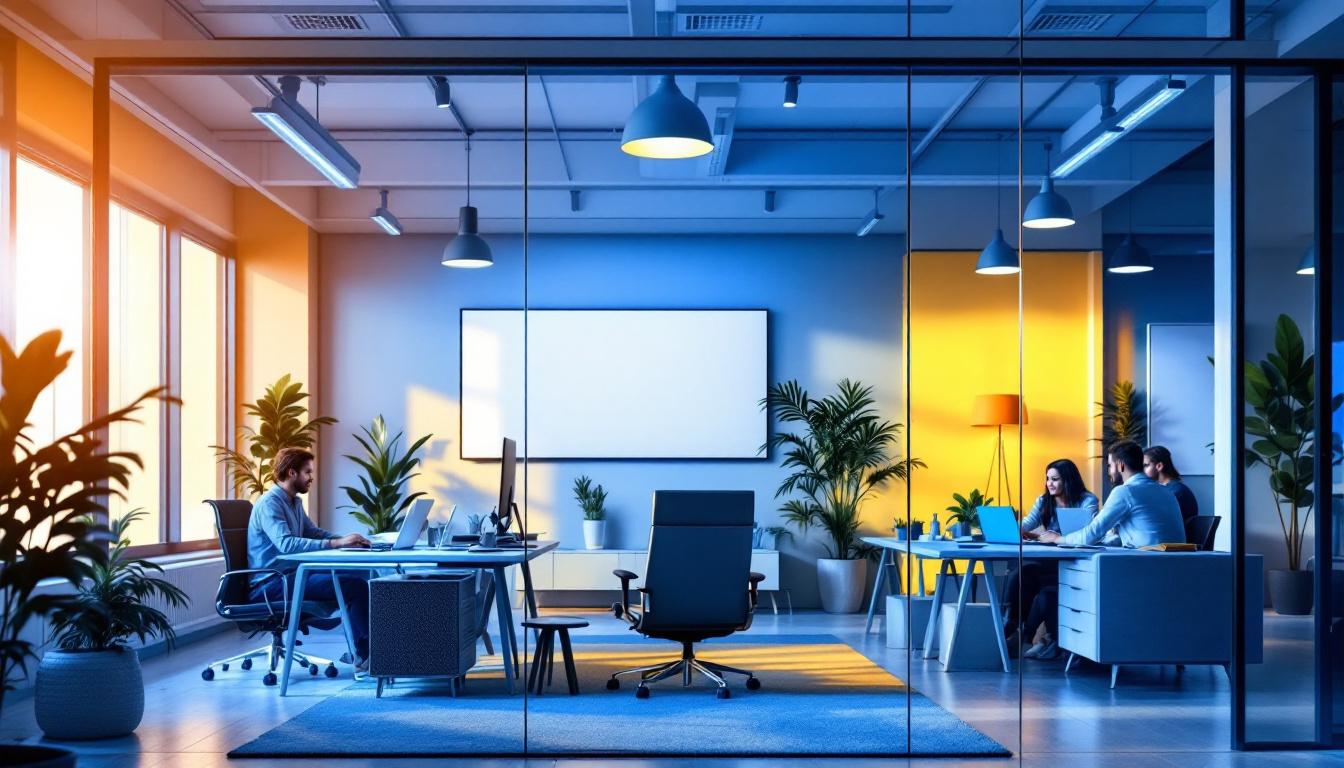
Effective workplace lighting balances brightness, color temperature, and distribution to create an environment conducive to various tasks. For instance, manufacturing floors require high-intensity, uniform lighting to ensure precision and safety, whereas office environments benefit from softer, adjustable lighting that reduces eye strain and enhances comfort. The strategic placement of fixtures can also minimize shadows and glare, which are common distractions that can lead to fatigue and decreased performance over time.
Moreover, understanding the types of lighting—ambient, task, accent, and decorative—is crucial. Ambient lighting provides general illumination, task lighting focuses on specific work areas, accent lighting highlights particular features, and decorative lighting adds aesthetic value. A well-designed workplace lighting plan integrates these types to optimize functionality and atmosphere. In open-plan offices, for instance, a combination of ambient and task lighting can create a versatile space that accommodates both collaborative work and individual tasks, promoting a more dynamic work environment.
Key Lighting Metrics Every Contractor Should Know
Several technical metrics are fundamental to workplace lighting design. Illuminance, measured in lux, indicates the amount of light falling on a surface. Different work environments demand varying lux levels; for example, detailed assembly work may require upwards of 1000 lux, while general office work typically needs between 300 and 500 lux. Understanding these requirements allows contractors to tailor lighting solutions that not only meet but exceed industry standards, ensuring optimal performance and comfort for employees.
Color temperature, expressed in Kelvins (K), affects mood and alertness. Cooler temperatures (4000K to 6500K) mimic daylight and are often used in industrial or clinical settings to enhance focus, while warmer temperatures (2700K to 3500K) create a relaxing atmosphere suitable for break rooms or lounges. The psychological effects of color temperature can significantly influence employee morale; thus, selecting the appropriate lighting can foster a more engaged and motivated workforce. Additionally, incorporating smart lighting systems that adjust based on natural light availability can further enhance energy efficiency and employee satisfaction.
Color rendering index (CRI) measures how accurately a light source reveals colors compared to natural light. A CRI above 80 is generally recommended for workplaces to ensure true color perception, which is vital in design studios, retail, and healthcare environments. High CRI lighting is particularly important in settings where color differentiation is crucial, such as in art studios or laboratories, where precision can impact the quality of work. By prioritizing these metrics, lighting contractors not only enhance the visual quality of a space but also contribute to the overall health and productivity of the workforce.
Regulatory Standards and Compliance in Workplace Lighting
Lighting contractors must navigate a complex landscape of regulations and standards that govern workplace lighting to ensure safety, health, and energy efficiency. Familiarity with these requirements is non-negotiable for delivering compliant and effective lighting solutions.
In many regions, occupational health and safety administrations set minimum lighting standards to prevent accidents and reduce eye strain. These standards specify minimum lux levels for various tasks and environments, as well as guidelines for glare control and flicker reduction. For instance, areas designated for detailed work, such as laboratories or design studios, often require higher lux levels to ensure precision and accuracy, while general office areas may have more lenient requirements. Understanding these nuances allows contractors to tailor their lighting designs to meet specific operational needs.
Energy codes and sustainability certifications, such as LEED or WELL Building Standard, increasingly influence lighting design. These frameworks encourage the use of energy-efficient fixtures, controls like occupancy sensors and daylight harvesting, and materials that enhance indoor environmental quality. Moreover, adherence to these standards not only promotes ecological responsibility but can also lead to significant cost savings for businesses through reduced energy consumption and potential tax incentives for sustainable practices.
Common Compliance Challenges and How to Overcome Them
One frequent challenge is balancing adequate illumination with energy conservation. Over-lighting wastes energy and can cause discomfort, while under-lighting compromises safety and productivity. Lighting contractors must conduct thorough site assessments and use lighting simulation tools to optimize fixture placement and specifications. This involves not only measuring current light levels but also considering the reflectance of surfaces and the layout of furniture, which can significantly affect how light is distributed in a space.
Another hurdle is glare management, which can cause visual discomfort and reduce task performance. Employing diffusers, louvers, and indirect lighting techniques helps minimize glare. Additionally, understanding the specific needs of different workstations allows for tailored solutions that enhance user comfort. For example, in collaborative spaces where screens are frequently used, it may be beneficial to incorporate adjustable lighting systems that can adapt to changing daylight conditions and user preferences. This adaptability not only improves the working environment but also aligns with the growing trend towards personalized workspaces that cater to individual employee needs.
Advancements in Lighting Technology and Their Impact on Workplace Solutions
The lighting industry is rapidly evolving, with innovations that offer lighting contractors new tools to enhance workplace environments. Staying abreast of these advancements is critical for delivering cutting-edge, efficient, and adaptable lighting systems.
LED technology remains at the forefront, offering superior energy efficiency, longevity, and design flexibility compared to traditional lighting. Modern LEDs provide excellent color rendering and tunable color temperatures, enabling dynamic lighting environments that can adjust throughout the day to support circadian rhythms.
Smart lighting systems integrate sensors and controls, allowing automated adjustments based on occupancy, daylight availability, and user preferences. These systems not only improve energy savings but also enhance user experience by providing personalized lighting conditions.
Incorporating Human-Centric Lighting in Workplaces
Human-centric lighting (HCL) focuses on aligning artificial lighting with natural human biological rhythms. By adjusting intensity and color temperature throughout the day, HCL supports alertness during working hours and relaxation during breaks, potentially improving overall health and productivity.
For lighting contractors, implementing HCL requires understanding the specific needs of the workforce and the nature of tasks performed. Integrating tunable white LEDs and programmable controls allows for customized lighting schedules that can be adapted as workplace demands evolve.
Moreover, the integration of HCL goes beyond mere aesthetics; it can significantly impact employee well-being and satisfaction. Studies have shown that workplaces equipped with HCL systems report lower levels of fatigue and higher levels of focus among employees. This is particularly beneficial in environments where cognitive tasks are performed, as the right lighting can enhance concentration and reduce errors. Additionally, the ability to simulate natural light patterns can help mitigate the effects of Seasonal Affective Disorder (SAD), making workplaces more inviting and conducive to productivity throughout the year.
As organizations increasingly recognize the importance of mental health and well-being, the role of lighting becomes even more critical. By fostering an environment that prioritizes human-centric design, companies can not only improve employee morale but also reduce turnover rates and enhance overall job satisfaction. This shift towards more thoughtful lighting solutions underscores the need for lighting contractors to stay informed about the latest technologies and research, ensuring they can provide the most effective solutions tailored to the unique needs of each workplace.
Practical Considerations for Lighting Installation and Maintenance
Beyond design, lighting contractors must consider practical aspects of installation and ongoing maintenance to ensure long-term performance and client satisfaction.
Proper installation includes accurate fixture placement, secure mounting, and compliance with electrical codes. Attention to wiring, grounding, and protection against environmental factors such as moisture and dust is essential to prevent failures and hazards. For instance, in outdoor settings, using weatherproof fixtures and corrosion-resistant materials can extend the lifespan of the installation significantly. Furthermore, considering the location of fixtures in relation to natural light sources can enhance the overall effectiveness of the lighting design, ensuring that artificial lighting complements rather than competes with daylight.
Maintenance planning is equally important. Lighting systems should be designed for easy access to fixtures and controls to facilitate cleaning, bulb replacement, and troubleshooting. Using modular components and standardized parts can reduce downtime and maintenance costs. Additionally, implementing a regular maintenance schedule can help identify potential issues before they escalate, such as flickering lights or inconsistent brightness levels, which can be indicative of underlying electrical problems. This proactive approach not only enhances the reliability of the lighting system but also fosters a sense of trust and professionalism with clients.
Energy Management and Cost Efficiency Strategies
Lighting contractors can add value by advising clients on energy management strategies. Incorporating dimming controls, occupancy sensors, and daylight-responsive systems can significantly reduce energy consumption without compromising lighting quality. These technologies not only adjust the lighting based on actual usage but also contribute to a more sustainable environment by minimizing waste. For example, occupancy sensors can automatically turn off lights in unoccupied rooms, while daylight-responsive systems can dim artificial lighting when sufficient natural light is available, creating a harmonious balance between energy efficiency and comfort.
Additionally, selecting fixtures with high efficacy (lumens per watt) and long lifespans minimizes operational costs. Educating clients on the benefits of preventive maintenance and regular system audits helps sustain performance and identify opportunities for upgrades. By conducting energy audits, contractors can provide clients with tailored recommendations, such as transitioning to LED technology or integrating smart lighting solutions that can be controlled remotely. This not only enhances user experience but also aligns with modern energy conservation goals, making the lighting system a vital component of a building’s overall energy strategy.
Conclusion: Elevating Workplace Lighting Through Expertise and Innovation
For lighting contractors, mastering the complexities of workplace lighting is a pathway to delivering solutions that enhance safety, productivity, and occupant satisfaction. By understanding fundamental lighting principles, adhering to regulatory standards, embracing technological advancements, and prioritizing practical installation and maintenance, contractors position themselves as trusted partners in creating optimized work environments.
Continuous learning and adaptation to emerging trends, such as human-centric lighting and smart controls, will further empower contractors to meet evolving client needs and contribute to healthier, more efficient workplaces.
Discover Unmatched Lighting Solutions with LumenWholesale
Ready to elevate your lighting projects with superior quality and value? Look no further than LumenWholesale, where we specialize in providing contractors with spec-grade lighting products at unbeatable wholesale prices. Say goodbye to local distributor markups and hello to our extensive selection that meets the highest industry standards. With free shipping on bulk orders, you can trust that you’re getting premium lighting solutions at the best price, without any hidden fees. Make your next project shine by choosing LumenWholesale for quality, affordability, and convenience. Wholesale Lighting at the Best Value is just a click away.