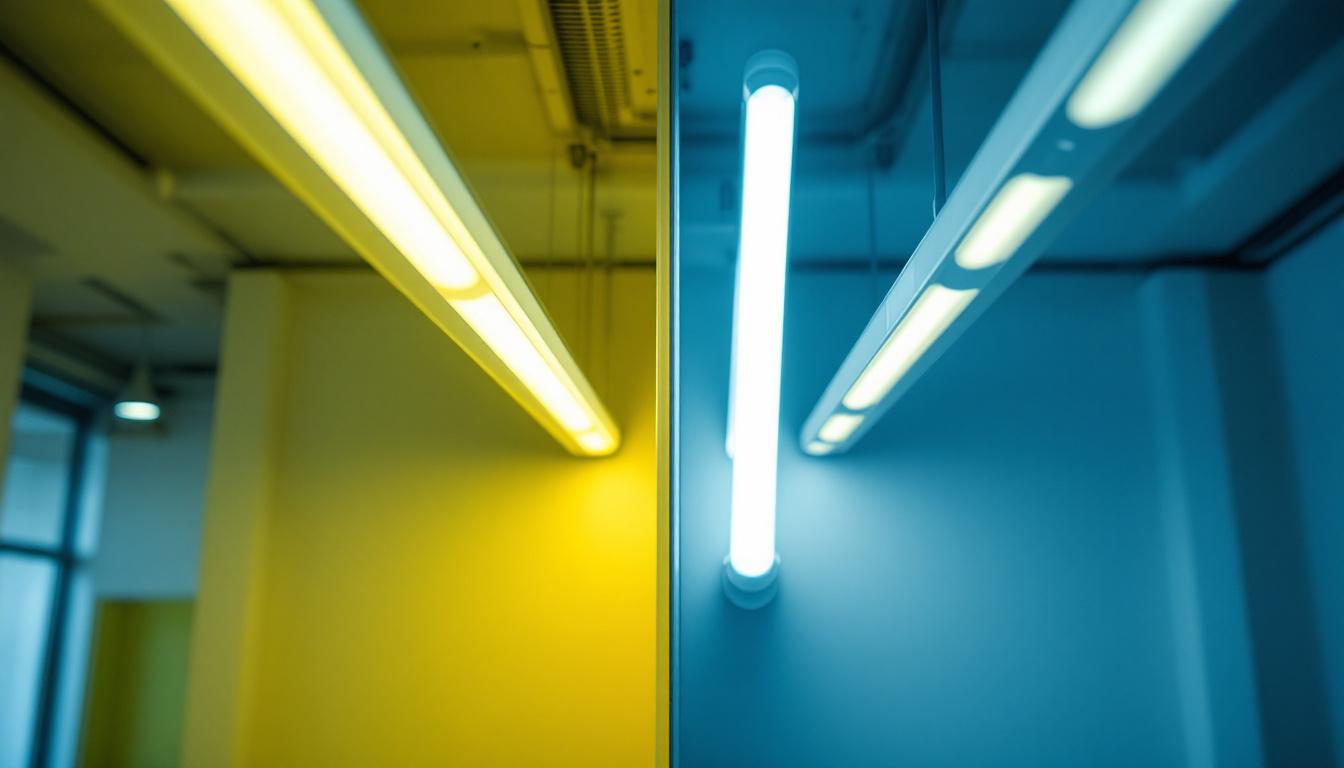
Understanding T8 and T12 Lighting Technologies
Lighting contractors frequently encounter the choice between T8 and T12 fluorescent lamps when designing or upgrading commercial and industrial lighting systems. These two types of fluorescent tubes differ not only in physical dimensions but also in performance characteristics, efficiency, and cost implications that directly impact a contractor’s project outcomes and profitability.
At its core, the designation “T” in T8 and T12 refers to the tube diameter measured in eighths of an inch. A T12 lamp has a diameter of 12 eighths of an inch (1.5 inches), while a T8 lamp measures 8 eighths of an inch (1 inch). This difference in size is more than cosmetic; it influences the lamp’s electrical requirements, light output, and compatibility with fixtures and ballasts.
Key Physical and Technical Differences
T12 lamps are the older technology, widely used in commercial lighting for decades. They typically operate at a lower frequency and require magnetic ballasts. T8 lamps, introduced as a more energy-efficient alternative, operate at higher frequencies using electronic ballasts, which contribute to better performance and longer lamp life.
In terms of light quality, T8 lamps generally produce a more consistent and higher-quality light output, with improved color rendering index (CRI) values compared to T12s. This makes T8s more suitable for environments where accurate color perception is critical, such as retail spaces, offices, and healthcare facilities.
Moreover, the energy efficiency of T8 lamps is a significant advantage. They consume less power than T12 lamps, leading to lower energy bills and a reduced carbon footprint. This efficiency is particularly beneficial in large-scale applications where lighting is used extensively, such as warehouses and manufacturing plants. As organizations increasingly prioritize sustainability, the shift from T12 to T8 lighting solutions aligns with broader environmental goals and can enhance a company’s reputation as a responsible business.
Additionally, the transition from T12 to T8 lighting is often incentivized by various energy efficiency programs and rebates offered by utility companies. These programs encourage businesses to upgrade their lighting systems, providing financial assistance that can offset the initial costs of new fixtures and ballasts. By taking advantage of these incentives, contractors can not only improve the lighting quality for their clients but also enhance their own profitability through reduced project costs and increased customer satisfaction.
Energy Efficiency and Operational Costs
One of the most significant factors influencing a lighting contractor’s decision is the energy consumption of the lighting system. T8 lamps are considerably more energy-efficient than T12s, consuming roughly 30-40% less power for the same light output. This efficiency stems from their smaller diameter, improved phosphor coatings, and the use of electronic ballasts that reduce energy losses. In addition to this, the advancements in LED technology have further revolutionized the lighting landscape, offering even greater energy savings and longer lifespans, making them an attractive option for contractors looking to provide the best solutions for their clients.
For contractors, this translates into a compelling value proposition for clients aiming to reduce utility bills and carbon footprints. While the initial cost of T8 lamps and compatible ballasts may be higher than T12 systems, the long-term savings on electricity often justify the investment. Furthermore, many utility companies offer rebates and incentives for upgrading to energy-efficient lighting, which contractors can leverage to enhance project appeal. These financial incentives not only help offset the upfront costs but also encourage businesses to adopt more sustainable practices, thus contributing to a greener environment.
Impact on Maintenance and Longevity
T8 lamps typically have a longer rated life compared to T12 lamps, often lasting up to 20,000 hours or more, whereas T12s usually last around 10,000 to 15,000 hours. This extended lifespan reduces maintenance frequency and labor costs associated with lamp replacement—a critical consideration in large commercial installations where access to fixtures can be challenging and costly. The reduced need for frequent replacements not only saves money but also minimizes disruptions in business operations, allowing companies to maintain productivity without the interruptions that come from lighting outages.
Additionally, electronic ballasts used with T8 lamps are more reliable and generate less heat, further extending the overall system’s lifespan. For lighting contractors, recommending T8 systems can enhance client satisfaction by minimizing downtime and maintenance expenses, thereby strengthening long-term relationships. Moreover, the improved thermal performance of these systems can lead to better overall building efficiency, as less heat generation contributes to lower cooling costs in warmer months. This holistic approach to energy management is increasingly important for clients who are looking to optimize their operational costs while also adhering to environmental regulations and standards.
Compatibility and Retrofit Considerations
Many existing commercial buildings still utilize T12 fixtures, which poses a challenge for contractors tasked with upgrading lighting systems. While T8 lamps offer superior performance, they are not always directly compatible with T12 ballasts. This incompatibility requires either replacing the ballast with an electronic version or opting for plug-and-play T8 lamps designed to work with existing magnetic ballasts. Understanding the specific requirements of each building’s electrical system is essential, as it can significantly impact the overall retrofit strategy and budget.
Choosing the right retrofit approach is crucial for cost control and project efficiency. Full fixture upgrades, including ballasts and lamps, deliver the best performance and energy savings but come with higher upfront costs and longer installation times. Conversely, plug-and-play T8 lamps offer a quicker, less expensive retrofit but may not achieve the same energy efficiency or lifespan benefits. Additionally, the choice of lamp color temperature and lumen output can influence the ambiance and functionality of the space, making it important for contractors to discuss these options with their clients to ensure the final result aligns with their vision.
Evaluating Cost-Benefit Scenarios
Lighting contractors must carefully assess the client’s budget, project timeline, and long-term goals when recommending T8 versus T12 solutions. For instance, in facilities with limited downtime windows, a plug-and-play retrofit may be the most practical solution despite its compromises. In contrast, new construction or major renovations provide opportunities to install fully optimized T8 systems that maximize energy savings and performance. Furthermore, understanding the specific usage patterns of the space—such as peak occupancy times and the types of tasks performed—can guide the selection of lighting solutions that enhance productivity and comfort for occupants.
Moreover, contractors should consider the evolving regulatory landscape. Many jurisdictions have phased out or restricted the use of T12 lamps due to their inefficiency, making T8 and LED alternatives more favorable and sometimes mandatory. Staying informed about local codes and standards helps contractors advise clients accurately and avoid costly compliance issues. Additionally, as sustainability becomes a higher priority for many businesses, contractors can leverage this trend by highlighting the environmental benefits of upgrading to more efficient lighting systems, such as reduced carbon footprints and lower energy consumption. This not only aligns with regulatory demands but also resonates with clients’ corporate social responsibility goals, making the case for retrofitting even more compelling.
Financial Implications for Lighting Contractors
The choice between T8 and T12 lamps affects not only the client’s operational costs but also the contractor’s bottom line. Projects involving T8 installations often command higher upfront fees due to the cost of electronic ballasts and potentially more complex wiring. However, these projects can yield greater customer satisfaction and repeat business because of the improved lighting quality and energy savings delivered. The enhanced efficiency of T8 lamps, which consume less energy while providing better illumination, can lead to significant savings over time, making them a more attractive option for businesses looking to reduce their overhead costs.
Conversely, T12 projects may offer lower initial costs, appealing to budget-conscious clients, but the contractor risks future callbacks or client dissatisfaction due to higher energy bills and more frequent maintenance. Additionally, as T12 lamps become less available and eventually obsolete, contractors focusing on these technologies may face shrinking market demand. This shift not only impacts their current projects but also their long-term viability, as clients increasingly seek out energy-efficient solutions that align with sustainability goals. The transition away from T12 can also create a gap in knowledge and expertise for contractors who have relied heavily on this older technology.
Opportunities for Value-Added Services
Lighting contractors can differentiate themselves by offering comprehensive lighting audits and energy assessments that demonstrate the tangible benefits of upgrading to T8 systems. By quantifying energy savings, maintenance reductions, and improved lighting quality, contractors provide clients with a clear return on investment, justifying higher project costs. These audits can also help identify areas where lighting can be optimized for better performance, such as adjusting fixture placement or recommending smart lighting controls that further enhance energy efficiency.
Furthermore, contractors who stay abreast of emerging technologies, such as LED replacements for T8 and T12 lamps, can expand their service offerings and future-proof their businesses. LEDs offer even greater efficiency and longevity, and many LED retrofit kits are designed to fit existing T8 or T12 fixtures, simplifying upgrades. By incorporating smart technology into their offerings, such as automated dimming systems or occupancy sensors, contractors can provide clients with cutting-edge solutions that not only save energy but also enhance the overall user experience. This proactive approach can lead to stronger client relationships and a reputation as a forward-thinking contractor in a rapidly evolving industry.
Conclusion: Strategic Choices for Lighting Contractors
For lighting contractors, understanding the differences between T8 and T12 lamps is essential for making informed recommendations that balance initial costs, operational savings, and client satisfaction. T8 lamps offer clear advantages in energy efficiency, light quality, and maintenance, making them the preferred choice for most modern lighting projects.
However, retrofit challenges and budget constraints require contractors to tailor solutions to each client’s unique circumstances. By leveraging their technical expertise and market knowledge, lighting contractors can optimize project outcomes, enhance their reputation, and improve profitability in a competitive industry.
Illuminate Your Projects with LumenWholesale
Ready to enhance your lighting projects with superior T8 lamps and other high-quality solutions? At LumenWholesale, we provide lighting contractors like you with the spec-grade products you need at unbeatable wholesale prices. Say goodbye to local distributor markups and hello to our extensive selection that meets the highest industry standards. With free shipping on bulk orders, you can trust that you’re getting premium lighting at the best value — all without hidden fees or compromises. Elevate your lighting game and ensure client satisfaction with every installation. Visit LumenWholesale today for Wholesale Lighting at the Best Value.