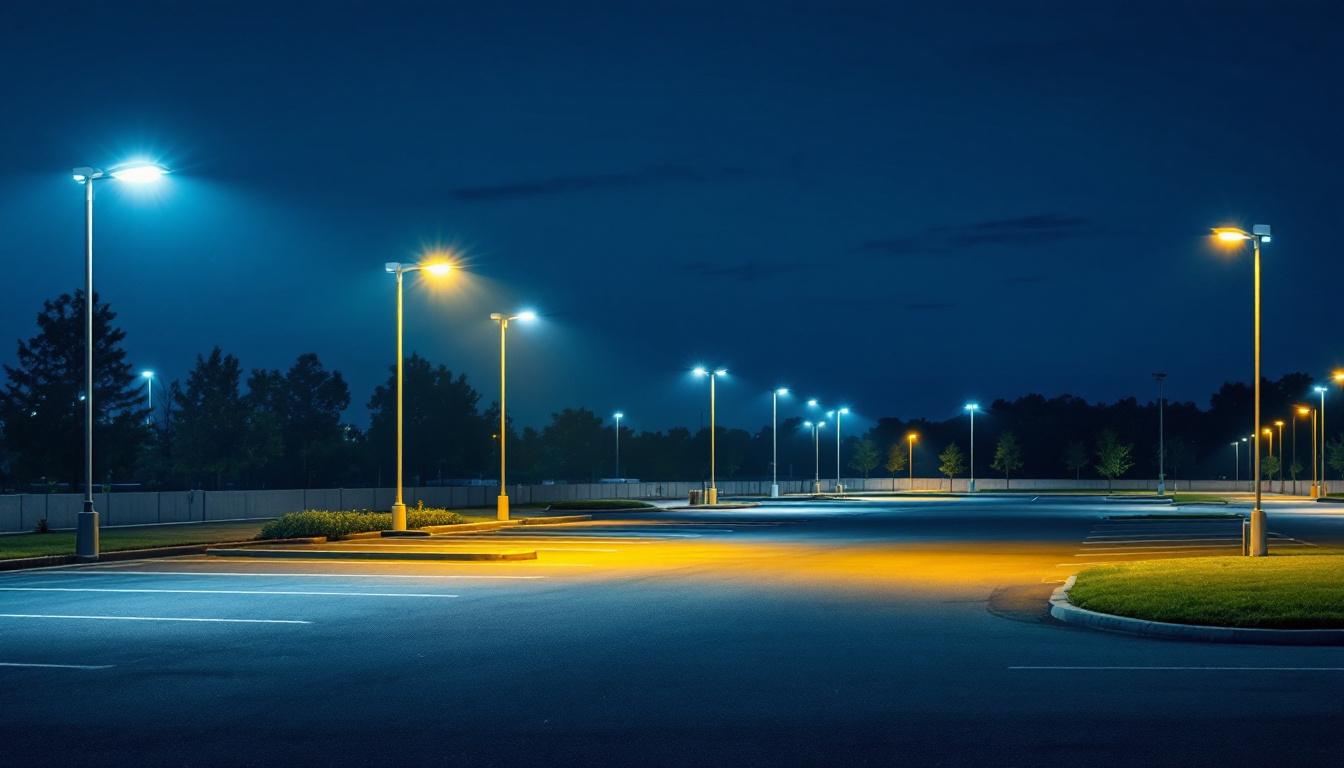
Understanding the Importance of Parking Lot Lighting
Parking lot lighting plays a critical role in ensuring safety, security, and accessibility for both pedestrians and vehicles. For lighting contractors, understanding the nuances of parking lot lighting requirements is essential to designing and installing systems that meet regulatory standards while maximizing energy efficiency and operational effectiveness.
Well-designed lighting not only deters criminal activity by increasing visibility but also reduces accidents and enhances the overall user experience. Given the expansive nature of parking lots, optimizing lighting can also lead to significant cost savings through reduced energy consumption and maintenance.
In addition to safety and security, effective parking lot lighting can significantly impact the perception of a business. Brightly lit, well-maintained parking areas create a welcoming atmosphere that encourages customers to visit, thereby potentially increasing foot traffic and sales. Furthermore, the strategic placement of lighting fixtures can highlight key areas, such as entrances, exits, and pedestrian walkways, guiding visitors safely through the space. This not only improves the overall functionality of the parking lot but also enhances the aesthetic appeal of the property, making it more attractive to potential customers.
Moreover, advancements in lighting technology, such as LED fixtures, have revolutionized the way parking lots are illuminated. These modern solutions offer longer lifespans, lower energy consumption, and reduced heat output compared to traditional lighting options. By integrating smart lighting systems that can adjust brightness based on real-time conditions, businesses can further optimize their energy usage, contributing to sustainability efforts while also lowering operational costs. As municipalities and businesses alike strive to meet energy efficiency goals, investing in high-quality parking lot lighting becomes not just a necessity, but a strategic advantage in today’s competitive landscape.
Key Regulatory Standards and Guidelines
Illuminating Engineering Society (IES) Recommendations
The Illuminating Engineering Society provides widely accepted guidelines for parking lot lighting that balance safety and efficiency. These recommendations cover aspects such as average illuminance, uniformity ratios, and glare control. For example, a typical parking lot should maintain an average illuminance level between 1.5 to 3 foot-candles, depending on the lot’s size and usage intensity. This illuminance level is crucial not only for visibility but also for enhancing the overall sense of security for users, as well-lit areas deter potential criminal activity.
Uniformity is equally important; the ratio of average to minimum illuminance should generally not exceed 4:1 to avoid dark spots that can compromise safety. Contractors must also consider the color rendering index (CRI) to ensure that colors are rendered naturally, which aids in security and navigation. A higher CRI allows individuals to distinguish colors accurately, which is particularly beneficial in environments where identifying vehicles or personal belongings is essential. Furthermore, the IES emphasizes the importance of using energy-efficient lighting solutions, such as LED fixtures, which not only reduce operational costs but also contribute to sustainability efforts by lowering energy consumption.
Local Codes and Accessibility Requirements
In addition to IES standards, local building codes and the Americans with Disabilities Act (ADA) impose specific requirements. These include minimum lighting levels for accessible routes and parking spaces, as well as considerations for glare and light trespass to neighboring properties. Compliance with these regulations is mandatory and can vary significantly by jurisdiction, so contractors must stay informed about local requirements. For instance, some municipalities may require additional lighting for designated accessible parking spaces to ensure they are easily identifiable and safe for individuals with disabilities.
Moreover, the integration of smart lighting technologies is becoming increasingly relevant in meeting these codes. Smart lighting systems can adjust brightness based on occupancy or time of day, ensuring that areas are adequately lit when needed while conserving energy when they are not. This adaptability not only helps in complying with local codes but also enhances user experience by providing a well-lit environment that responds to real-time conditions. As communities continue to prioritize safety and accessibility, understanding and implementing these evolving standards will be essential for contractors and developers alike.
Design Considerations for Maximum Efficiency
Choosing the Right Light Sources
LED technology has revolutionized parking lot lighting by offering superior energy efficiency, longer lifespan, and improved light quality compared to traditional metal halide or high-pressure sodium lamps. LEDs provide instant-on capabilities and better controllability, enabling features such as dimming and motion sensing. These advancements not only enhance visibility but also contribute to significant cost savings over time, as the reduced energy consumption translates into lower utility bills.
When selecting LED fixtures, contractors should consider lumen output, color temperature (typically between 4000K and 5000K for parking lots), and fixture efficacy measured in lumens per watt. High-efficacy fixtures reduce energy consumption while maintaining adequate lighting levels. Furthermore, the choice of color temperature can influence the perception of safety in the parking lot; cooler temperatures are often associated with a more secure environment, which can deter criminal activity and enhance the overall user experience.
Fixture Placement and Mounting Height
Proper fixture placement is essential to achieving uniform illumination and minimizing shadows. Mounting heights typically range from 15 to 30 feet, depending on the size of the parking lot and the type of fixture used. Higher mounting heights allow for broader light distribution but may increase glare if not properly shielded. Additionally, the angle at which fixtures are mounted can affect how light is distributed across the space, making it crucial to consider both height and tilt when designing the layout.
Spacing between fixtures should be calculated based on the beam angle and mounting height to ensure overlapping light patterns and consistent coverage. Using photometric analysis software can assist contractors in optimizing fixture layout for both performance and cost-effectiveness. This technology not only aids in achieving the desired illumination levels but also helps in visualizing potential issues before installation, allowing for adjustments that can save time and resources in the long run.
Controlling Glare and Light Pollution
Glare can negatively impact driver visibility and pedestrian comfort, while light pollution affects surrounding communities and ecosystems. To mitigate these issues, fixtures should have appropriate shielding and be aimed downward at a controlled tilt angle. The design of the fixtures themselves can also play a role; selecting models with built-in glare reduction features can enhance the overall effectiveness of the lighting system.
Implementing cutoff or full cutoff fixtures helps prevent light from spilling beyond the parking lot boundaries. Additionally, using adaptive lighting controls such as dimmers and timers can reduce light levels during low-activity periods, further minimizing environmental impact. This not only conserves energy but also aligns with sustainability goals that many municipalities are adopting, promoting a greener approach to urban development. Furthermore, community engagement in the planning process can lead to better acceptance of lighting solutions, as residents often appreciate efforts to reduce light pollution and enhance their quality of life.
Incorporating Smart Lighting Controls
Motion Sensors and Occupancy Controls
Integrating motion sensors allows lighting systems to respond dynamically to activity within the parking lot. Lights can remain at a lower baseline level and increase in brightness when movement is detected, optimizing energy use without compromising safety.
This approach is particularly effective in parking lots with variable occupancy patterns, such as those serving retail centers or office buildings with fluctuating hours. Motion-activated lighting can reduce energy consumption by up to 60% compared to continuous lighting.
Daylight Harvesting and Scheduling
Daylight harvesting involves using ambient light sensors to adjust artificial lighting based on natural light availability. This ensures that lighting levels are sufficient but not excessive during dawn, dusk, or overcast conditions.
Scheduling controls enable pre-programmed lighting scenarios that correspond to business hours or special events. Combining these strategies with occupancy sensors creates a comprehensive control system that maximizes efficiency and extends fixture lifespan.
Maintenance Strategies for Sustained Efficiency
Routine Inspection and Cleaning
Regular maintenance is vital to preserving the performance and efficiency of parking lot lighting. Dirt, dust, and debris accumulation on fixtures can reduce light output by up to 30%, necessitating periodic cleaning to maintain optimal illumination.
Inspections should also include checking for fixture damage, corrosion, and electrical issues. Prompt repairs prevent energy waste and ensure compliance with safety standards.
Leveraging Predictive Maintenance
Advanced lighting systems equipped with IoT sensors can provide real-time data on fixture performance and energy consumption. This enables predictive maintenance, where potential failures are identified and addressed before they impact lighting quality or safety.
For contractors, offering predictive maintenance services can add value to clients by reducing downtime and extending the life of the lighting system.
Case Studies Demonstrating Effective Optimization
Retail Center Parking Lot Retrofit
A large retail center replaced outdated metal halide fixtures with LED luminaires equipped with motion sensors and daylight harvesting controls. The retrofit resulted in a 65% reduction in energy consumption and improved uniformity, enhancing customer safety and satisfaction.
Additionally, the project qualified for utility rebates, offsetting installation costs and shortening the payback period.
Municipal Parking Facility Upgrade
A municipal parking garage implemented a lighting system with full cutoff LED fixtures and adaptive controls. The design minimized light trespass into adjacent residential areas while maintaining compliance with local ordinances.
The upgrade improved visibility and security, leading to a measurable decrease in nighttime incidents and positive feedback from community members.
Conclusion: Best Practices for Lighting Contractors
Optimizing parking lot lighting requires a comprehensive approach that balances regulatory compliance, energy efficiency, user safety, and environmental considerations. Lighting contractors should prioritize the use of high-quality LED fixtures, strategic fixture placement, and smart control technologies to achieve these goals.
Staying informed about evolving standards and leveraging advanced tools such as photometric modeling and IoT-enabled maintenance can differentiate contractors in a competitive market. Ultimately, delivering efficient, reliable, and sustainable parking lot lighting solutions benefits clients, end-users, and the broader community alike.
Illuminate Your Projects with LumenWholesale
Ready to elevate your lighting projects with the most efficient and cost-effective solutions? Look no further than LumenWholesale, where we provide contractors with the highest quality, spec-grade lighting products at wholesale prices that can’t be beaten. Our extensive selection is designed to meet the most rigorous industry standards, ensuring that every parking lot lighting system you install is reliable and high-performing. Plus, with free shipping on bulk orders, you can secure premium lighting at the best value without any hidden fees. Don’t compromise on quality or cost. Discover the best in wholesale lighting at LumenWholesale and make your next project shine.