Introduction to LED Growing Lights for Lighting Contractors
LED growing lights have revolutionized the horticulture and indoor farming industries by providing efficient, customizable, and long-lasting lighting solutions. For lighting contractors, understanding the nuances of LED grow lights is essential to meet the increasing demand from commercial growers, urban farmers, and even residential enthusiasts. This article explores the critical points lighting contractors must consider when selecting, installing, and maintaining LED growing lights to deliver optimal results for their clients.
As the indoor agriculture market continues to expand, driven by urbanization and the quest for sustainable food production, LED growing lights have become a cornerstone technology. Their energy efficiency, spectrum control, and durability make them a preferred choice over traditional lighting methods like high-pressure sodium (HPS) or fluorescent lamps. For contractors, this means new opportunities but also new challenges in mastering the technology and tailoring solutions to diverse growing environments.
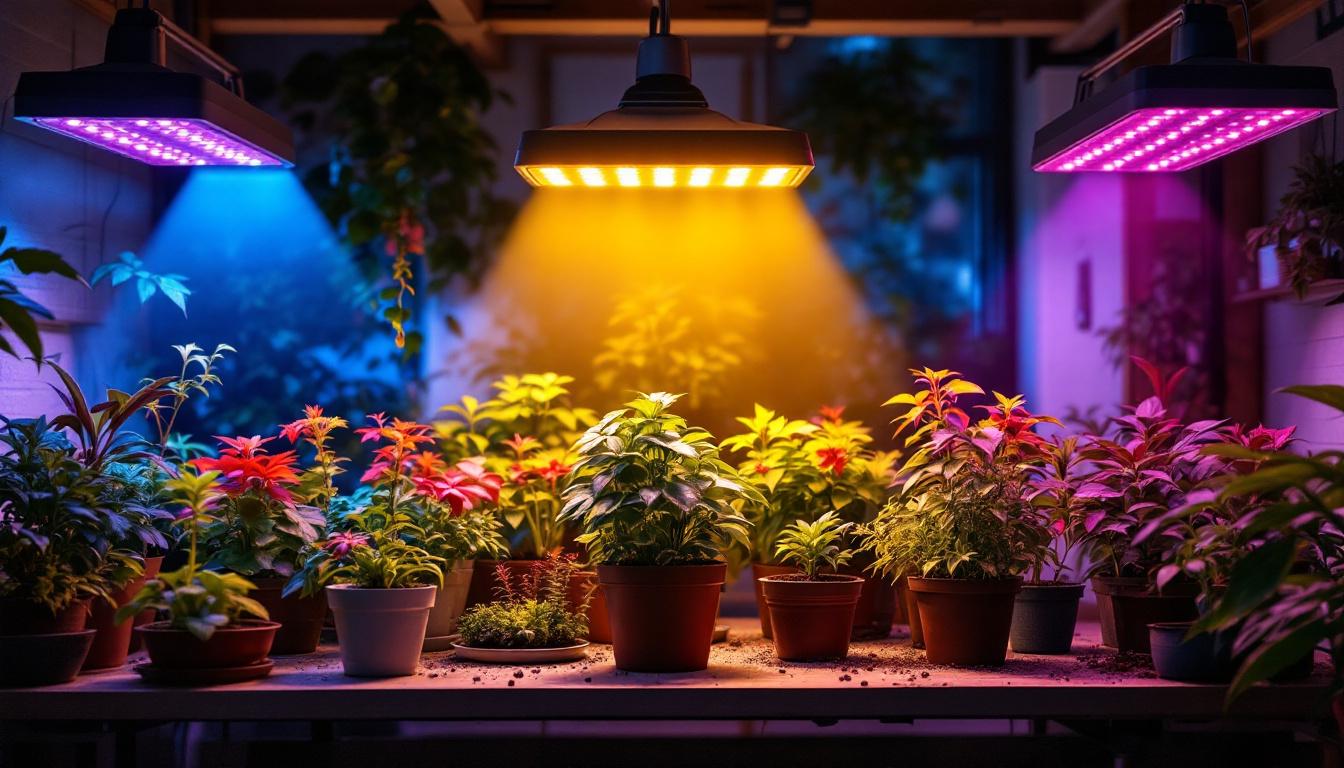
One of the key advantages of LED grow lights is their ability to provide specific light spectrums that cater to different growth stages of plants. For instance, blue light is crucial during the vegetative phase, promoting healthy leaf and stem development, while red light supports flowering and fruiting. This level of customization allows contractors to design lighting systems that can be adjusted based on the specific needs of various crops, ensuring optimal growth and yield. Moreover, the ability to control the light spectrum can lead to reduced energy costs and improved crop quality, making it a win-win for both contractors and their clients.
Additionally, the integration of smart technology into LED growing lights has opened up new avenues for lighting contractors. Many modern systems come equipped with sensors and automation features that allow for real-time monitoring and adjustments based on environmental conditions. This not only enhances plant growth but also simplifies the management process for growers. Understanding these technological advancements is crucial for contractors looking to stay competitive in the market, as they can offer clients cutting-edge solutions that maximize efficiency and productivity in their indoor farming operations.
Understanding the Technology Behind LED Growing Lights
What Sets LED Grow Lights Apart
LED grow lights differ from conventional lighting primarily in their ability to emit specific light spectra that plants use most effectively for photosynthesis. Unlike traditional bulbs that emit broad-spectrum light with significant energy wasted in non-useful wavelengths, LEDs can be tuned to provide targeted wavelengths such as blue and red light, which are critical for vegetative growth and flowering stages, respectively.
Additionally, LEDs generate less heat, reducing the risk of plant damage and lowering cooling costs in indoor grow rooms. Their longer lifespan—often exceeding 50,000 hours—means fewer replacements and lower maintenance costs, a factor that lighting contractors should emphasize when advising clients on total cost of ownership. Furthermore, the compact design of LED fixtures allows for more versatile installation options, enabling growers to maximize their space efficiently. This adaptability is particularly beneficial for urban farming and vertical gardens, where every inch counts.
Key Technical Specifications to Consider
When selecting LED grow lights, contractors must evaluate several technical parameters:
- Photosynthetically Active Radiation (PAR): This measures the light intensity in the 400-700 nm range that plants use for photosynthesis. High PAR output is crucial for healthy plant growth.
- Photosynthetic Photon Flux Density (PPFD): Indicates the number of photons hitting a square meter per second, directly correlating to how much usable light the plants receive.
- Light Spectrum: Different growth stages require different spectral compositions. Adjustable spectrum LEDs provide flexibility for various crops and growth phases.
- Energy Efficiency: Measured in micromoles per joule (µmol/J), this indicates how effectively the light converts electricity into usable plant light.
- Thermal Management: Efficient heat dissipation ensures longevity and consistent performance of the LED fixtures.
Moreover, the integration of smart technology in modern LED grow lights is revolutionizing the way indoor farming is approached. Many systems now come equipped with sensors and programmable settings that allow growers to automate light cycles based on plant needs, environmental conditions, and growth stages. This level of control not only enhances plant health but also optimizes energy consumption, making it easier for growers to achieve sustainable practices. As the industry continues to evolve, the potential for integrating artificial intelligence and machine learning into these systems could further refine growth strategies, leading to even more efficient and productive agricultural practices.
Installation Considerations for Lighting Contractors
Site Assessment and Layout Planning
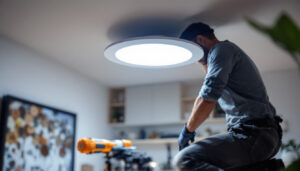
Before installation, a thorough site assessment is vital. Lighting contractors should evaluate the grow space dimensions, ceiling height, and existing infrastructure. This information helps determine the number of fixtures needed, their placement, and mounting height to achieve uniform light distribution.
Proper layout planning minimizes shadowing and ensures that all plants receive adequate light intensity. Using lighting simulation software can assist contractors in designing an optimal lighting grid, which can be a valuable service to clients looking to maximize crop yields. Additionally, understanding the specific light requirements of different plant species can guide the selection of fixtures and their arrangement. For instance, certain plants may thrive under specific light spectrums, necessitating a tailored approach to lighting that considers the unique needs of each crop type.
Electrical Requirements and Safety
LED grow lights require specific electrical considerations. Contractors must verify that the existing electrical system can handle the load and that wiring complies with local codes. Many LED grow lights operate on low voltage DC power, necessitating compatible drivers and transformers.
Safety is paramount. Proper grounding, surge protection, and waterproofing (especially in humid grow environments) must be integrated into the installation. Lighting contractors should also educate clients on the importance of regular electrical inspections to prevent hazards. Furthermore, incorporating energy-efficient practices can not only enhance safety but also reduce operational costs. By suggesting energy-efficient LED options and smart timers, contractors can help clients optimize their energy consumption while maintaining optimal growth conditions for their plants.
Integration with Environmental Controls
Modern grow operations often use environmental control systems that regulate temperature, humidity, CO2 levels, and light cycles. LED grow lights with dimming capabilities and programmable spectrums can be integrated with these systems to automate and optimize plant growth conditions.
Contractors should be familiar with communication protocols such as DMX or proprietary control systems to enable seamless integration. This expertise adds value to the contractor’s service offering and can differentiate them in a competitive market. Additionally, understanding the interplay between light and other environmental factors can lead to more effective growth strategies. For example, adjusting light intensity based on humidity levels or temperature can enhance plant health and yield, making it essential for contractors to stay informed about the latest advancements in both lighting technology and environmental control systems. This knowledge not only improves the effectiveness of the installation but also positions contractors as trusted advisors in the rapidly evolving field of horticultural lighting.
Maintenance and Troubleshooting of LED Grow Lights
Routine Maintenance Practices
Although LED grow lights require less maintenance than traditional lighting, regular checks are necessary to ensure peak performance. Contractors should advise clients to clean the fixtures periodically to remove dust and residue that can reduce light output. A simple solution of mild soap and water can be effective, but it’s important to ensure that the lights are turned off and cooled down before cleaning to avoid any risk of electric shock or damage.
Inspecting connectors, drivers, and heat sinks for signs of wear or damage helps prevent unexpected failures. Establishing a maintenance schedule as part of the installation contract can foster long-term client relationships and recurring revenue. Additionally, educating clients on the importance of maintaining proper humidity levels in their grow spaces can further enhance the longevity of the LED lights. High humidity can lead to condensation, which may damage electrical components over time, so advising on dehumidification strategies can be a valuable service.
Common Issues and Solutions
Some common problems encountered with LED grow lights include flickering, reduced light intensity, and overheating. Flickering often results from faulty drivers or loose connections, which can be resolved by replacing components or tightening fittings. It’s also beneficial to remind clients to check their power supply and ensure it meets the voltage requirements of the LED system, as fluctuations can lead to inconsistent performance.
Reduced intensity may indicate aging diodes or accumulation of dust on the lenses. Overheating usually stems from inadequate ventilation or blocked heat sinks. Contractors should be prepared to diagnose these issues quickly and recommend corrective actions to minimize downtime. Furthermore, implementing a temperature monitoring system can help clients keep track of their grow environment, allowing for proactive adjustments before overheating becomes a significant issue. Regularly scheduled performance evaluations can also help identify any gradual declines in light output, ensuring that plants receive the optimal light spectrum for growth throughout their life cycle.
Trends and Innovations Impacting Lighting Contractors
Advancements in Spectrum Customization
Recent innovations allow for dynamic spectrum tuning, enabling growers to adjust light quality in real time to optimize plant morphology and secondary metabolite production. Contractors who stay informed about these advancements can offer cutting-edge solutions that improve crop quality and yield.
Smart Lighting and IoT Integration
Smart LED grow lights equipped with sensors and IoT connectivity provide data-driven insights into plant health and environmental conditions. Lighting contractors can leverage these technologies to deliver precision agriculture solutions, enhancing client satisfaction and operational efficiency.
Sustainability and Energy Efficiency
With increasing emphasis on sustainability, energy-efficient LED grow lights help reduce the carbon footprint of indoor farming. Contractors who prioritize eco-friendly products and educate clients about energy savings position themselves as responsible and forward-thinking professionals.
Conclusion: Maximizing Value for Clients Through Expertise
For lighting contractors, mastering the intricacies of LED growing lights opens doors to a burgeoning market with diverse client needs. From understanding technical specifications and installation challenges to offering maintenance services and embracing technological trends, contractors can provide comprehensive solutions that enhance crop productivity and energy efficiency.
By combining technical knowledge with practical experience, lighting contractors become trusted partners in the success of indoor growers, contributing to the advancement of sustainable agriculture and innovative horticultural practices.
Illuminate Your Projects with LumenWholesale
Ready to elevate your lighting solutions and give your clients the competitive edge in sustainable agriculture? Look no further than LumenWholesale for a comprehensive range of LED growing lights that meet the highest industry standards. Our commitment to quality, affordability, and convenience ensures that you can access spec-grade lighting products at wholesale prices, with the added benefit of free shipping on bulk orders. Don’t let middleman markups dim your project’s potential. Choose LumenWholesale and experience the seamless integration of top-tier lighting with unbeatable value. Visit our selection today and discover Wholesale Lighting at the Best Value.