As outdoor lighting continues to evolve, lighting contractors face a myriad of challenges when selecting and installing flood lights. The right choice can enhance safety, security, and aesthetic appeal, while the wrong one can lead to a host of issues. This article explores the brightest outdoor flood lights available and offers insights into how lighting contractors can avoid common pitfalls in their projects.
Understanding the Importance of Brightness in Outdoor Flood Lights
Brightness is a crucial factor when it comes to outdoor flood lights. It not only affects visibility but also influences the overall ambiance of a space. For contractors, understanding how to measure and select the right brightness is key to delivering effective lighting solutions.
Measuring Brightness: Lumens vs. Watts
Traditionally, many contractors relied on watts as a measure of brightness. However, this metric is outdated and can be misleading. Today, lumens are the standard unit for measuring the amount of light emitted by a source. A higher lumen rating indicates a brighter light, which is essential for outdoor areas where visibility is paramount.
For example, a flood light with 1,000 lumens is significantly brighter than one with 500 lumens. Contractors should educate clients about these differences to ensure they choose the appropriate brightness for their specific needs. Additionally, understanding the space’s requirements—such as the height of installation and the area to be illuminated—can help in selecting the right lumen output. Factors like the presence of obstacles, the color of surrounding surfaces, and the intended use of the area (e.g., recreational, security, or decorative) all play a role in determining the optimal brightness level. By conducting a thorough assessment, contractors can provide tailored solutions that enhance both safety and aesthetics.
Color Temperature and Its Impact
Another critical aspect of outdoor lighting is color temperature, measured in Kelvin (K). This metric describes the color appearance of the light emitted by a bulb. For outdoor flood lights, a color temperature between 3000K and 5000K is typically recommended. Lower temperatures (around 3000K) produce a warm, inviting glow, while higher temperatures (5000K) yield a cooler, daylight-like effect.
Choosing the right color temperature can significantly affect the mood and functionality of outdoor spaces. For instance, a warm light may be more suitable for residential areas, creating a cozy atmosphere, while cooler lights are often preferred for commercial settings where visibility and security are priorities. Furthermore, the choice of color temperature can influence how colors appear in the illuminated area. Warmer lights might enhance earthy tones and create a softer environment, while cooler lights can make colors appear more vibrant and true to life. This is particularly important in settings like gardens or outdoor art installations, where the visual impact is paramount.
Moreover, the color temperature can also affect the behavior of nocturnal wildlife. Some studies suggest that warmer lights are less disruptive to certain species, making them a better choice for areas where wildlife is prevalent. By considering these ecological factors, contractors can make informed decisions that not only meet the aesthetic and functional needs of their clients but also promote a harmonious relationship with the surrounding environment.
Common Issues Lighting Contractors Face
Despite the advancements in outdoor lighting technology, contractors often encounter several common issues during installation and maintenance. Understanding these challenges can help contractors avoid pitfalls and deliver superior results.
Over-lighting and Under-lighting
One of the most frequent issues is achieving the right balance between over-lighting and under-lighting. Over-lighting can create harsh shadows and glare, which detracts from the intended ambiance and can even lead to safety hazards. Conversely, under-lighting can leave areas inadequately illuminated, increasing the risk of accidents and security breaches.
To mitigate these issues, contractors should conduct thorough site assessments. This includes evaluating the layout, identifying key areas that require illumination, and considering the types of activities that will take place in those spaces. By tailoring the lighting design to the specific needs of the environment, contractors can achieve optimal lighting levels. Additionally, utilizing lighting design software can aid in visualizing how different fixtures and placements will affect the overall atmosphere, allowing for adjustments before installation begins.
Choosing the Right Fixtures
The selection of fixtures is another critical factor that can lead to complications. Not all flood lights are created equal; they vary in terms of durability, energy efficiency, and light distribution patterns. For outdoor applications, it is essential to choose fixtures that are weather-resistant and designed for the specific environmental conditions.
Contractors should also consider the beam angle of the flood lights. A narrow beam angle can focus light on a specific area, while a wider beam angle can illuminate a larger space. Understanding the intended use of the area will guide the selection of the appropriate fixture type. Furthermore, it’s vital to stay updated on the latest advancements in LED technology, as newer models often offer improved energy efficiency and longer lifespans, which can significantly reduce maintenance costs over time. Incorporating smart lighting solutions, such as motion sensors and dimmers, can also enhance functionality and energy savings, providing clients with a more sustainable and adaptable lighting system.
Best Practices for Installation
Proper installation is vital for maximizing the performance of outdoor flood lights. Following best practices can help contractors avoid common issues and ensure that the lighting system operates efficiently.
Proper Placement and Height
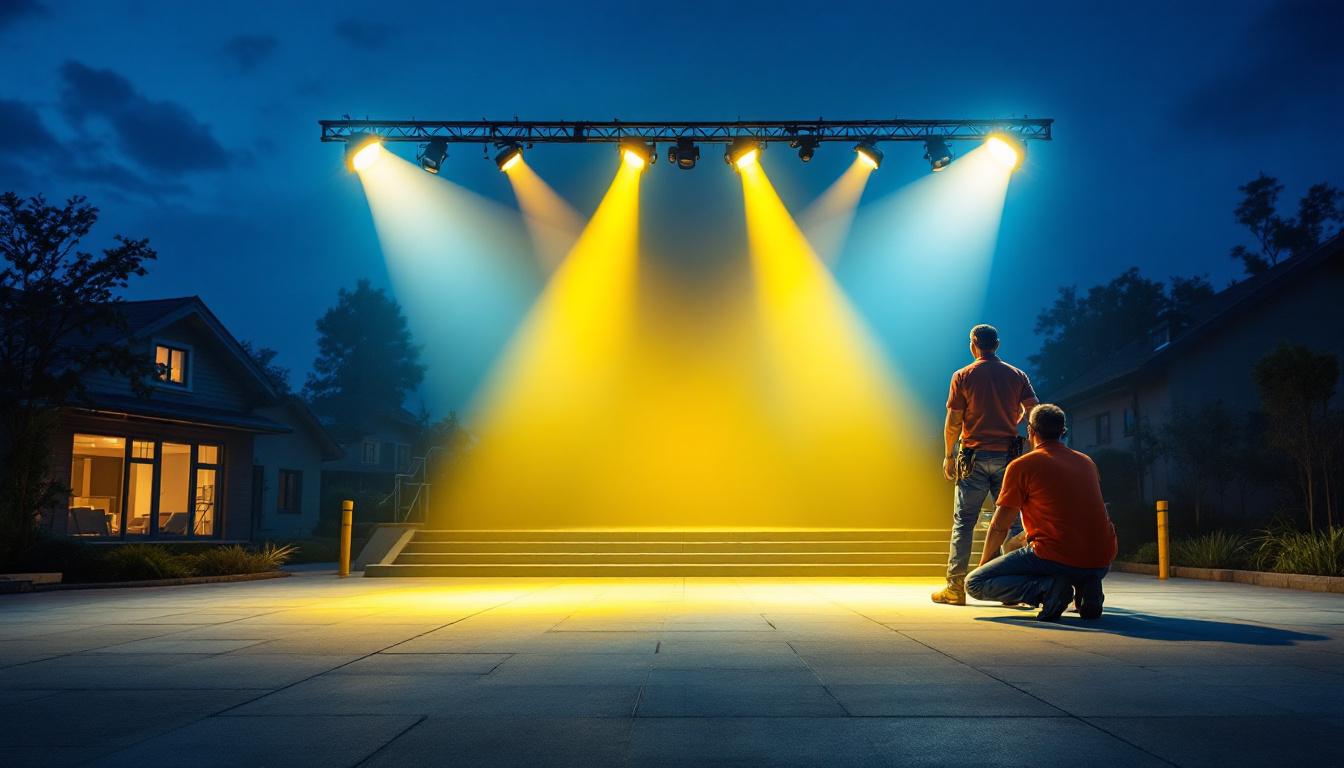
Placement and height are critical considerations when installing flood lights. Lights should be positioned to minimize shadows and provide adequate coverage without creating glare. Typically, flood lights should be mounted at a height that allows them to effectively illuminate the desired area while reducing the risk of vandalism or damage.
For instance, mounting flood lights too low may result in excessive glare and limited coverage, while lights mounted too high may fail to provide sufficient illumination. A general guideline is to install flood lights at a height of 10 to 20 feet, depending on the specific application and the area to be illuminated.
Wiring and Electrical Considerations
Electrical considerations are paramount when installing outdoor flood lights. Proper wiring and connections are essential for ensuring safety and functionality. Contractors should use outdoor-rated wiring and ensure that all connections are waterproof to prevent moisture-related issues.
Additionally, incorporating timers or motion sensors can enhance energy efficiency and security. Timers allow lights to operate only when needed, while motion sensors can activate lights in response to movement, providing added safety for outdoor spaces.
Maintaining Outdoor Flood Lights
Maintenance is often overlooked but is crucial for ensuring the longevity and efficiency of outdoor flood lights. Regular upkeep can prevent issues and extend the lifespan of the lighting system.
Regular Cleaning and Inspections
Outdoor flood lights are exposed to the elements, which can lead to dirt and debris buildup. Regular cleaning is essential to maintain optimal performance. Contractors should recommend a cleaning schedule to clients, ensuring that fixtures are free from obstructions that could hinder light output.
In addition to cleaning, routine inspections should be conducted to check for any signs of wear or damage. This includes examining the wiring, fixtures, and bulbs. Identifying and addressing issues early can prevent more significant problems down the line.
Upgrading to Energy-Efficient Solutions
As technology advances, energy-efficient solutions are becoming increasingly available. Contractors should stay informed about the latest lighting technologies, such as LED flood lights, which offer significant advantages over traditional incandescent or halogen options.
LED flood lights not only consume less energy but also have a longer lifespan, reducing the frequency of replacements. By recommending energy-efficient options to clients, contractors can help them save on utility costs while also contributing to environmental sustainability.
Future Trends in Outdoor Flood Lighting
The outdoor lighting industry is continually evolving, with new trends emerging that can impact how lighting contractors approach their projects. Staying ahead of these trends can provide a competitive edge and enhance service offerings.
Smart Lighting Technology
Smart lighting technology is gaining traction in outdoor applications. This includes features such as remote control, automation, and integration with smart home systems. Contractors who embrace these technologies can offer clients enhanced control over their outdoor lighting, allowing for customized settings and energy savings.
Smart flood lights can be programmed to adjust brightness based on time of day or occupancy, providing both convenience and efficiency. As more homeowners and businesses seek smart solutions, contractors should consider incorporating these technologies into their service offerings.
Focus on Sustainability
Sustainability is becoming a significant consideration in outdoor lighting design. Contractors should be aware of the growing demand for eco-friendly lighting solutions that minimize environmental impact. This includes using energy-efficient fixtures, sustainable materials, and environmentally responsible practices.
By prioritizing sustainability, contractors can not only meet client expectations but also contribute to a greener future. Educating clients about the benefits of sustainable lighting options can also enhance their overall experience and satisfaction.
Conclusion
In the world of outdoor lighting, brightness is just one of many factors that lighting contractors must consider. By understanding the importance of lumens, color temperature, and proper installation techniques, contractors can avoid common pitfalls and deliver exceptional results. Regular maintenance, embracing new technologies, and focusing on sustainability will further enhance the quality of outdoor lighting projects.
As the industry continues to evolve, staying informed about trends and best practices will empower contractors to meet the changing needs of their clients. Ultimately, the goal is to create safe, inviting, and efficient outdoor spaces that enhance the quality of life for all users.
Illuminate Your Projects with LumenWholesale
Ready to elevate your lighting projects with the brightest and most reliable outdoor flood lights? At LumenWholesale, we provide lighting contractors with the highest quality, spec-grade lighting products at the most competitive wholesale prices. Say goodbye to local distributor markups and hello to a vast selection of industry-standard lighting that ensures every project shines. With the convenience of free shipping on bulk orders, you can trust that you’re getting premium lighting at the best value — no hidden fees, no compromises. Enhance your outdoor spaces with the perfect combination of quality, affordability, and convenience. Visit LumenWholesale today for Wholesale Lighting at the Best Value and light up your projects with confidence.