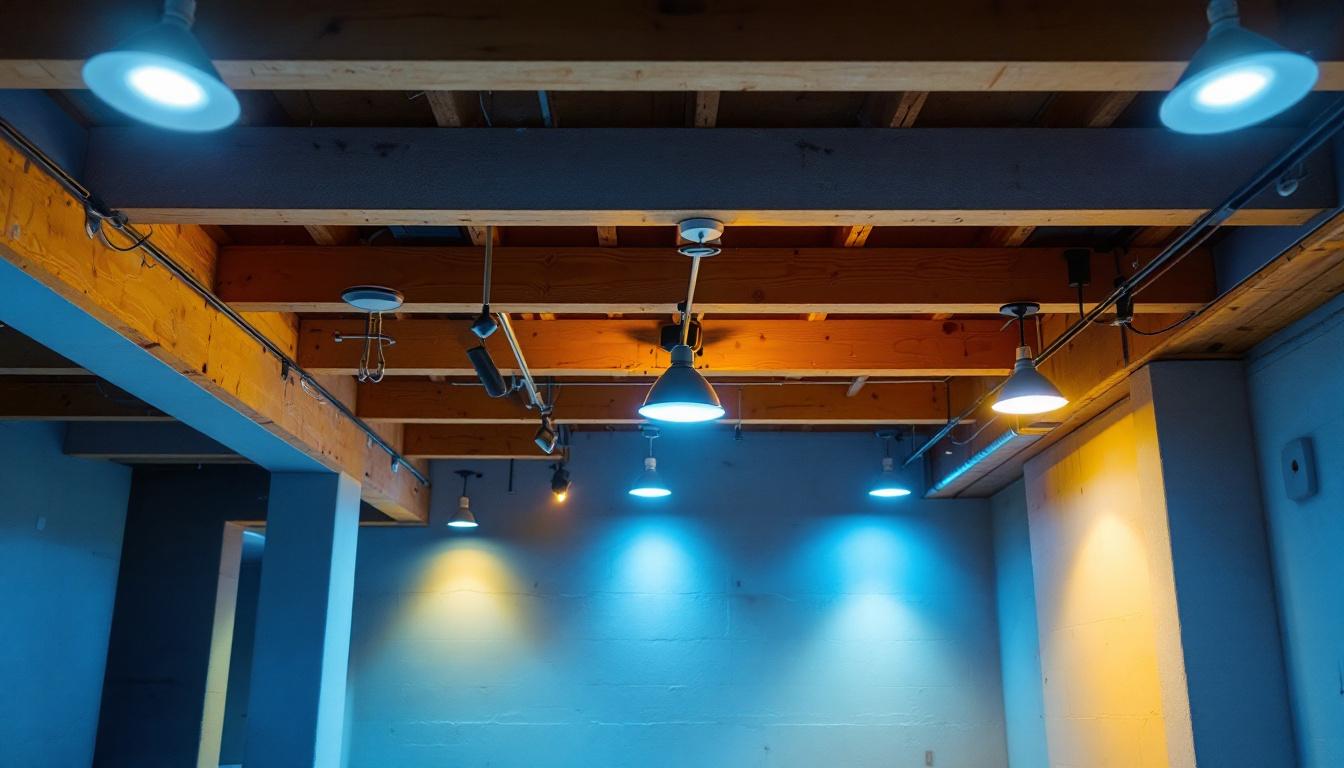
Understanding the Unique Challenges of Basement Lighting with Unfinished Ceilings
Basements with unfinished ceilings present a distinct set of challenges for lighting contractors. Unlike finished ceilings, which offer a clean, uniform surface to mount fixtures and conceal wiring, unfinished ceilings expose joists, ductwork, plumbing, and electrical conduits. This complexity requires a thoughtful approach to lighting design and installation to ensure safety, functionality, and aesthetics.
Lighting contractors must navigate these obstacles while meeting building codes, maximizing illumination, and maintaining ease of access for future maintenance. The absence of a finished ceiling also means that lighting fixtures often become a prominent visual element, making the choice and placement of fixtures critical.
Why Unfinished Ceilings Demand Specialized Lighting Solutions
In unfinished basements, the ceiling height is often lower due to exposed structural elements. This limits the types of fixtures that can be used without causing obstructions or creating an oppressive atmosphere. Additionally, the exposed surfaces can reflect light differently compared to finished ceilings, affecting the overall brightness and distribution of light.
Contractors must consider moisture levels, potential dust accumulation, and the likelihood of future renovations. Selecting fixtures that are durable, easy to clean, and adaptable to changing conditions is essential. Furthermore, lighting designs must provide adequate illumination for various basement activities, from storage and laundry to recreation and workshops.
Moreover, the choice of lighting technology plays a crucial role in optimizing basement environments. LED fixtures, for instance, are not only energy-efficient but also offer a range of color temperatures that can enhance the mood of the space. Warmer tones can create a cozy atmosphere for recreational areas, while cooler tones might be more suitable for workspaces that require focus and clarity. Additionally, dimmable options allow for flexibility, enabling users to adjust the lighting according to their specific needs, whether it’s for a lively gathering or a quiet evening of relaxation.
Another factor to consider is the integration of smart lighting systems. These systems can provide remote control and automation features, allowing homeowners to adjust lighting settings from their smartphones or through voice commands. Such technology not only adds convenience but also enhances energy efficiency, as lights can be programmed to turn off when the space is unoccupied. As basements continue to evolve into multifunctional spaces, the incorporation of innovative lighting solutions becomes increasingly important, ensuring that these areas are both practical and inviting.
Key Considerations for Lighting Installations in Unfinished Basement Ceilings
Successful lighting installations in unfinished basement ceilings hinge on several critical factors. These include fixture selection, wiring methods, compliance with electrical codes, and integration with other basement systems.
Fixture Selection: Balancing Functionality and Aesthetics
Choosing the right fixtures is paramount. Recessed lighting, often favored in finished spaces, can be challenging to install in unfinished ceilings due to the lack of a drywall surface. Instead, surface-mounted fixtures, track lighting, or suspended lighting solutions are commonly employed.
LED fixtures are particularly advantageous in basements because of their energy efficiency, longevity, and low heat output. They also come in a variety of form factors suitable for exposed ceiling joists. For example, linear LED strip lights can be mounted along beams to provide even illumination without overwhelming the space.
Contractors should also consider waterproof or damp-rated fixtures, especially in basements prone to moisture. This ensures durability and safety over time. Additionally, the color temperature of the lighting can significantly impact the ambiance of the basement. Warmer tones can create a cozy and inviting atmosphere, while cooler tones can enhance visibility and make the space feel larger and more open.
Wiring and Electrical Code Compliance
Exposed wiring in unfinished ceilings must be installed in accordance with local electrical codes to prevent hazards. This often means using conduit or armored cable to protect wires from physical damage. Proper support and secure fastening are necessary to avoid sagging or accidental disconnection.
Lighting contractors should also plan wiring routes carefully to avoid interference with plumbing, HVAC ducts, and other mechanical systems. Coordination with other trades is crucial to prevent costly rework and ensure a clean, professional installation. Furthermore, it is advisable to incorporate additional outlets or switches that can accommodate future lighting expansions or modifications, allowing for greater flexibility as the basement evolves in its use.
Accessibility and Maintenance Considerations
One advantage of unfinished ceilings is easier access to wiring and fixtures for repairs or upgrades. However, this benefit is only realized if installations are performed thoughtfully. Fixtures should be mounted in locations that are reachable without excessive difficulty, and wiring should be organized to facilitate troubleshooting.
Using modular lighting systems or fixtures with quick-connect features can further simplify maintenance. This approach reduces downtime and labor costs, which is attractive to both contractors and homeowners. Additionally, incorporating smart lighting technology can enhance the functionality of the space, allowing homeowners to control lighting remotely or set schedules. This not only adds convenience but can also improve energy efficiency by ensuring lights are only on when needed, further optimizing the basement’s utility and comfort.
Design Strategies to Optimize Lighting in Basements with Unfinished Ceilings
Beyond technical considerations, lighting contractors must apply design strategies that enhance the usability and ambiance of basement spaces. Effective lighting transforms a dark, uninviting basement into a comfortable and functional area.
Layered Lighting for Versatility
Layered lighting combines ambient, task, and accent lighting to address diverse needs. In unfinished basements, ambient lighting often comes from broad, surface-mounted fixtures or LED panels that provide general illumination. Task lighting is critical in areas like workbenches, laundry zones, or home gyms, where focused light improves safety and efficiency.
Accent lighting can highlight architectural features or create visual interest, even in utilitarian spaces. For instance, adjustable track lights can illuminate artwork, shelving, or storage areas, adding depth and personality to the basement.
Maximizing Light Distribution and Minimizing Shadows
Exposed beams and ductwork can create shadows that reduce the effectiveness of lighting. Strategically positioning fixtures to minimize these shadows is essential. Using multiple light sources from different angles helps achieve uniform light distribution.
Reflective surfaces, such as light-colored walls or floors, can amplify available light. Contractors should advise clients on complementary finishes that enhance the lighting scheme.
Incorporating Smart Lighting Controls
Smart lighting technologies offer significant benefits in basement environments. Motion sensors can automatically turn lights on or off, improving energy efficiency and convenience. Dimmable fixtures allow users to adjust brightness levels according to activity and mood.
Integrating smart controls also future-proofs the installation, enabling easy upgrades and customization. Lighting contractors should be familiar with these systems to provide comprehensive solutions that meet modern expectations.
Safety and Code Compliance: Non-Negotiable Aspects of Basement Lighting
Safety is paramount in any electrical installation, and basements pose specific risks that must be addressed rigorously. Adhering to electrical codes and safety standards protects occupants and ensures the longevity of the lighting system.
Addressing Moisture and Electrical Hazards
Basements are often susceptible to dampness and occasional flooding. Using fixtures and wiring rated for damp or wet locations prevents corrosion and electrical faults. Ground-fault circuit interrupters (GFCIs) should be installed where required to protect against shock hazards.
Contractors should also inspect for existing water intrusion issues before installation. Proper sealing and drainage can mitigate moisture problems that might compromise electrical components.
Ensuring Adequate Emergency and Egress Lighting
Basements used as living spaces or work areas must have sufficient emergency lighting and clearly marked egress paths. This is critical for occupant safety during power outages or emergencies.
Lighting contractors should collaborate with architects and building inspectors to ensure that lighting plans meet all safety requirements. Installing battery-backed emergency lights or exit signs where necessary enhances safety and code compliance.
Documentation and Permitting
Proper documentation of lighting installations, including wiring diagrams and fixture specifications, is essential for inspections and future maintenance. Contractors should secure all necessary permits and inspections before and after installation to avoid legal and safety issues.
Case Studies: Successful Basement Lighting Installations in Unfinished Ceilings
Examining real-world examples provides valuable insights into effective strategies and common pitfalls in basement lighting projects.
Transforming a Storage Basement into a Functional Workshop
One contractor was tasked with converting a dark, unfinished basement used for storage into a well-lit woodworking workshop. The solution involved installing linear LED fixtures along exposed joists to provide even, shadow-free illumination across work surfaces. Task lights with adjustable arms were added at individual stations for precision work.
All wiring was run through metal conduit to comply with code and protect against accidental damage. The contractor incorporated motion sensors to conserve energy during periods of inactivity. The client reported significant improvements in productivity and safety.
Creating a Cozy Recreation Room with Ambient and Accent Lighting
Another project involved lighting a basement with exposed beams and ductwork intended for use as a family recreation room. Surface-mounted LED panel lights provided ambient illumination, while track lighting highlighted a built-in bookshelf and wall art. Dimmable controls allowed the family to adjust lighting for movie nights or gatherings.
The contractor selected fixtures with a warm color temperature to create a welcoming atmosphere despite the industrial ceiling. Coordination with HVAC installers ensured that lighting did not obstruct air flow or access panels.
Conclusion: The Critical Role of Thoughtful Lighting in Unfinished Basement Ceilings
Lighting installations in basements with unfinished ceilings demand a specialized approach that balances technical requirements, safety, and design. For lighting contractors, understanding the unique challenges and opportunities presented by exposed structural elements is essential to delivering successful projects.
By selecting appropriate fixtures, adhering to electrical codes, and employing strategic design principles, contractors can transform unfinished basements into well-lit, functional spaces that meet client needs and expectations. Embracing innovations such as LED technology and smart controls further enhances the value and sustainability of these installations.
Ultimately, basement lighting in unfinished ceilings is not merely a technical task but a critical component of creating safe, inviting, and versatile environments below ground level.
Illuminate Your Projects with LumenWholesale
Ready to elevate your basement lighting installations to new heights? At LumenWholesale, we provide lighting contractors with the high-quality, specification-grade lighting solutions you need to tackle any challenge. Our extensive selection of fixtures is designed to meet the unique demands of unfinished basement ceilings, ensuring safety, efficiency, and design excellence. With unbeatable wholesale prices and the convenience of free shipping on bulk orders, you can access premium lighting without the premium price tag. Transform your next project with the perfect blend of quality, affordability, and convenience. Discover wholesale lighting at the best value today and light up your basements with confidence.