Introduction to Address Tile Numbers in Lighting
In the evolving landscape of the lighting industry, precision and clarity in installation and maintenance have become paramount. Address tile numbers, a seemingly simple component, have emerged as a critical element that enhances operational efficiency, safety, and customer satisfaction. For lighting contractors, understanding the growing importance of address tile numbers is essential to staying ahead in a competitive market.
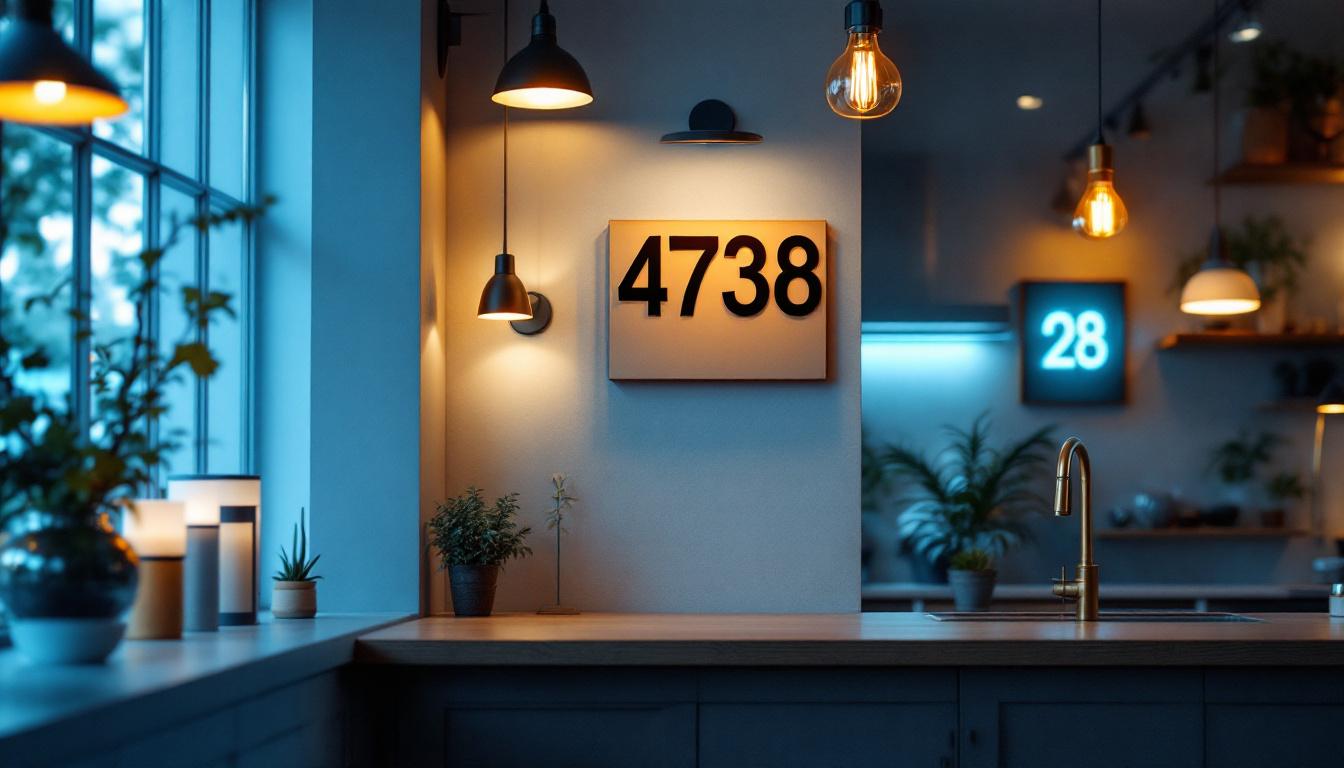
Address tile numbers refer to the clearly visible numerical markers placed on buildings, poles, or fixtures that indicate the exact address or location. These markers are crucial for identifying specific points in a lighting network, especially in urban and suburban environments where multiple installations coexist. Their role extends beyond mere identification; they are integral to emergency response, maintenance scheduling, and asset management.
Moreover, the design and placement of address tile numbers can significantly impact visibility and accessibility. For instance, reflective materials and strategic positioning can enhance readability during nighttime or in adverse weather conditions, ensuring that emergency services can quickly locate critical lighting infrastructure. This not only aids in quicker response times but also contributes to overall public safety. Furthermore, as smart lighting systems become more prevalent, the integration of address tile numbers with digital mapping and GPS technologies is paving the way for more sophisticated asset management solutions, allowing contractors to monitor and manage lighting installations with unprecedented accuracy.
In addition to their practical applications, address tile numbers also play a role in branding and aesthetics. For businesses and municipal entities, well-designed address markers can enhance the visual appeal of a property while providing essential information. This dual functionality can improve customer perception and foster a sense of community pride. As the lighting industry continues to innovate, the evolution of address tile numbers will likely reflect broader trends in design and technology, making them an exciting area for future exploration and development.
The Role of Address Tile Numbers in Modern Lighting Projects
Enhancing Installation Accuracy
Lighting contractors often face challenges in ensuring that installations are carried out at the correct locations, particularly in large-scale projects involving numerous fixtures. Address tile numbers provide a straightforward solution by offering a reliable reference point. This reduces the risk of errors during the installation phase, saving time and resources.
For example, in street lighting projects, each pole can be tagged with an address tile number that corresponds to a specific location on the project blueprint. This system allows contractors to verify installation sites quickly and ensures that lighting fixtures are placed exactly where planned. Additionally, the use of address tile numbers can enhance communication among team members. When everyone is aware of the numbering system, it fosters a shared understanding of the project layout, thereby minimizing misunderstandings and miscommunications that can lead to costly mistakes.
Streamlining Maintenance and Repairs
Maintenance teams benefit significantly from the presence of address tile numbers. When a lighting fixture malfunctions or requires routine servicing, technicians can identify the exact location without ambiguity. This precision minimizes downtime and enhances the efficiency of repair operations.
Moreover, address tile numbers facilitate the use of digital asset management systems. By linking each numbered tile to a database entry, contractors can track the maintenance history, warranty status, and technical specifications of every lighting fixture. This integration supports proactive maintenance strategies and reduces long-term operational costs. Furthermore, having a systematic approach to identifying fixtures can also aid in emergency situations, such as during power outages or severe weather events. Technicians can quickly locate and address issues, ensuring that critical areas remain illuminated and safe for the public, which is particularly vital in urban environments where safety is a primary concern.
Address Tile Numbers and Safety Considerations
Improving Emergency Response Times
One of the most critical benefits of address tile numbers is their role in emergency situations. Whether responding to a power outage, accident, or security issue, emergency personnel rely on clear location markers to navigate quickly. Address tile numbers provide an unambiguous reference that can significantly reduce response times.
In areas with dense lighting networks, such as industrial parks or residential complexes, the presence of address tile numbers ensures that responders can pinpoint problem areas without delay. This capability not only protects public safety but also helps contractors demonstrate their commitment to community well-being. Moreover, during nighttime emergencies or in adverse weather conditions, the visibility of these numbers can be a game-changer. Brightly colored tiles or reflective materials can enhance visibility, ensuring that emergency services can locate the site of an incident swiftly, regardless of the time of day or weather conditions.
Furthermore, the strategic placement of address tile numbers can also aid in improving overall community safety. By ensuring that all properties are clearly marked, local authorities can conduct more efficient patrols and monitoring, thereby deterring potential criminal activities. This proactive approach to safety not only benefits residents but also fosters a sense of security within the community, encouraging more people to engage in outdoor activities and community events.
Supporting Compliance with Regulatory Standards
Regulatory bodies increasingly emphasize the importance of clear and consistent location marking in public infrastructure projects. Address tile numbers help lighting contractors comply with these standards, avoiding potential fines and project delays. Furthermore, adherence to such regulations enhances the contractor’s reputation and fosters trust with clients and stakeholders.
In addition to compliance, the implementation of address tile numbers can also streamline the process of urban planning and development. As cities expand and evolve, having a standardized system for marking addresses can facilitate better data collection and analysis for city planners. This system can assist in identifying patterns related to traffic flow, emergency response effectiveness, and even demographic trends. By integrating address tile numbers into broader urban infrastructure, municipalities can create a more organized and efficient environment that benefits all residents. Additionally, the use of innovative technologies, such as GPS mapping and mobile applications, can further enhance the effectiveness of these address systems, making it easier for both residents and service providers to navigate the urban landscape.
Technological Integration and Future Trends
Smart Lighting Systems and Address Tile Numbers
The rise of smart lighting systems has introduced new dimensions to the use of address tile numbers. These systems rely on precise location data to optimize lighting performance, energy consumption, and user interaction. Address tile numbers serve as physical anchors that correspond to digital identifiers within smart networks.
For instance, in a smart city environment, each address tile number can be linked to sensors and control modules that adjust lighting based on real-time conditions such as traffic flow or weather. This integration enhances sustainability and operational efficiency, making address tile numbers indispensable in next-generation lighting projects.
Integration with Geographic Information Systems (GIS)
Geographic Information Systems (GIS) are increasingly utilized in infrastructure management, including lighting networks. Address tile numbers provide a tangible reference that can be mapped accurately within GIS platforms. This mapping enables comprehensive spatial analysis, asset tracking, and strategic planning.
Lighting contractors who adopt GIS integration benefit from improved project visualization, better resource allocation, and enhanced communication with clients and municipal authorities. The synergy between address tile numbers and GIS technology represents a significant advancement in lighting project management.
Practical Considerations for Lighting Contractors
Material Selection and Durability
When selecting address tile numbers, contractors must consider material durability to withstand environmental factors such as UV exposure, moisture, and physical impact. Common materials include high-grade plastics, metals, and weather-resistant composites. The choice of material affects not only longevity but also visibility and maintenance requirements.
Ensuring that address tile numbers remain legible over time is crucial for maintaining the benefits they provide. Contractors should prioritize products that offer high contrast, reflective properties, and resistance to fading.
Placement Strategies for Maximum Visibility
Effective placement of address tile numbers is vital for their functionality. They should be positioned at eye level or in locations easily visible to both pedestrians and vehicles. In some cases, illumination of the tiles themselves may be necessary, especially in poorly lit areas or for nighttime visibility.
Contractors should also coordinate placement with local regulations and client preferences, balancing visibility with aesthetic considerations. Proper installation techniques ensure that address tile numbers remain securely attached and are not obstructed by vegetation or other infrastructure.
Cost-Benefit Analysis
While the initial investment in address tile numbers may seem modest, the long-term benefits are substantial. Reduced installation errors, faster maintenance, improved safety, and regulatory compliance collectively contribute to cost savings and enhanced project outcomes.
Contractors should present these benefits to clients as part of a comprehensive project proposal, highlighting how address tile numbers add value beyond their apparent simplicity. This approach can differentiate a contractor in a competitive bidding environment.
Case Studies Highlighting the Impact of Address Tile Numbers
Urban Street Lighting Upgrade
A municipal lighting contractor undertook a city-wide street lighting upgrade involving thousands of fixtures. By implementing address tile numbers on each pole, the contractor streamlined installation verification and maintenance scheduling. The result was a 25% reduction in installation errors and a 30% improvement in maintenance response times.
This project demonstrated how address tile numbers facilitate large-scale coordination and contribute to operational excellence.
Smart Campus Lighting Installation
In a university campus project integrating smart lighting controls, address tile numbers were used to link physical fixtures with their digital counterparts in the control system. This linkage enabled precise adjustments based on occupancy and daylight levels, resulting in a 40% reduction in energy consumption.
The success of this project underscored the importance of address tile numbers in enabling advanced technological solutions.
Conclusion: Embracing Address Tile Numbers for Future Success
For lighting contractors, address tile numbers are no longer a mere accessory but a fundamental component of modern lighting projects. Their role in enhancing installation accuracy, maintenance efficiency, safety, and technological integration is undeniable. As the industry moves towards smarter, more sustainable solutions, the strategic use of address tile numbers will continue to grow in importance.
Contractors who recognize and implement best practices related to address tile numbers position themselves as leaders in quality and innovation. By investing in durable materials, thoughtful placement, and integration with digital systems, they can deliver superior outcomes for clients and communities alike.
Ultimately, address tile numbers represent a small but powerful tool that contributes significantly to the success and professionalism of lighting projects in today’s dynamic environment.
Illuminate Your Projects with LumenWholesale
Ready to elevate your lighting installations with the precision of address tile numbers and the highest quality lighting solutions? Look no further than LumenWholesale, where we provide contractors with spec-grade lighting products at unbeatable wholesale prices. Our commitment to quality, affordability, and convenience ensures that you have access to the best lighting products for your projects without the burden of inflated costs. Take advantage of our hassle-free bulk buying and free shipping to get premium lighting at the best value. Don’t compromise on excellence; choose LumenWholesale for all your lighting needs. Discover our extensive selection and start transforming your lighting projects today by visiting Wholesale Lighting at the Best Value.