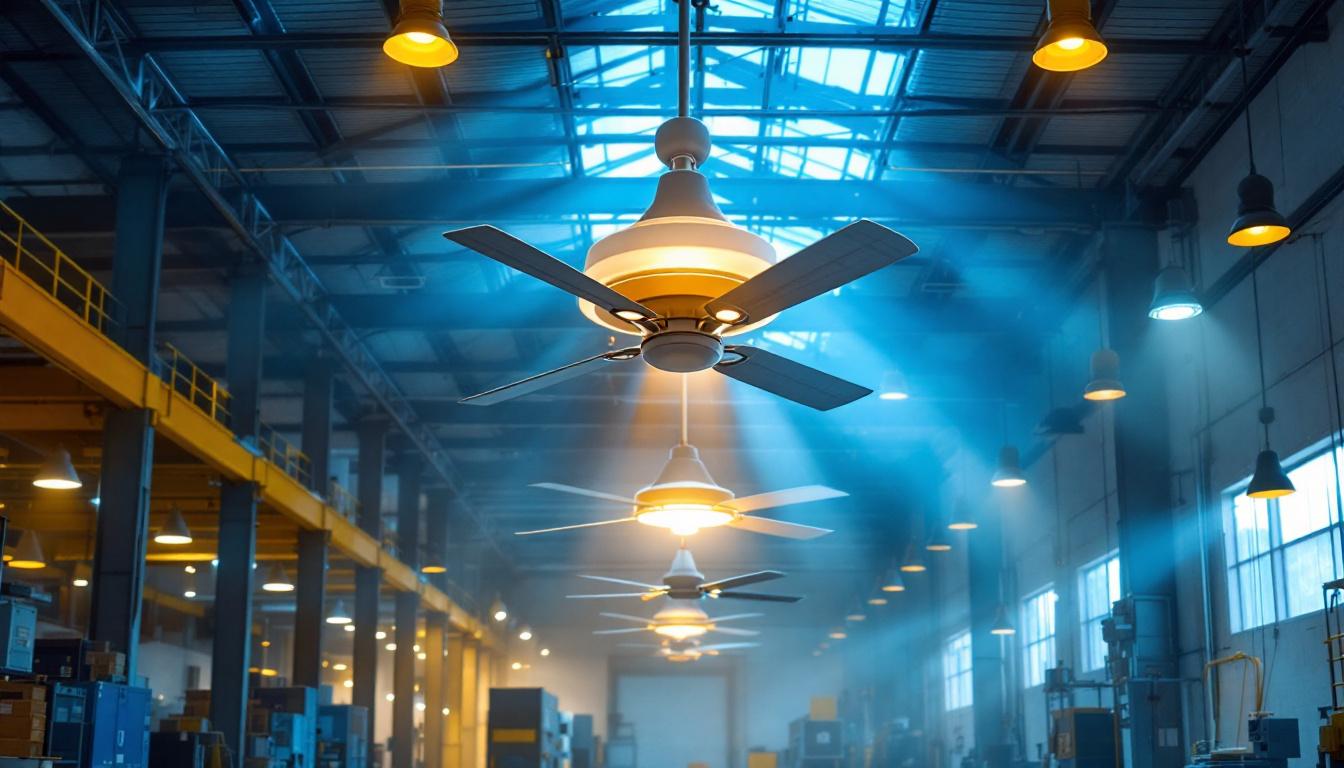
Revolutionizing Warehouse Environments with Large Ceiling Fans
Warehouses are unique spaces that demand specialized solutions for climate control and lighting. The sheer volume of air and the expansive floor area make traditional HVAC and lighting systems less effective or prohibitively expensive. Large ceiling fans have emerged as a game-changer, not only improving air circulation but also influencing lighting strategies within these vast industrial environments.
Big ceiling fans, often spanning 7 feet or more in diameter, move air efficiently across large spaces. This capability reduces temperature stratification, which is a common problem in tall warehouse ceilings where warm air rises and cool air settles near the floor. By pushing the warm air down during winter and creating a cooling breeze in summer, these fans optimize the indoor climate and reduce energy consumption.
For lighting contractors, understanding the integration of big ceiling fans with warehouse lighting systems is crucial. These fans affect light distribution, fixture placement, and even the types of lighting technologies that perform best in such dynamic environments. The strategic positioning of lighting fixtures can be enhanced by the airflow created by the fans, ensuring that light reaches all corners of the warehouse without creating harsh shadows or overly bright spots.
Moreover, the use of large ceiling fans can significantly enhance employee comfort and productivity. In environments where workers are engaged in physically demanding tasks, maintaining a consistent and comfortable temperature can lead to improved morale and reduced fatigue. Studies have shown that a well-ventilated space can lead to higher levels of concentration and efficiency, making it a win-win for both employees and employers. Additionally, the aesthetic appeal of these fans can contribute to a more inviting atmosphere, transforming the often stark and utilitarian look of warehouses into a more pleasant working environment.
Another important aspect to consider is the maintenance and operational costs associated with large ceiling fans. Compared to traditional HVAC systems, which can be costly to install and operate, these fans typically have lower energy requirements and are easier to maintain. Many modern large ceiling fans come equipped with energy-efficient motors and smart controls, allowing for automated adjustments based on occupancy and temperature, further enhancing energy savings. This not only contributes to a greener operation but also aligns with the growing emphasis on sustainability within industrial sectors.
How Large Ceiling Fans Impact Lighting Design in Warehouses
Addressing Airflow and Heat Dissipation Around Fixtures
Warehouse lighting typically involves high-intensity fixtures such as LED high bays or metal halide lamps mounted on ceilings or rafters. These fixtures generate heat, which can affect both their lifespan and performance. Large ceiling fans help dissipate this heat by circulating air, which can extend the life of lighting components and maintain consistent light output.
Lighting contractors must account for the airflow patterns created by these fans. Fixtures placed too close to the fan blades may experience mechanical stress or vibration, potentially leading to premature failure. Proper spacing and mounting techniques are essential to ensure safety and durability. Additionally, the integration of smart technology can enhance this dynamic; for instance, sensors that monitor temperature and humidity levels can adjust fan speeds accordingly, optimizing both air circulation and lighting performance in real-time.
Optimizing Light Distribution with Fan Placement
Big ceiling fans influence how light spreads across the warehouse floor. When fans are strategically positioned, they can reduce shadows and glare caused by uneven lighting. This is especially important in warehouses where clear visibility is critical for safety and operational efficiency.
For example, fans installed near clusters of LED high bays can help disperse light more evenly by breaking up concentrated beams and reducing hotspots. Lighting contractors should collaborate with HVAC and facility managers to coordinate fan and fixture layouts for maximum effectiveness. Furthermore, considering the height and angle of the fans can also play a significant role in enhancing light distribution. Fans that are angled downward can push air directly over work areas, ensuring that both airflow and light are optimized for tasks requiring precision and attention to detail. This thoughtful approach not only improves the overall working environment but can also lead to increased productivity and employee satisfaction, as workers benefit from a well-lit and comfortable space.
Energy Efficiency: A Dual Benefit for Lighting and Climate Control
Reducing HVAC Loads Through Air Movement
One of the biggest operational costs in warehouses is heating and cooling. Large ceiling fans can reduce reliance on HVAC systems by maintaining a more uniform temperature throughout the space. This effect is particularly valuable in warehouses with high ceilings where heat naturally rises.
By circulating air, big ceiling fans reduce the need for heating during colder months by pushing warm air downward. In warmer months, the fans create a cooling breeze that helps workers stay comfortable without excessively lowering the thermostat. This dual function directly translates into lower energy bills and reduced environmental impact.
Complementing LED Lighting for Maximum Savings
LED lighting has become the standard in warehouse environments due to its energy efficiency and long lifespan. When combined with large ceiling fans, the overall energy footprint of a warehouse can be significantly reduced. Fans help maintain optimal operating temperatures for LED fixtures, preventing overheating and ensuring consistent performance.
Lighting contractors can promote this synergy to clients as a comprehensive energy-saving strategy. Integrating fan controls with lighting systems-such as using occupancy sensors and timers-can further enhance efficiency by ensuring both systems operate only when needed.
Installation Considerations for Big Ceiling Fans in Warehouses
Structural Requirements and Safety Protocols
Installing large ceiling fans in warehouses requires careful planning. The structural integrity of the ceiling or roof trusses must be assessed to support the weight and dynamic forces generated by the fans. Lighting contractors often work alongside structural engineers to ensure compliance with building codes and safety standards.
Vibration dampening and secure mounting hardware are critical to prevent damage to both fans and lighting fixtures. Additionally, electrical wiring must be designed to accommodate the power demands of these high-capacity fans without interfering with lighting circuits.
Maintenance and Accessibility
Regular maintenance is essential to keep big ceiling fans operating efficiently. Bearings, blades, and motors require periodic inspection and servicing. Lighting contractors should advise warehouse managers on designing lighting layouts that allow easy access to both fans and fixtures for maintenance tasks.
In some cases, integrating lighting with fan assemblies can simplify installation and upkeep. For instance, some manufacturers offer combined fan-light units designed specifically for industrial applications, reducing the number of separate components and streamlining maintenance.
Case Studies: Successful Integration of Big Ceiling Fans and Lighting
Warehouse Distribution Center in the Midwest
A large distribution center in the Midwest implemented 14-foot diameter ceiling fans alongside LED high bay lighting. The fans reduced the facility’s heating costs by nearly 20%, while the LED fixtures cut lighting energy consumption by 40%. The combined effect led to a significant reduction in overall utility expenses.
The lighting contractor worked closely with the facility’s operations team to position fans and fixtures for optimal airflow and illumination. This collaboration ensured minimal shadowing and glare, improving worker safety and productivity.
Automotive Parts Warehouse in the Southeast
In a humid climate, an automotive parts warehouse installed big ceiling fans to combat heat and humidity buildup. The fans helped maintain a consistent temperature, reducing the strain on HVAC units. The lighting system was upgraded to LED with integrated controls synchronized with fan operation.
This integration allowed the facility to automate lighting and air circulation based on occupancy and ambient conditions, resulting in a 30% reduction in combined energy use. The lighting contractor’s expertise in system integration was key to achieving these results.
The Future of Warehouse Lighting and Airflow Solutions
Smart Controls and IoT Integration
Advancements in smart building technology are transforming how warehouses manage lighting and airflow. Internet of Things (IoT) sensors can monitor temperature, humidity, occupancy, and light levels in real time. These data points enable automated adjustments to ceiling fans and lighting systems, optimizing comfort and efficiency.
Lighting contractors are increasingly involved in designing these integrated systems, which require knowledge of both electrical and mechanical components. The ability to program and customize fan speeds and lighting intensity based on actual conditions represents the next step in warehouse environmental control.
Innovations in Fan and Lighting Design
Manufacturers continue to innovate with fan blade materials, motor efficiency, and aerodynamic designs that reduce noise and power consumption. On the lighting front, tunable white LEDs and advanced optics allow for better color rendering and adaptable illumination levels.
Combining these innovations will enable warehouses to create safer, more comfortable, and energy-efficient environments. Lighting contractors who stay informed about these trends can offer clients cutting-edge solutions that deliver measurable benefits.
Conclusion: Why Lighting Contractors Should Embrace Big Ceiling Fans
Big ceiling fans have evolved beyond simple air movers to become integral components of warehouse environmental systems. Their impact on lighting design, energy efficiency, and worker comfort is profound. For lighting contractors, understanding how to integrate these fans with lighting systems is essential to delivering comprehensive, effective solutions.
By considering airflow, fixture placement, energy savings, and maintenance from the outset, contractors can help warehouse clients achieve operational excellence. The future points toward smarter, more connected systems where lighting and airflow work hand in hand to create optimal industrial environments.
Illuminate Your Warehouse with LumenWholesale
Ready to elevate your warehouse lighting and climate control systems? Look no further than LumenWholesale for the ultimate selection of spec-grade lighting products. Our commitment to quality and affordability ensures that you can implement the latest big ceiling fan and lighting solutions seamlessly. Say goodbye to inflated markups and hello to hassle-free bulk buying with free shipping. Don’t compromise on performance—choose LumenWholesale for Wholesale Lighting at the Best Value and watch your warehouse operations transform.