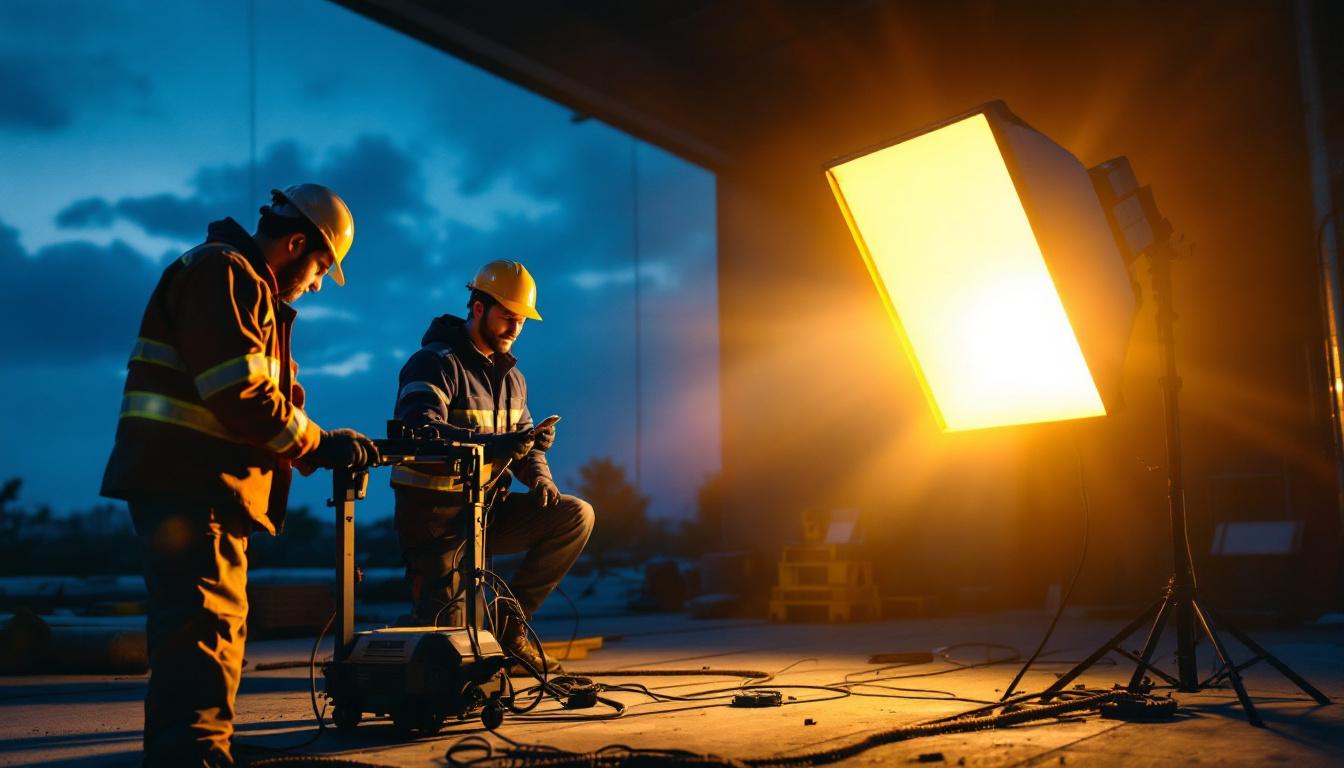
Understanding Commercial Electric Flood Lights
Commercial electric flood lights are a cornerstone of outdoor and large-area illumination. Their ability to deliver powerful, broad-spectrum light makes them indispensable for warehouses, parking lots, sports arenas, and construction sites. For lighting contractors, mastering the nuances of these fixtures is critical—not just for installation but for maintenance, troubleshooting, and client consultation.
Training your team effectively starts with a solid grasp of the technical fundamentals. Flood lights vary widely in wattage, beam angle, color temperature, and mounting options. Each specification impacts the performance and suitability of the fixture for different environments. For instance, a 200-watt LED flood light with a 120-degree beam angle is ideal for wide, open spaces, while a narrower beam might suit targeted security lighting.
Understanding these variables allows your team to make informed decisions, ensuring that installations meet the client’s needs and comply with safety standards. It also prepares them to explain options clearly to customers, which builds trust and reduces costly errors.
Moreover, the choice of flood light can significantly influence energy efficiency and operational costs. LED flood lights, for example, consume less power compared to traditional halogen or incandescent options, offering a longer lifespan and lower maintenance frequency. This not only benefits the environment but also enhances the client’s return on investment. Additionally, many modern flood lights come equipped with smart technology, allowing for remote control and automation, which can further optimize energy usage and provide flexibility for various lighting scenarios.
Furthermore, understanding the environmental impact of flood lighting is becoming increasingly important. With the rise of sustainability initiatives, many businesses are looking for lighting solutions that minimize light pollution and energy waste. This has led to the development of fixtures that incorporate features such as motion sensors and dimming capabilities, which adjust the light output based on real-time needs. Educating your team about these advancements not only positions your business as a forward-thinking provider but also helps clients make choices that align with their sustainability goals.
Essential Training Components for Your Lighting Team
Technical Knowledge and Product Familiarity
Start with comprehensive product training. Your team should know the ins and outs of the most common commercial flood lights, including LED, halogen, and metal halide options. LED flood lights have become the industry standard due to their energy efficiency, longevity, and lower maintenance requirements. However, understanding the pros and cons of each technology is crucial for tailoring solutions.
Include training on electrical specifications such as voltage requirements, current draw, and compatibility with existing electrical systems. This knowledge prevents installation errors that could lead to fixture failure or safety hazards. Additionally, encourage your team to stay updated on emerging technologies and innovations in lighting. For instance, advancements in smart lighting systems offer features like remote control and automated dimming, which can significantly enhance user experience and energy savings. Familiarity with these trends not only empowers your team but also positions your company as a forward-thinking leader in the industry.
Hands-On Installation and Maintenance
Practical experience is irreplaceable. Organize workshops where team members practice mounting flood lights, wiring them correctly, and adjusting beam angles. Emphasize the importance of secure fixtures and proper grounding to avoid electrical faults or accidents.
Maintenance training should cover routine inspections, cleaning techniques to preserve light output, and troubleshooting common issues like flickering or dimming. Teaching your team to identify signs of wear or damage early can extend fixture lifespan and reduce downtime for clients. Furthermore, consider incorporating case studies into your training sessions. Analyzing real-world scenarios where improper installation or maintenance led to significant issues can provide valuable lessons and reinforce the importance of diligence and attention to detail in every project.
Safety Protocols and Compliance
Safety cannot be overstated. Flood light installations often occur at heights or in challenging environments. Your team must be proficient in using ladders, scaffolding, and personal protective equipment. Additionally, they should understand local electrical codes and regulations to ensure every installation is compliant.
Incorporate training on lockout/tagout procedures and emergency response plans. This not only protects your team but also enhances your company’s reputation for professionalism and reliability. Moreover, consider conducting regular safety drills and refresher courses to keep safety protocols fresh in your team’s minds. Engaging in discussions about near-miss incidents or safety concerns can foster a culture of safety awareness, empowering your team to prioritize their well-being and that of their colleagues on every job site. By making safety a core component of your training, you not only protect your employees but also build trust with clients who value a commitment to high standards in every aspect of your work.
Effective Training Strategies for Lighting Contractors
Structured Learning Paths
Develop a training curriculum that progresses logically from basic concepts to advanced applications. Start with classroom sessions covering theory, followed by hands-on workshops and field training. This layered approach reinforces learning and builds confidence.
Consider creating customized modules tailored to different team roles—installers, electricians, project managers—so each member receives relevant knowledge without unnecessary overload. For instance, installers might focus more on practical skills and safety protocols, while project managers could delve deeper into project management software and budgeting techniques. This targeted training ensures that each team member is equipped with the skills necessary for their specific responsibilities, ultimately leading to more efficient project execution.
Utilizing Technology and Resources
Leverage digital tools such as interactive tutorials, videos, and virtual simulations. These resources can demonstrate complex procedures like wiring configurations or troubleshooting steps in a controlled environment. They also allow team members to revisit material at their own pace, which is particularly beneficial for those who may need extra time to grasp intricate concepts.
Encourage participation in manufacturer-led training sessions or certification programs. These often provide the latest insights into product innovations and industry best practices. Additionally, consider integrating augmented reality (AR) applications that allow trainees to visualize installations in real-time, enhancing their understanding of spatial relationships and design considerations. Such innovative tools not only make learning more engaging but also prepare contractors to adapt to rapidly evolving technologies in the lighting industry.
Mentorship and Peer Learning
Pair less experienced team members with seasoned professionals. Mentorship accelerates skill development and fosters a culture of continuous improvement. Encourage open communication where questions and knowledge sharing are welcomed. This relationship can also help to instill a sense of accountability and pride in workmanship, as mentees learn the importance of quality and attention to detail from their mentors.
Regular team meetings to discuss recent projects, challenges, and solutions can also enhance collective expertise and problem-solving abilities. Incorporating case studies from past projects into these discussions can provide practical context, allowing team members to analyze what worked well and what could be improved. Furthermore, establishing a feedback loop where team members can share their insights and experiences creates an environment of collaborative learning, ultimately leading to more innovative approaches to lighting solutions.
Measuring Training Success and Continuous Improvement
Assessment and Feedback
Implement assessments to gauge understanding and practical skills. Written quizzes, hands-on tests, and real-world project evaluations provide measurable indicators of progress. Use these results to identify knowledge gaps and tailor future training accordingly. This structured approach not only helps in quantifying the effectiveness of the training but also empowers trainees to take ownership of their learning journey. By understanding their strengths and weaknesses, they can focus on areas that require more attention, leading to a more personalized and impactful training experience.
Solicit feedback from trainees about the training process itself. Their insights can reveal which methods are most effective and where adjustments are needed. Consider using anonymous surveys to encourage honest responses, or facilitate open discussions where trainees can share their thoughts in a comfortable environment. This two-way communication fosters a culture of continuous improvement and demonstrates to trainees that their opinions are valued, ultimately enhancing their engagement and motivation throughout the training program.
Keeping Up with Industry Trends
The lighting industry evolves rapidly, with advances in LED technology, smart controls, and energy regulations. Encourage your team to stay informed by subscribing to industry publications, attending trade shows, and participating in webinars. Additionally, consider creating a resource library that includes articles, videos, and case studies on the latest innovations and best practices. This not only aids in keeping the team updated but also serves as a valuable reference point for ongoing projects and challenges they may encounter in the field.
Regularly update your training materials to reflect new standards, products, and techniques. This commitment to ongoing education ensures your team remains competitive and capable of delivering top-tier service. Furthermore, integrating real-time case studies from recent projects can provide practical context to theoretical knowledge, making the training more relevant and engaging. By showcasing successful implementations of new technologies or methods, you can inspire your team to think creatively and apply what they’ve learned in innovative ways, ultimately enhancing their problem-solving skills and adaptability in a fast-paced industry.
Building Client Confidence Through Skilled Teams
Clients rely heavily on lighting contractors to provide safe, efficient, and aesthetically pleasing solutions. A well-trained team not only executes installations flawlessly but also communicates effectively with clients, addressing concerns and explaining benefits clearly.
By investing in comprehensive training, you enhance your company’s reputation and increase client satisfaction. This often leads to repeat business, referrals, and a stronger market position.
Ultimately, the success of commercial electric flood light projects depends on the expertise and professionalism of the people behind the scenes. Training your team thoroughly is an investment that pays dividends in quality, safety, and customer trust.
Get the Best in Lighting with LumenWholesale
Ready to elevate your lighting projects with superior quality and unbeatable value? Look no further than LumenWholesale for all your commercial electric flood light needs. Our spec-grade lighting products are designed to meet the highest industry standards, ensuring your team delivers top-notch installations every time. Say goodbye to inflated markups and hello to hassle-free bulk buying with free shipping. Trust LumenWholesale to provide the perfect blend of quality, affordability, and convenience. Take the first step towards enhancing your lighting solutions by visiting Wholesale Lighting at the Best Value today!