Choosing the Wrong Lumens for the Space
One of the most common pitfalls lighting contractors face when installing LED floodlights is misjudging the required brightness. Lumens measure the total amount of visible light emitted by a source, and selecting the wrong lumen output can dramatically affect the effectiveness of the lighting.
Too few lumens result in dim, ineffective illumination that fails to meet safety or aesthetic standards. Conversely, an excessively bright floodlight can cause glare, discomfort, and energy waste. For example, a parking lot might require between 2,000 and 5,000 lumens per fixture depending on its size and layout, while a residential backyard might only need 800 to 1,200 lumens.
Lighting contractors should always perform a thorough site assessment and consult recommended lumen levels for the intended application. Using lighting design software or photometric reports can help ensure the chosen floodlights deliver the right intensity without over- or under-lighting the area.
Additionally, it’s essential to consider the color temperature of the light, which is measured in Kelvins (K). A warmer light (around 2700K-3000K) can create a cozy atmosphere for residential spaces, while a cooler light (5000K-6500K) is often preferred for commercial or security applications, as it enhances visibility and alertness. The interplay between lumens and color temperature can significantly influence the ambiance and functionality of a space, making it vital for contractors to understand both elements when planning a lighting installation.
Moreover, the placement and angle of the floodlights also play a crucial role in achieving the desired lighting effect. For instance, mounting floodlights too high can lead to uneven lighting and shadows, while improper angling may cause light to spill into unwanted areas, contributing to light pollution. By carefully considering the arrangement and aiming of the fixtures, contractors can optimize the distribution of light, ensuring that every corner of the space is adequately illuminated while minimizing energy consumption and enhancing the overall aesthetic appeal.
Ignoring Color Temperature and Its Impact
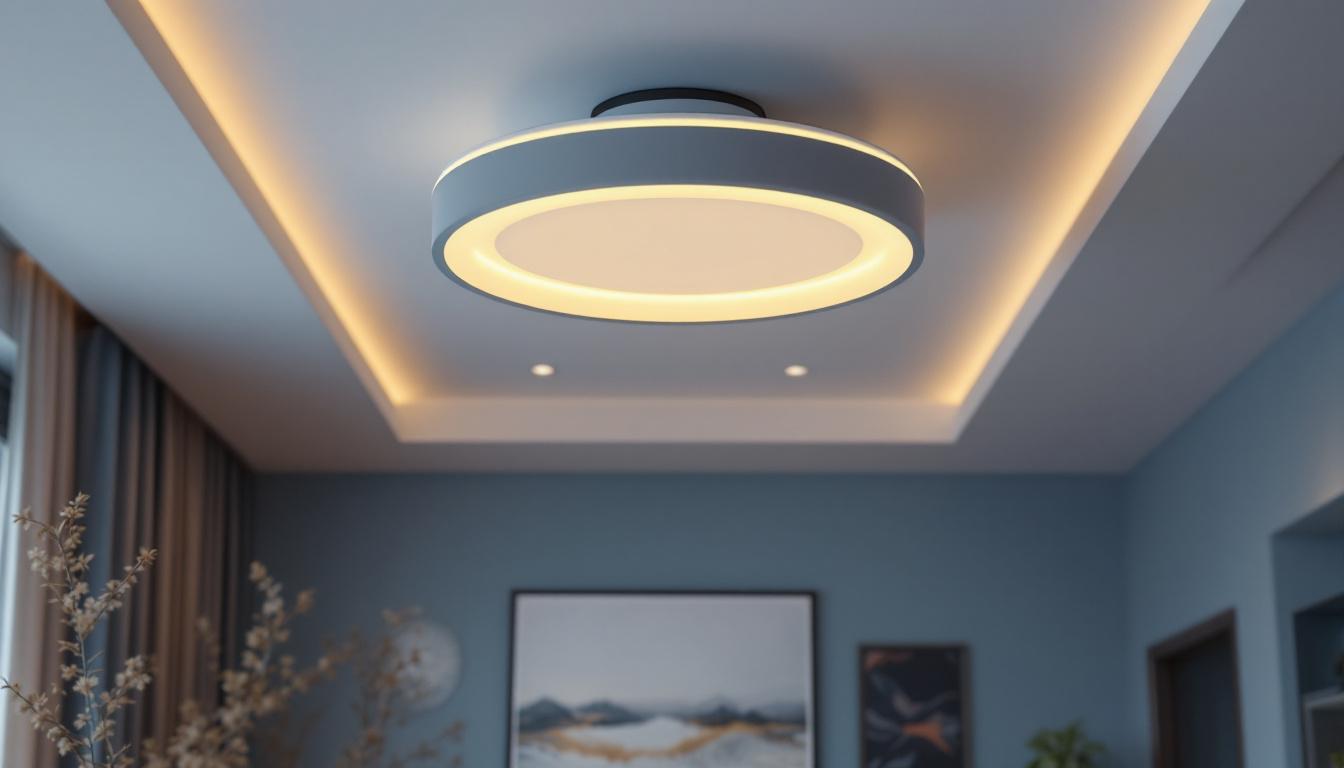
Color temperature, measured in Kelvins (K), influences the ambiance and functionality of a space. LED floodlights come in a range of color temperatures, from warm white (around 2700K) to cool white (up to 6500K). Selecting the wrong color temperature can undermine the lighting’s purpose.
For security lighting, cooler temperatures in the 4000K to 5000K range are preferred because they mimic daylight and improve visibility. Warmer tones might be better suited for residential or hospitality settings where a softer, inviting glow is desired. Installing a 6500K floodlight in a cozy outdoor patio, for instance, could create an overly harsh atmosphere.
Lighting contractors should discuss color temperature options with clients and consider the environment’s function and mood before making a decision. Balancing aesthetics and practicality is key to a successful LED floodlight installation.
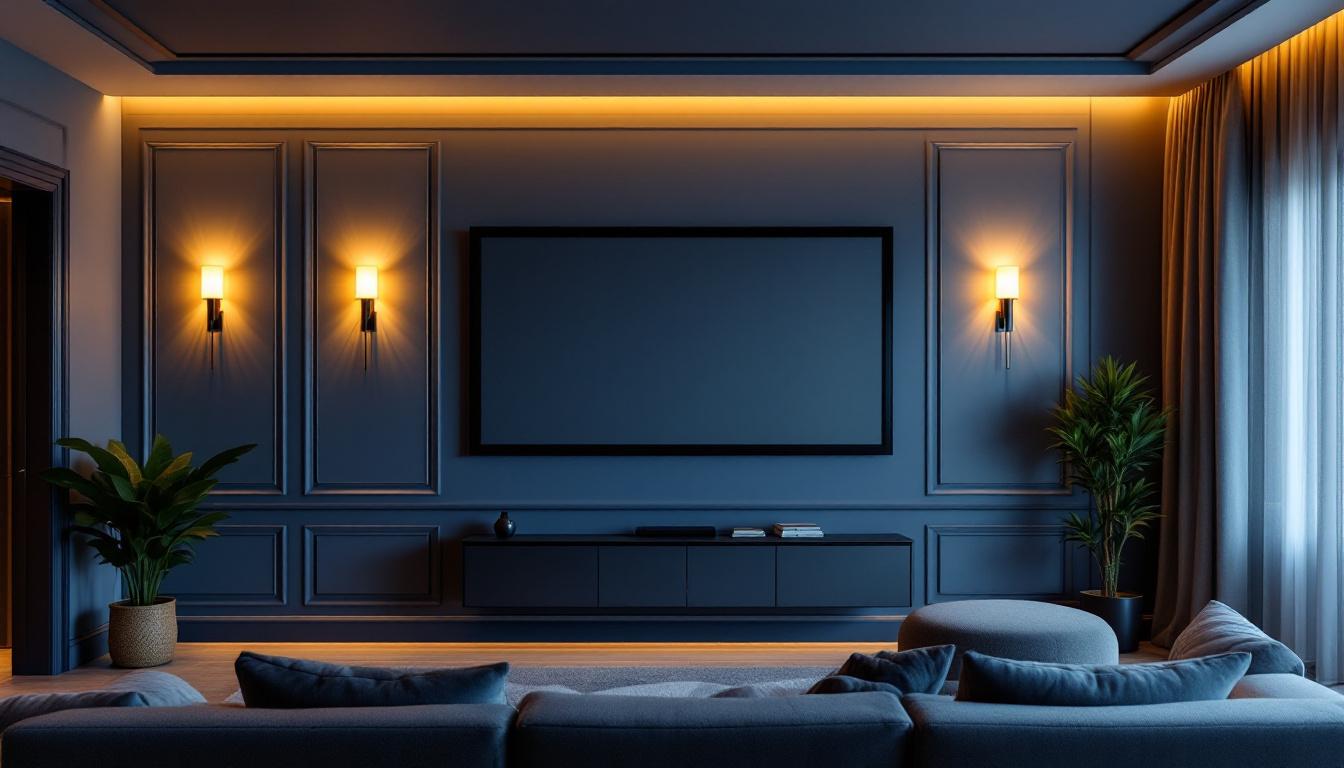
Furthermore, the psychological effects of color temperature cannot be overlooked. Research indicates that cooler light can enhance alertness and concentration, making it ideal for workspaces or areas where tasks requiring focus are performed. Conversely, warmer light has been shown to promote relaxation and comfort, which is particularly beneficial in settings like restaurants or lounges where patrons are encouraged to linger. This understanding of human response to different lighting conditions can play a significant role in designing spaces that cater to specific activities and experiences.
Additionally, the integration of smart lighting technology allows for dynamic adjustments to color temperature based on time of day or user preference. For instance, a system could automatically shift from a bright, cool light during the day to a warm, soothing glow in the evening, creating a seamless transition that enhances the overall environment. This adaptability not only improves the functionality of a space but also supports energy efficiency, as users can tailor their lighting needs to align with their daily routines and activities.
Overlooking Beam Angle and Coverage Area
Beam angle determines how light spreads from the fixture. A narrow beam angle concentrates light in a tight spot, while a wide beam angle disperses light over a broader area. Choosing the wrong beam angle can lead to uneven lighting and shadows, which compromise both safety and visual appeal.
For instance, a floodlight with a 15-degree beam angle is ideal for highlighting architectural features or signage, while a 60-degree beam angle works better for general area illumination like sports fields or large parking lots. Installing a floodlight with too narrow a beam angle in a wide-open space means many dark spots remain unlit.
Lighting contractors should carefully match beam angles to the spatial requirements of the project. Consulting photometric data and performing on-site tests can prevent costly mistakes and ensure uniform lighting coverage.
Neglecting Proper Mounting Height and Positioning
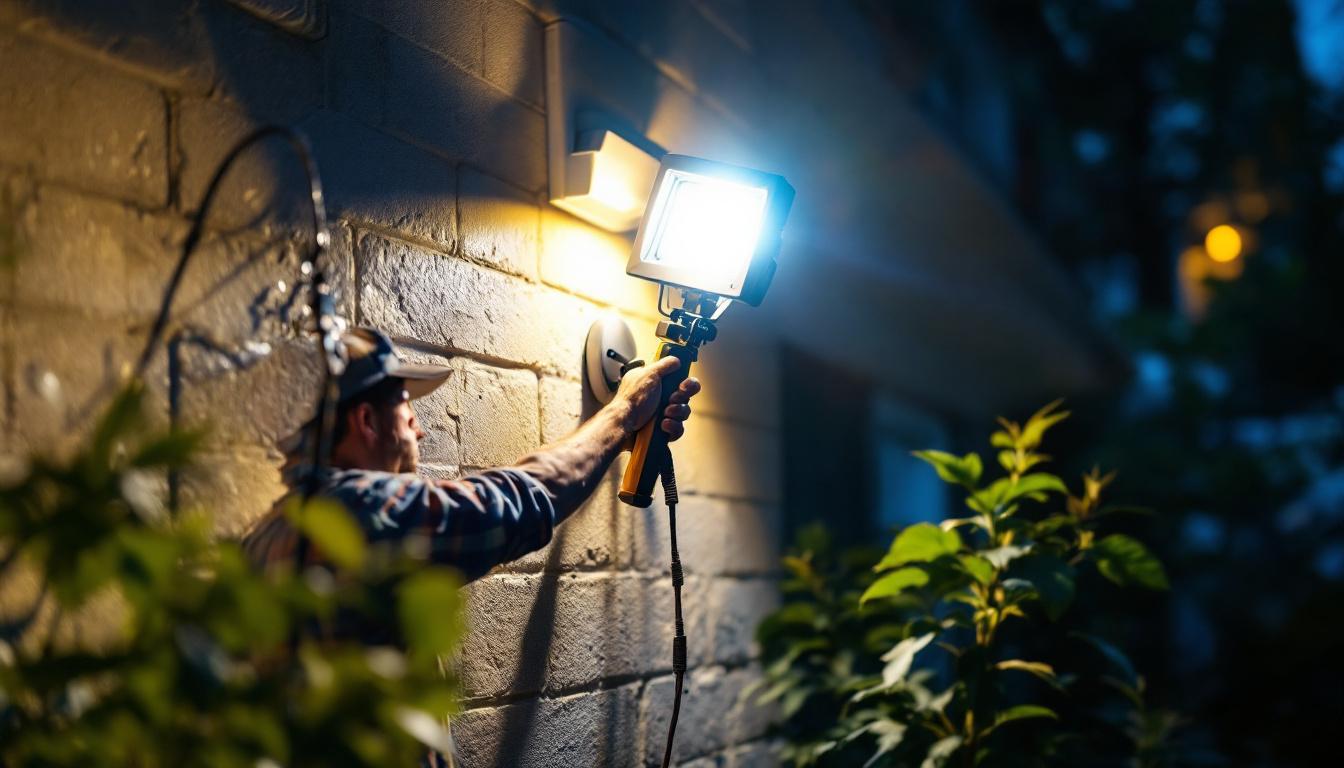
Floodlight performance depends heavily on how and where the fixture is mounted. Incorrect mounting height or positioning can cause glare, shadows, or insufficient coverage. For example, mounting a floodlight too low can create blinding glare for pedestrians or drivers, while mounting it too high may reduce the intensity of light on the target area.
As a rule of thumb, mounting heights between 10 and 30 feet are common for outdoor floodlights, but this varies based on the fixture’s design and the area’s requirements. Positioning should also consider potential obstructions like trees, poles, or building features that could block light.
Contractors should use adjustable brackets and aim floodlights carefully to optimize illumination angles. Taking time during installation to test different positions can make a significant difference in the final lighting quality.
Failing to Account for Environmental Conditions
Outdoor floodlights face a range of environmental challenges, including moisture, dust, temperature fluctuations, and impact risks. Selecting fixtures without the appropriate Ingress Protection (IP) rating or ruggedness can lead to premature failures and costly maintenance.
For outdoor applications, an IP65 rating or higher is generally recommended to ensure resistance to water jets and dust ingress. In areas prone to vandalism or heavy physical impact, fixtures with IK ratings indicating impact resistance should be considered.
Lighting contractors must evaluate the installation environment carefully and choose floodlights designed to withstand local weather conditions and potential hazards. This foresight reduces downtime and enhances client satisfaction.
Overlooking Energy Efficiency and Control Options
LED floodlights are celebrated for their energy efficiency, but not all models deliver the same savings. Ignoring features like dimming capabilities, motion sensors, or smart controls can result in higher operational costs and missed opportunities for energy management.
Integrating motion sensors allows floodlights to operate only when needed, significantly reducing electricity consumption. Dimming options enable adjusting brightness levels based on time of day or specific activities, enhancing both comfort and savings.
Contractors should recommend fixtures compatible with modern control systems and educate clients on the benefits. Properly specified LED floodlights can reduce energy bills by up to 70% compared to traditional lighting, a compelling selling point for any project.
Skipping Proper Wiring and Electrical Safety Checks
Even the best floodlight can fail or pose hazards if wiring and electrical connections are subpar. Common mistakes include using incorrect wire gauges, neglecting waterproof connectors, or failing to ground fixtures properly.
Outdoor lighting installations must comply with local electrical codes and standards to ensure safety and reliability. Using weatherproof junction boxes and conduit protects wiring from moisture and physical damage.
Lighting contractors should conduct thorough inspections and tests after installation, verifying that all connections are secure and that circuit breakers or ground fault interrupters function correctly. This diligence prevents electrical faults and enhances system longevity.
Ignoring Maintenance Accessibility and Longevity
LED floodlights boast long lifespans, often exceeding 50,000 hours, but they still require periodic maintenance. Installing fixtures in hard-to-reach locations without considering access can complicate cleaning, inspection, and replacement tasks.
Dust, dirt, and insect buildup on lenses reduce light output and can cause overheating. Designing installations with maintenance in mind-such as using adjustable mounts or placing fixtures within reach-simplifies upkeep and extends service life.
Contractors should discuss maintenance plans with clients and recommend fixtures with replaceable components or modular designs. This approach minimizes downtime and protects the investment over time.
Underestimating the Importance of Photometric Planning
Photometric planning involves analyzing how light distributes across a space before installation. Skipping this step can lead to uneven illumination, dark spots, or excessive overlap, all of which detract from the lighting’s effectiveness.
Using photometric software or consulting manufacturers’ IES files helps contractors design layouts that optimize fixture placement, beam angles, and lumen output. This process ensures compliance with lighting standards and client expectations.
Investing time in photometric planning reduces costly rework and enhances project professionalism. It also provides clients with visualizations that clarify the anticipated results.
Failing to Communicate Clearly with Clients
Successful lighting projects hinge on clear communication. Contractors sometimes assume clients understand technical terms or the implications of design choices, leading to misunderstandings and dissatisfaction.
Explaining the benefits and trade-offs of different LED floodlight options-such as lumen levels, color temperatures, and control features-helps clients make informed decisions. Providing samples or mock-ups can also aid comprehension.
Establishing expectations about installation timelines, maintenance requirements, and energy savings fosters trust and reduces disputes. Good communication is as critical as technical expertise in delivering a quality lighting solution.
Conclusion: Avoiding These Mistakes Elevates Your Craft
LED floodlights offer tremendous advantages in energy efficiency, durability, and performance. However, common mistakes-from selecting improper lumens and color temperatures to neglecting environmental factors and maintenance-can undermine these benefits.
Lighting contractors who approach floodlight installations with careful planning, attention to detail, and clear client communication position themselves as trusted experts. Avoiding these pitfalls not only improves project outcomes but also enhances reputation and client satisfaction.
Investing in knowledge, tools, and best practices ensures every LED floodlight installation shines brightly and stands the test of time.
Get Your Premium LED Floodlights at LumenWholesale
Ready to elevate your lighting projects with the highest quality LED floodlights? Look no further than LumenWholesale, where we provide contractors with spec-grade lighting products at unbeatable wholesale prices. Say goodbye to middleman markups and hello to a vast selection of reliable, high-performance lighting that meets rigorous industry standards. Plus, enjoy the convenience of bulk buying with free shipping, ensuring you get the best value without any hidden costs. Make the smart choice for your next project and experience wholesale lighting at the best value with LumenWholesale.