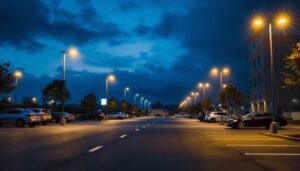
Introduction to Big Solar Outdoor Lights for Lighting Contractors
Solar outdoor lighting has rapidly evolved from a niche product to a mainstream solution for illuminating large outdoor spaces. For lighting contractors, understanding the nuances of big solar outdoor lights is essential to delivering efficient, sustainable, and cost-effective lighting solutions to clients. These systems not only reduce energy expenses but also offer flexibility in installation, making them an attractive option for commercial, municipal, and residential projects.
Big solar outdoor lights typically refer to high-capacity solar lighting units designed to illuminate expansive areas such as parking lots, parks, pathways, and building exteriors. Unlike smaller solar lights used for garden accents or pathway markers, these larger units incorporate advanced photovoltaic panels, high-capacity batteries, and powerful LED arrays to ensure consistent and bright illumination.
This article explores proven methods that lighting contractors can employ when specifying, installing, and maintaining big solar outdoor lights. It covers key considerations such as system design, component selection, installation best practices, and maintenance strategies to maximize performance and client satisfaction.
One of the most significant advantages of big solar outdoor lights is their ability to operate independently of the electrical grid. This not only provides a reliable source of illumination in remote or off-grid locations but also contributes to a reduction in carbon footprint. Lighting contractors can emphasize the environmental benefits to clients, showcasing how solar lights align with sustainability goals and energy conservation initiatives. Additionally, many municipalities are now incentivizing the use of solar technology, offering rebates or grants that can further reduce installation costs and enhance the appeal of these systems.
Moreover, advancements in technology have led to the development of smart solar lighting solutions that integrate with IoT devices. These systems can be equipped with motion sensors, timers, and remote monitoring capabilities, allowing for dynamic control over lighting levels based on real-time conditions. For lighting contractors, this means not only providing a product that meets the immediate needs of illumination but also offering a forward-thinking solution that can adapt to future demands. By staying informed about these technological trends, contractors can position themselves as experts in the field, ultimately leading to increased customer trust and satisfaction.
Understanding the Components of Big Solar Outdoor Lighting Systems
Photovoltaic Panels: The Power Source
At the heart of any solar lighting system is the photovoltaic (PV) panel, which converts sunlight into electrical energy. For large outdoor lights, contractors must select panels with adequate wattage and efficiency to meet the lighting load requirements. High-efficiency monocrystalline panels are often preferred due to their superior energy conversion rates and smaller footprint, which is critical when space is limited.
When specifying PV panels, contractors should consider factors such as panel orientation, tilt angle, shading, and local solar insolation levels. Proper placement ensures maximum energy harvest throughout the year, which directly impacts the lighting system’s reliability and autonomy.
Battery Storage: Ensuring Nighttime Illumination
Battery technology plays a pivotal role in big solar outdoor lighting systems. The batteries store the energy generated during daylight hours to power the lights after sunset. Lithium-ion batteries have become the industry standard due to their high energy density, longer life cycles, and better performance in varying temperatures compared to traditional lead-acid batteries.
Contractors must carefully size the battery bank to accommodate the lighting load, anticipated autonomy (number of nights without sunlight), and degradation over time. Over-sizing batteries can unnecessarily increase costs, while under-sizing may lead to premature system failure or insufficient illumination.
LED Fixtures: Delivering Bright, Efficient Light
Light Emitting Diodes (LEDs) are the preferred light source for big solar outdoor lights due to their high luminous efficacy, long lifespan, and low power consumption. Modern LED fixtures offer adjustable color temperatures and beam angles, enabling contractors to tailor lighting to specific environments and client preferences.
When selecting LED fixtures, it is important to consider lumen output, color rendering index (CRI), and thermal management. Proper heat dissipation extends the lifespan of LEDs and ensures consistent light quality over time.
Designing Effective Big Solar Outdoor Lighting Systems
Assessing Site Conditions and Lighting Requirements
Successful solar lighting projects begin with a thorough site assessment. Lighting contractors should evaluate the area’s size, layout, ambient lighting conditions, and potential obstructions such as trees or buildings that could cast shadows on PV panels.
Understanding the client’s lighting goals is equally important. For example, a parking lot may require uniform illumination with minimal glare to enhance safety, whereas a park pathway may prioritize softer, aesthetically pleasing lighting. Conducting photometric analyses using lighting design software can help contractors optimize fixture placement and spacing to meet these requirements efficiently.
Calculating Energy Budgets and Autonomy
Accurate energy budgeting is critical for big solar outdoor lights. Contractors must calculate the total wattage of all fixtures, factoring in operational hours and any additional loads such as sensors or communication modules. This calculation informs the sizing of PV panels and batteries to ensure the system can operate reliably through cloudy days and extended periods of low sunlight.
Autonomy—the number of nights the system can run without solar input—is a key performance metric. A typical design might target 3 to 5 days of autonomy, but this can vary depending on local climate conditions and client expectations. Overestimating autonomy can increase upfront costs, so precise calculations based on historical weather data are recommended.
Incorporating Smart Controls and Sensors
Modern big solar outdoor lighting systems increasingly integrate smart controls such as motion sensors, dimming capabilities, and remote monitoring. These features enhance energy efficiency by reducing light output when full illumination is unnecessary and enable proactive maintenance through real-time system diagnostics.
Lighting contractors should evaluate the compatibility of control systems with solar power constraints and ensure that communication modules do not excessively drain battery reserves. Selecting low-power, reliable control technologies can significantly extend system life and reduce operational costs.
Installation Best Practices for Lighting Contractors
Site Preparation and Mounting Considerations
Proper installation is crucial to the performance and longevity of big solar outdoor lighting systems. Contractors should ensure that mounting poles or structures are sturdy enough to support the weight of PV panels and fixtures, withstand local wind loads, and allow for optimal panel orientation.
Ground-mounted solar lights require secure foundations, often concrete footings, to prevent tilting or shifting over time. For rooftop or wall-mounted systems, contractors must verify structural integrity and waterproofing to avoid damage.
Wiring and Electrical Connections
All electrical connections should comply with local codes and standards. Contractors must use weatherproof connectors and conduits to protect wiring from moisture, UV exposure, and physical damage. Proper cable management not only enhances system reliability but also simplifies future maintenance.
It is advisable to perform continuity and insulation resistance tests after installation to verify the integrity of electrical connections before commissioning the system.
Commissioning and Performance Testing
After installation, contractors should conduct comprehensive performance testing, including verifying PV panel output, battery voltage levels, and fixture illumination. Testing under different lighting conditions ensures the system meets design specifications and client expectations.
Documenting baseline performance data is also beneficial for future maintenance and troubleshooting activities.
Maintenance Strategies to Maximize System Longevity
Routine Inspection and Cleaning
Solar panels and LED fixtures require periodic cleaning to remove dust, dirt, bird droppings, and other debris that can reduce light output and energy generation. Contractors should establish maintenance schedules based on site conditions, with more frequent cleaning in dusty or polluted environments.
Inspections should also check for physical damage, corrosion, loose connections, and battery health. Early detection of issues can prevent costly repairs and downtime.
Battery Management and Replacement
Battery performance degrades over time due to charge-discharge cycles and environmental factors. Lighting contractors should monitor battery voltage and capacity regularly using diagnostic tools and replace batteries proactively before failure occurs.
Proper disposal and recycling of old batteries are essential to comply with environmental regulations and promote sustainability.
Software Updates and Remote Monitoring
For systems equipped with smart controls, keeping firmware and software updated ensures optimal performance and security. Remote monitoring platforms allow contractors to track system status, receive alerts, and schedule maintenance efficiently, reducing the need for on-site visits.
Implementing these technologies can improve client satisfaction by minimizing downtime and demonstrating proactive service.
Case Studies: Successful Big Solar Outdoor Lighting Projects
Municipal Park Lighting Upgrade
A city park replaced its aging grid-powered lighting with big solar outdoor lights to reduce energy costs and carbon footprint. The lighting contractor conducted a detailed site assessment and designed a system with 150-watt monocrystalline panels and lithium-ion batteries sized for five days of autonomy. Motion sensors and dimming controls were integrated to enhance energy savings.
The project resulted in a 60% reduction in energy expenses and improved nighttime safety, earning positive feedback from the community and city officials.
Commercial Parking Lot Illumination
A retail center sought to improve parking lot illumination while avoiding costly trenching for electrical wiring. The lighting contractor installed high-capacity solar streetlights with LED fixtures providing uniform coverage. The modular design allowed for phased installation and easy relocation if needed.
The solar lighting system delivered bright, reliable illumination with zero utility costs, enhancing the shopping experience and security for customers.
Conclusion: Embracing Solar Lighting for Future-Ready Projects
Big solar outdoor lights represent a compelling opportunity for lighting contractors to expand their service offerings with sustainable, cost-effective solutions. By mastering the proven methods outlined in this article—from system design and component selection to installation and maintenance—contractors can deliver high-performance lighting that meets the evolving demands of clients and communities.
As technology advances and solar lighting becomes increasingly sophisticated, staying informed and adopting best practices will be key to maintaining a competitive edge in the lighting industry. Embracing these innovations not only benefits contractors and clients but also contributes to broader environmental goals through reduced energy consumption and greenhouse gas emissions.
Get Your Big Solar Outdoor Lights at LumenWholesale
Ready to illuminate your projects with the best big solar outdoor lights on the market? Look no further than LumenWholesale, where we provide lighting contractors with exceptional, spec-grade lighting products at unbeatable wholesale prices. Our commitment to quality and affordability means you can equip your large-scale outdoor lighting projects with confidence. With LumenWholesale, you’ll enjoy free shipping on bulk orders, ensuring you get the premium lighting solutions you need at the best value — all without hidden fees or compromises. Elevate your lighting projects today by visiting Wholesale Lighting at the Best Value and discover the difference that LumenWholesale can make.