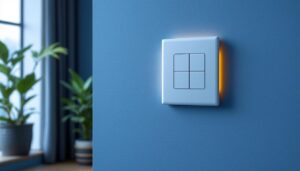
Introduction to Motion Sensors and Timer Switches in Lighting
For lighting contractors, understanding the integration of motion sensors and timer switches is essential to delivering efficient, cost-effective, and user-friendly lighting solutions. These devices not only enhance energy savings but also improve convenience and security for end-users. As the demand for smart and sustainable lighting grows, contractors who master these technologies can significantly differentiate their services in a competitive market.
Motion sensors and timer switches have evolved far beyond their basic functions. Today, they incorporate advanced detection methods, wireless connectivity, and customizable settings that cater to a wide range of applications—from residential to commercial and industrial environments. This article explores proven methods and best practices for lighting contractors to optimize their installations and maximize client satisfaction.
One of the most significant advancements in motion sensor technology is the integration of smart features that allow for remote monitoring and control. With the rise of smart home systems, contractors can now install sensors that communicate with smartphones and other devices, enabling users to adjust settings from anywhere. This not only enhances user experience but also allows for real-time monitoring of energy consumption, helping clients make informed decisions about their lighting usage. Furthermore, many modern sensors can be programmed to adapt to specific schedules or occupancy patterns, ensuring that lights are only activated when necessary, thus reducing waste and lowering utility bills.
In addition to residential applications, timer switches are increasingly being utilized in commercial settings to optimize energy efficiency and enhance security. For instance, businesses can set timers to automatically turn lights on and off during specific hours, creating a welcoming environment for employees and customers while deterring potential intruders after hours. Moreover, the ability to integrate these systems with existing building management systems can lead to even greater efficiencies. By understanding the various types of sensors and switches available, contractors can provide tailored solutions that meet the unique needs of each client, ultimately leading to more successful and sustainable lighting projects.
Understanding the Technology Behind Motion Sensors
Types of Motion Sensors
Motion sensors detect movement and trigger lighting systems accordingly. The most common types used in lighting installations include Passive Infrared (PIR), Ultrasonic, Microwave, and Dual-technology sensors.
PIR sensors detect infrared radiation emitted by warm objects, such as people, and are widely favored for their reliability and low power consumption. Ultrasonic sensors emit high-frequency sound waves and detect changes in the reflected waves, making them effective in enclosed spaces but sometimes prone to false triggers. Microwave sensors emit microwave pulses and detect movement based on the Doppler effect; they offer longer detection ranges but can be more expensive. Dual-technology sensors combine two methods (usually PIR and microwave) to reduce false activations and improve accuracy.
Key Features and Specifications
When selecting motion sensors, lighting contractors should consider detection range, field of view, response time, and environmental compatibility. For example, a sensor with a wide detection angle and adjustable sensitivity is ideal for large open spaces, while a sensor with a narrow focus suits hallways or stairwells.
Additionally, weatherproof and vandal-resistant models are critical for outdoor installations. Understanding these specifications ensures the sensor performs optimally and meets client expectations. Furthermore, it’s essential to consider the installation height and angle, as these factors can significantly affect a sensor’s performance. For instance, mounting a sensor too high may limit its ability to detect motion effectively, while improper angling could lead to blind spots in the coverage area.
Another important aspect to consider is the integration of motion sensors with smart home technology. Many modern sensors can connect to home automation systems, allowing users to control lighting remotely or set schedules based on their daily routines. This not only enhances convenience but also contributes to energy efficiency, as lights can be programmed to turn off automatically when no motion is detected for a specified period. As technology continues to evolve, the capabilities of motion sensors are expanding, making them an increasingly valuable component of modern lighting solutions.
Timer Switches: Enhancing Control and Efficiency
Types of Timer Switches
Timer switches allow lighting to be automatically turned on or off based on preset schedules. They come in mechanical, digital, and smart varieties.
Mechanical timers are simple and cost-effective but lack precision and programming flexibility. Digital timers offer more accurate scheduling, multiple on/off settings, and often include countdown and random modes to simulate occupancy. Smart timer switches integrate with home automation systems and can be controlled remotely via smartphones or voice assistants, providing advanced customization and energy management.
Applications and Benefits
Timer switches are particularly useful in commercial settings such as office buildings, warehouses, and parking garages where lighting needs to be active only during business hours or specific time frames. They reduce energy waste, extend bulb life, and improve operational efficiency.
For residential projects, timer switches add convenience and security by automating outdoor lighting or holiday decorations, enhancing curb appeal and deterring intruders. In addition, they can be programmed to turn on lights at dusk and off at dawn, ensuring that your home is always well-lit without the need for manual intervention. This feature is especially beneficial for families with busy schedules, allowing them to focus on their daily activities without worrying about whether they remembered to turn off the lights.
Moreover, timer switches can also be integrated with other smart home devices, such as motion sensors and security cameras, creating a cohesive and responsive home environment. For instance, when a motion sensor detects activity in the yard, the timer switch can trigger outdoor lights to illuminate, enhancing safety and visibility. This interconnectedness not only promotes energy efficiency but also elevates the overall user experience, making homes smarter and more responsive to the needs of their inhabitants.
Proven Installation Methods for Lighting Contractors
Site Assessment and Planning
Successful integration of motion sensors and timer switches begins with a thorough site assessment. Contractors should evaluate the layout, lighting requirements, traffic patterns, and environmental factors such as ambient light and temperature fluctuations.
Mapping out sensor placement is crucial to avoid blind spots and minimize false triggers. For example, placing a motion sensor facing windows or heating vents can cause unwanted activations. Similarly, timer switches should be programmed based on actual usage patterns and seasonal changes to maximize efficiency.
Wiring and Compatibility Considerations
Lighting contractors must ensure compatibility between sensors, timer switches, and existing lighting fixtures or control systems. Some sensors require a neutral wire for proper operation, which may not be present in older buildings. In such cases, alternative models or rewiring might be necessary.
Using low-voltage or wireless sensors can simplify installation and reduce labor costs, especially in retrofit projects. However, contractors should verify signal range and potential interference sources to maintain reliable performance.
Calibration and Testing
After installation, calibrating sensor sensitivity, detection range, and timer schedules is essential. Testing under various conditions—daylight, darkness, and different occupancy scenarios—helps fine-tune settings for optimal operation.
Contractors should also educate clients on adjusting settings for changing needs, such as extended hours during holidays or reduced sensitivity in high-traffic areas to prevent frequent switching.
Maximizing Energy Savings and Client Satisfaction
Energy Efficiency Benefits
Studies show that motion sensor lighting can reduce energy consumption by up to 30-50% in commercial buildings by eliminating unnecessary lighting. When combined with timer switches, these savings increase as lights operate only when needed and for appropriate durations.
Lighting contractors can leverage these statistics to demonstrate the return on investment to clients, especially those with sustainability goals or energy cost concerns.
Enhancing User Experience
Beyond energy savings, motion sensors and timer switches improve occupant comfort and convenience. Automated lighting eliminates the need for manual switching, which is especially beneficial in areas like stairwells, restrooms, and corridors.
Smart timer switches that integrate with building management systems or mobile apps provide users with greater control and customization, fostering positive client relationships and potential repeat business.
Common Challenges and Solutions
False Triggers and Sensor Placement Issues
False activations caused by pets, HVAC systems, or reflective surfaces can frustrate users and reduce energy savings. Contractors should mitigate these issues by selecting appropriate sensor types, adjusting sensitivity levels, and strategically positioning devices away from known interference sources.
Compatibility and Retrofitting Difficulties
Older buildings may present wiring challenges or lack neutral wires, complicating sensor and timer switch installation. Lighting contractors can address these by using battery-operated or wireless sensors, or by upgrading electrical infrastructure where feasible.
Maintenance and Longevity
Regular maintenance, such as cleaning sensor lenses and checking battery levels in wireless units, ensures long-term reliability. Contractors should provide clients with maintenance guidelines and offer service contracts to maintain system performance.
Future Trends and Opportunities for Lighting Contractors
Integration with Smart Building Technologies
The rise of IoT and smart building platforms presents new opportunities for lighting contractors to offer integrated solutions. Motion sensors and timer switches are increasingly connected to centralized control systems, enabling data-driven energy management and predictive maintenance.
Advancements in Sensor Technology
Emerging technologies such as AI-powered sensors and occupancy analytics enhance detection accuracy and enable adaptive lighting strategies that respond dynamically to user behavior and environmental conditions.
Expanding Market Demand
With growing emphasis on sustainability and building automation, the demand for advanced motion sensor and timer switch installations is expected to rise. Lighting contractors who stay informed and skilled in these technologies will be well-positioned to capitalize on this trend.
Conclusion
For lighting contractors, mastering the use of motion sensors and timer switches is a strategic advantage that drives energy efficiency, enhances user experience, and supports sustainable building practices. By understanding the technology, applying proven installation methods, and anticipating future trends, contractors can deliver superior lighting solutions that meet evolving client needs.
Investing time in proper planning, calibration, and client education ensures successful outcomes and fosters long-term partnerships. As lighting technology continues to advance, staying current with innovations and industry best practices will remain critical for professional growth and business success.
Get Your Premium Lighting Supplies at LumenWholesale
Ready to elevate your lighting projects with the most efficient motion sensors and timer switches? Look no further than LumenWholesale for all your lighting needs. We provide contractors with high-quality, spec-grade lighting products at the best wholesale prices, ensuring you can deliver top-notch, sustainable lighting solutions to your clients. Our extensive selection is designed to meet the highest industry standards, guaranteeing reliable and high-performance lighting for any project. Plus, with free shipping on bulk orders, you can enjoy premium lighting solutions at the best value — without any hidden fees. Make the smart choice for your business and experience the best in wholesale lighting at LumenWholesale.