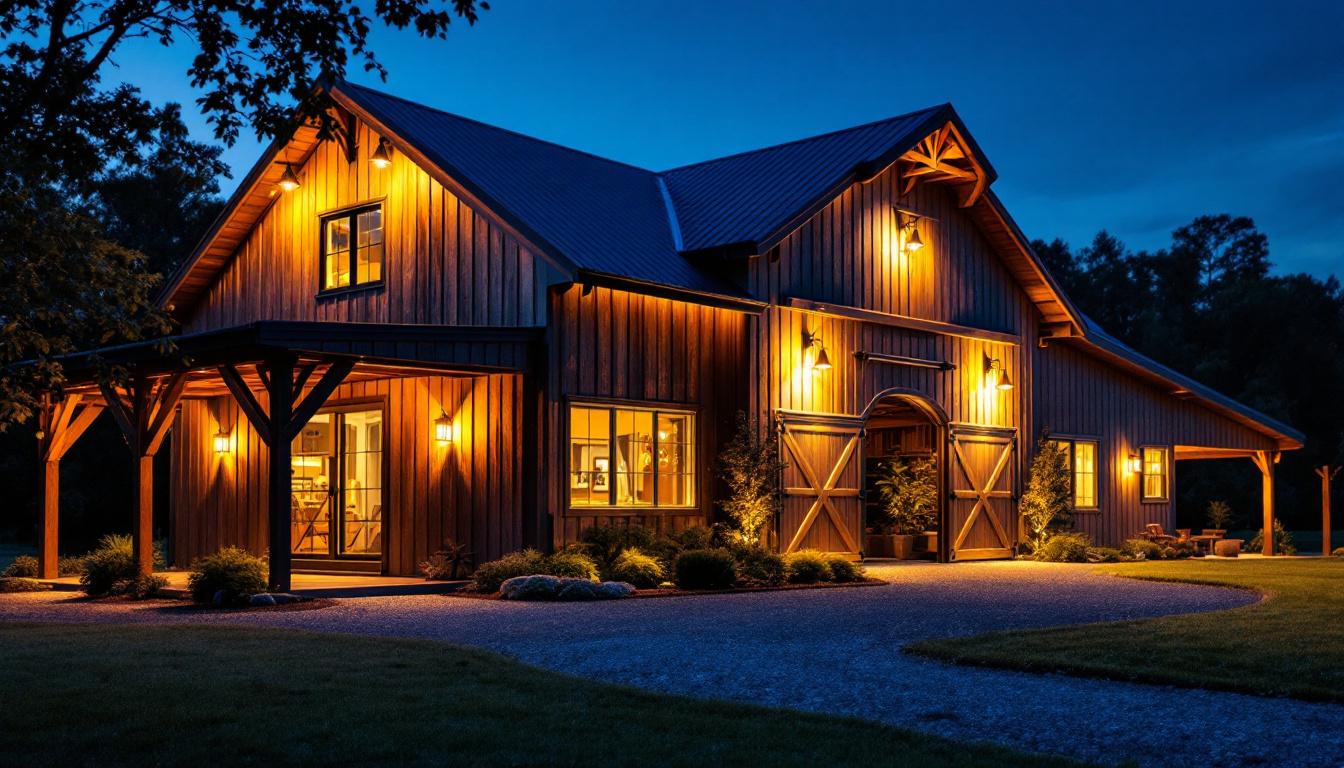
Understanding the Importance of Exterior Barn Lighting
For lighting contractors, exterior barn lighting presents a unique set of challenges and opportunities. Unlike typical residential or commercial lighting projects, barns often require fixtures that balance functionality, durability, and aesthetic appeal. These structures are not only utilitarian but often serve as focal points on farms or rural properties, making lighting choices critical.
Proper exterior barn lighting enhances visibility for safety, security, and operational efficiency. It also contributes to the overall ambiance, which can be particularly important for barns used for events or agritourism. Contractors who master the nuances of barn lighting can differentiate themselves in a competitive market and build a reputation for expertise in rural and agricultural lighting solutions.
When selecting lighting for barns, contractors must consider the specific activities that take place within and around the structure. For instance, barns used for livestock may require brighter, more focused lighting to ensure that workers can see clearly while tending to animals, while barns that host weddings or community events may benefit from softer, decorative lighting that creates a warm and inviting atmosphere. Additionally, the choice of lighting fixtures should take into account the local climate, as outdoor lights must withstand harsh weather conditions, from heavy rain to extreme temperatures, without compromising performance.
Moreover, energy efficiency is becoming an increasingly important factor in lighting design. With the rise of sustainable practices in agriculture, many farmers are looking to reduce their energy consumption and carbon footprint. LED lighting has emerged as a popular choice due to its longevity and lower energy usage compared to traditional incandescent bulbs. By integrating smart lighting solutions, such as motion sensors and timers, contractors can further enhance energy savings while ensuring that the barn remains well-lit when needed. This not only benefits the environment but also helps farmers save on operational costs, making it a win-win situation for all parties involved.
Key Considerations When Selecting Exterior Barn Lighting Fixtures
Durability and Weather Resistance
Barns are exposed to harsh environmental conditions, including rain, snow, wind, dust, and temperature fluctuations. Lighting fixtures must be designed to withstand these elements without compromising performance. Contractors should prioritize fixtures with high IP (Ingress Protection) ratings, typically IP65 or higher, ensuring resistance to water and dust ingress.
Materials such as powder-coated aluminum, stainless steel, and impact-resistant polycarbonate lenses are preferred for their longevity and low maintenance requirements. Additionally, fixtures with sealed wiring and corrosion-resistant components help prevent failures and reduce callbacks. It’s also worth considering the impact of UV exposure; fixtures that are UV-resistant will maintain their color and structural integrity over time, ensuring that the barn remains visually appealing and functional.
Furthermore, the placement of lighting fixtures should be strategic to minimize wear and tear. For example, fixtures mounted higher can avoid damage from farm equipment or livestock, while still providing adequate illumination for safety and security. Regular maintenance checks can also prolong the lifespan of these fixtures, ensuring they remain effective throughout the seasons.
Energy Efficiency and Sustainability
Energy-efficient lighting is a growing priority for barn owners, especially those looking to reduce operational costs or integrate renewable energy systems. LED technology has become the industry standard due to its low energy consumption, long lifespan, and minimal heat output.
Lighting contractors should recommend LED barn lights with high lumens per watt ratios to maximize illumination while minimizing electricity use. Incorporating smart controls such as motion sensors, photocells, and timers can further optimize energy usage by ensuring lights operate only when needed. Additionally, some barn owners may consider solar-powered lighting solutions, which can provide significant savings on electricity bills while utilizing renewable energy sources. These systems can be particularly advantageous in remote locations where extending electrical infrastructure may be cost-prohibitive.
Moreover, the implementation of energy-efficient lighting can contribute to a barn’s overall sustainability goals. By reducing energy consumption, barn owners not only lower their carbon footprint but can also enhance their reputation as environmentally conscious operators, potentially attracting customers who value sustainability in their agricultural practices.
Light Distribution and Beam Angle
Effective barn lighting requires careful attention to beam angle and light distribution to avoid dark spots and glare. Wide beam angles are generally preferred for illuminating large open areas such as barn yards, while narrower beams can highlight specific zones like entryways or loading docks.
Contractors should work closely with clients to understand the barn’s layout and operational needs. For example, adjustable fixtures allow for fine-tuning light direction post-installation, providing flexibility as farm activities evolve. Additionally, the use of diffusers can help soften harsh light and create a more inviting atmosphere, which is especially important in areas where animals are housed or handled.
Incorporating multiple lighting layers can also enhance visibility and safety. Combining ambient lighting with task lighting—such as focused lights over workstations or feeding areas—ensures that all areas of the barn are well-lit and functional. This layered approach not only improves operational efficiency but also contributes to the overall well-being of both livestock and workers, fostering a safer and more productive environment.
Popular Exterior Barn Lighting Fixture Types
Wall-Mounted Floodlights
Wall-mounted floodlights are among the most common fixtures used in barn lighting. They provide broad, intense illumination and are typically installed on barn exteriors to cover large areas such as driveways, parking zones, and workspaces.
Modern floodlights often feature LED arrays with adjustable heads, allowing contractors to customize coverage. Some models include integrated photocells for automatic dusk-to-dawn operation, enhancing convenience and security.
Post and Pole Lights
Post or pole-mounted lights are ideal for illuminating pathways, entrances, and perimeter fencing around barns. These fixtures elevate the light source, reducing shadows and improving visibility over a wider area.
Contractors should select poles of appropriate height and durability, considering factors such as wind load and ease of maintenance. LED post lights with diffusers provide soft, even lighting that enhances safety without causing excessive glare.
Barn-Specific Pendant and Lantern Fixtures
For barns that double as event spaces or rustic venues, pendant and lantern-style fixtures add character and charm. These fixtures blend traditional aesthetics with modern lighting technology, appealing to clients who value both form and function.
Lighting contractors can offer a range of styles, from vintage-inspired metal lanterns to sleek industrial pendants, all equipped with energy-efficient LED bulbs. These fixtures are typically installed under eaves or inside covered porches, providing ambient lighting that complements the barn’s architecture.
Installation Best Practices for Exterior Barn Lighting
Site Assessment and Planning
Before installation, a thorough site assessment is essential. Contractors should evaluate the barn’s orientation, surrounding landscape, and existing electrical infrastructure. Understanding these factors helps in determining optimal fixture placement, wiring routes, and power requirements.
Engaging with the client during this phase ensures that lighting plans align with their operational needs and aesthetic preferences. Detailed layouts and lighting simulations can help visualize the final result and prevent costly adjustments later.
Electrical Safety and Code Compliance
Exterior barn lighting installations must comply with local electrical codes and safety standards. Contractors should ensure all wiring is properly rated for outdoor use, with appropriate grounding and weatherproof junction boxes.
GFCI (Ground Fault Circuit Interrupter) protection is often required for outdoor circuits to prevent electrical shock hazards. Additionally, contractors should verify that all fixtures and components carry UL or equivalent certifications for outdoor use.
Maintenance Accessibility
Given the often remote and rugged locations of barns, ease of maintenance is a critical consideration. Lighting contractors should position fixtures and wiring to allow safe and straightforward access for bulb replacement, cleaning, and repairs.
Using modular fixture designs and quick-connect wiring systems can reduce downtime and labor costs over the life of the installation. Providing clients with maintenance guidelines and schedules also helps preserve lighting performance and longevity.
Leveraging Technology to Enhance Barn Lighting Solutions
Smart Lighting Controls
Integrating smart controls into barn lighting systems offers significant benefits. Motion sensors can activate lights only when movement is detected, enhancing security and reducing energy waste. Photocells automatically adjust lighting based on ambient light levels, ensuring illumination is provided only when necessary.
Advanced control systems allow remote monitoring and management via mobile apps, enabling barn owners to adjust settings or receive alerts about fixture malfunctions. For contractors, offering these technologies can position them as leaders in modern, efficient lighting solutions.
Solar-Powered Exterior Lighting
Solar-powered barn lighting is gaining traction, particularly in off-grid locations or where running electrical wiring is cost-prohibitive. High-efficiency solar panels combined with LED fixtures provide reliable illumination without ongoing electricity costs.
Contractors should evaluate site-specific factors such as sunlight exposure and battery capacity to design effective solar lighting systems. While initial investment may be higher, the long-term savings and sustainability appeal to many barn owners.
Building Client Relationships Through Expert Barn Lighting Services
Consultative Approach
Successful lighting contractors adopt a consultative approach, educating clients on the benefits and trade-offs of different fixtures and technologies. This builds trust and helps clients make informed decisions that meet both budgetary and functional goals.
Providing detailed proposals with clear explanations of energy savings, maintenance requirements, and expected lifespan fosters transparency and confidence. Contractors who demonstrate expertise and responsiveness often secure repeat business and referrals.
Offering Customized Solutions
Every barn is unique, and lighting solutions should be tailored accordingly. Contractors who invest time in customizing fixture selection, placement, and control systems differentiate themselves from competitors offering generic packages.
Customization may include designing lighting scenes for different activities, integrating with existing farm automation systems, or selecting fixtures that complement the barn’s architectural style. Such attention to detail enhances client satisfaction and project success.
Conclusion: Positioning for Success in Exterior Barn Lighting
Exterior barn lighting represents a specialized niche within the lighting industry, requiring a blend of technical knowledge, practical experience, and customer service skills. By prioritizing durable, energy-efficient fixtures, adhering to best installation practices, and leveraging modern technologies, lighting contractors can deliver superior results that meet the diverse needs of barn owners.
Building strong client relationships through education and customization further enhances reputation and business growth. As demand for sustainable and smart lighting solutions continues to rise, contractors who stay informed and adaptable will maximize their success in this rewarding sector.
Illuminate Your Projects with LumenWholesale
Ready to elevate your exterior barn lighting projects with fixtures that blend durability, efficiency, and style? Look no further than LumenWholesale, where we provide lighting contractors with spec-grade lighting products at unbeatable wholesale prices. Our extensive selection is designed to meet the highest industry standards, ensuring you deliver reliable, high-performance lighting for every project. Plus, with free shipping on bulk orders, you can enjoy premium lighting at the best value — without hidden fees or compromises. Don’t miss out on the perfect blend of quality, affordability, and convenience. Wholesale Lighting at the Best Value is just a click away. Experience the LumenWholesale difference today!