Understanding Light Bulb Bases: The Foundation of Every Lighting Project
When a lighting contractor steps onto a job site, the last thing they want is to discover that the bulbs ordered don’t fit the fixtures. This common but costly mistake often stems from a lack of familiarity with the variety of light bulb base types. A bulb’s base is more than just a connector; it determines compatibility, electrical safety, and performance. Knowing which base to specify can save time, reduce waste, and keep projects on budget.
Light bulb bases vary widely, from the familiar screw-in types to specialized pins and bayonets. Each base type has unique characteristics suited for different applications, voltages, and fixture designs. For contractors, mastering these distinctions is essential for precision and professionalism.
For instance, the E26 base, commonly known as the standard medium base, is prevalent in residential lighting, making it a go-to choice for many home projects. In contrast, the E12 base, or candelabra base, is often used in decorative fixtures, providing a softer aesthetic that enhances the ambiance of dining rooms or living spaces. Understanding the nuances between these bases not only helps in selecting the right bulb but also in ensuring that the overall lighting design aligns with the desired atmosphere and functionality of the space.
Moreover, with the rise of energy-efficient lighting options, such as LED and CFL bulbs, contractors must also consider base compatibility with these newer technologies. Many LED bulbs come in unique base configurations that may not be immediately recognizable, and using an incompatible base can lead to performance issues or even safety hazards. By staying informed about the latest trends and technologies in light bulb bases, contractors can offer clients the best solutions tailored to their specific needs, ensuring a seamless integration of lighting systems into their projects.
“`html
Common Light Bulb Base Types and Their Applications
Edison Screw Bases (E26, E27, E12, E14)
The Edison screw base is the most recognizable and widely used base type in residential and commercial lighting. The numbers—E26, E27, E12, and E14—refer to the diameter of the screw in millimeters.
E26 and E27 bases are often interchangeable, with E26 being standard in North America and E27 common in Europe. These bases are found in everything from standard household bulbs to commercial fixtures. Smaller Edison bases like E12 (candelabra) and E14 (small Edison screw) are typical in chandeliers and decorative lighting.
Choosing the wrong Edison base can cause bulbs to fit loosely or not at all, leading to flickering or electrical hazards. Confirming the base size before ordering is a simple step that prevents costly returns and delays.
Furthermore, the Edison screw base has evolved to accommodate energy-efficient technologies, such as LED and CFL bulbs. These modern bulbs often maintain the same base dimensions while offering significant energy savings and longer lifespans compared to traditional incandescent bulbs. This adaptability has made the Edison base a staple in both retrofitting older fixtures and designing new lighting solutions.
Bayonet Bases (BA15d, BA15s)
Bayonet bases use a push-and-twist mechanism rather than screwing in. The BA15d (double contact) and BA15s (single contact) are common in automotive lighting, indicator lamps, and some specialty fixtures.
Bayonet bases are prized for their secure fit and vibration resistance, making them ideal in environments where bulbs might loosen over time. Contractors working on automotive or industrial projects should be familiar with these bases to ensure proper bulb selection.
In addition to their use in vehicles, bayonet bases are also found in some household applications, particularly in outdoor lighting and emergency fixtures. The robust design of bayonet bases allows them to withstand harsher conditions, making them suitable for use in gardens, patios, and even in some marine applications where moisture and movement are concerns.
Bi-Pin and Multi-Pin Bases (GU10, G4, G9, GX5.3)
Pin bases are common in halogen, LED, and fluorescent bulbs, especially in track lighting, recessed fixtures, and under-cabinet lighting. The “GU” series, such as GU10, features two pins spaced 10 mm apart and often includes a twist-lock mechanism.
Smaller pins like G4 and G9 are used in compact bulbs for accent lighting. The GX5.3 base, with its two pins spaced 5.3 mm apart, is typical for MR16 halogen bulbs. Knowing the exact pin spacing and type is critical because even slight variations can prevent proper installation.
Additionally, the versatility of bi-pin bases allows for a wide range of lighting applications, from ambient to task lighting. The GU10 base, for example, is particularly favored in modern lighting designs due to its ability to deliver focused light in a compact form. This has made it a popular choice in both residential and commercial settings, where adjustable and directional lighting is often required.
Fluorescent Tube Bases (G13, G5)
Fluorescent tubes use specialized bases that differ significantly from screw or pin types. The G13 base is standard for T8 and T12 tubes, while the G5 base is used for slimmer T5 tubes. These bases have two pins on each end that fit into corresponding sockets in the fixture.
Choosing the wrong tube base can cause electrical mismatches or physical incompatibility. Contractors replacing fluorescent tubes must verify the base type and tube diameter to avoid ordering incorrect replacements.
Moreover, fluorescent tubes are often chosen for their efficiency and brightness, making them a staple in commercial spaces such as offices, schools, and retail environments. The G13 base, in particular, has become synonymous with high-output lighting solutions, providing excellent illumination for large areas. As the industry shifts towards LED alternatives, many fluorescent tube bases are being adapted for LED tubes, allowing for a seamless transition while maintaining the existing fixtures.
“`
How to Use a Light Bulb Base Types Chart Effectively
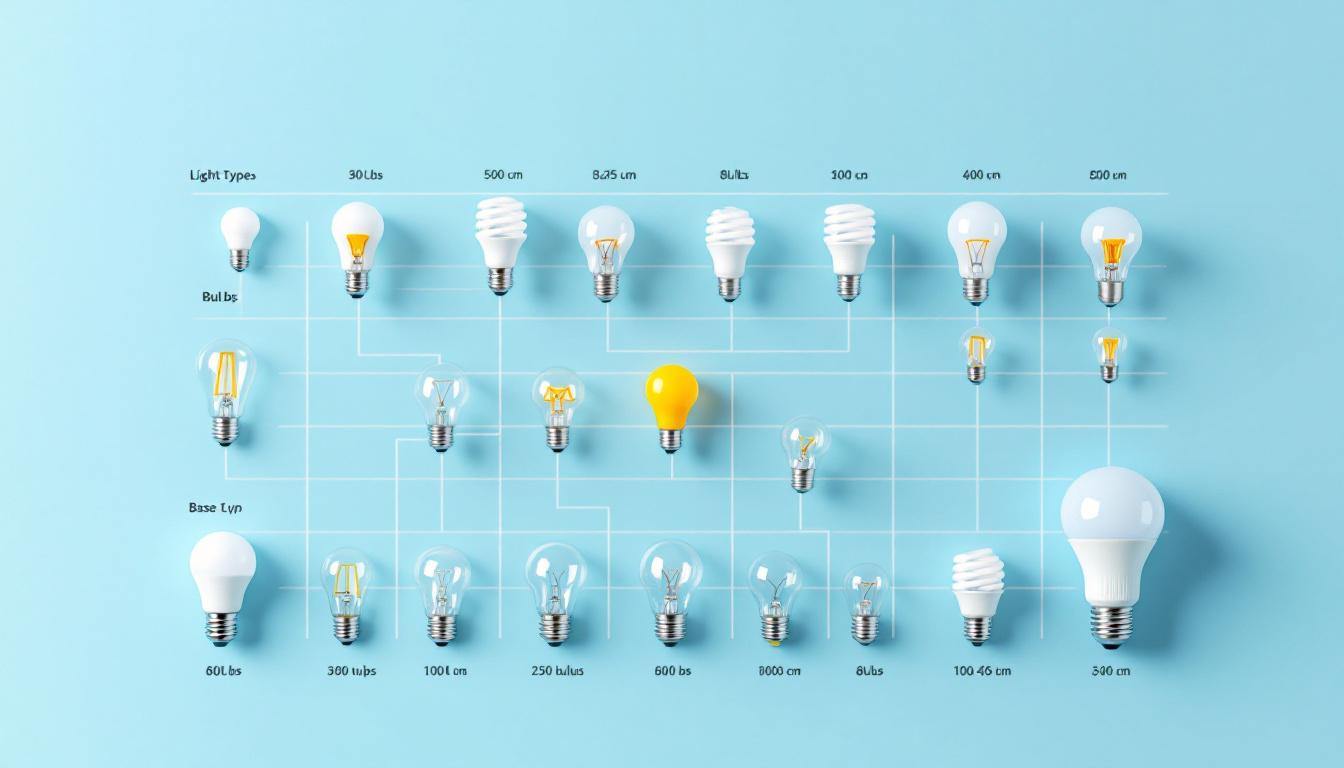
A light bulb base types chart is an indispensable tool for contractors. It consolidates base dimensions, electrical specifications, and typical applications into one reference, simplifying decision-making on the job.
When using such a chart, focus on these key factors:
- Base Type and Size: Confirm the exact base designation (e.g., E26 vs. E27) and measure if necessary.
- Voltage and Wattage Ratings: Ensure the bulb’s electrical requirements match the fixture and circuit.
- Fixture Compatibility: Some fixtures require specific base types due to design or safety standards.
- Environmental Conditions: Certain bases are better suited for damp or vibration-prone environments.
Cross-referencing these details with the chart prevents ordering errors and streamlines installation.
Common Mistakes and How to Avoid Them
Assuming All Screw Bases Are Interchangeable
It’s tempting to think that all screw bases are the same since they look similar. However, even a few millimeters difference in diameter can cause a bulb to either not fit or fit too loosely. For example, an E26 bulb will not fit securely in an E27 socket and vice versa. This mismatch can lead to poor electrical contact or damage to the fixture.
Always verify the base size by checking the fixture specifications or measuring the socket before purchasing bulbs.
Ignoring Pin Spacing and Orientation
Pin-based bulbs require precise alignment. Installing a GU10 bulb in a GU5.3 socket, or vice versa, is a common error that results in incompatibility. The difference may be subtle but critical.
Using a detailed chart that lists pin spacing and base type helps avoid these mistakes. When in doubt, physically compare the bulb and socket or consult manufacturer documentation.
Overlooking Base Type When Upgrading to LED
LED replacements often come with different base designs compared to traditional halogen or incandescent bulbs. Some LED retrofit bulbs may require adapters or have modified bases. Failing to check the base type during upgrades can cause installation delays or the need for additional purchases.
Contractors should confirm that LED bulbs match the existing base type or plan for adapter use ahead of time.
Special Considerations for Commercial and Industrial Projects
In commercial and industrial settings, lighting projects often involve specialized fixtures and higher voltage systems. Base types may include robust designs intended for harsh environments or high-intensity discharge (HID) lamps.
For example, mogul bases (E39, E40) are common in large-scale outdoor or warehouse lighting. These bases are larger and designed to handle higher wattages and voltages. Contractors working in these sectors must be familiar with these heavy-duty bases to ensure safety and performance.
Additionally, some industrial fixtures use proprietary bases or locking mechanisms to prevent unauthorized bulb changes. Understanding these unique base types is crucial for maintenance and replacement planning.
Tips for Streamlining Light Bulb Base Selection
Maintain an Updated Reference Library
Keep a physical or digital light bulb base types chart accessible. Update it regularly to include new base types and emerging technologies, such as smart bulbs with integrated bases.
Use Measurement Tools
Carry a caliper or socket gauge to measure base diameters and pin spacing on-site. This avoids guesswork and ensures accurate ordering.
Communicate with Suppliers
Work closely with bulb suppliers and manufacturers. They can provide detailed specifications and help confirm compatibility before purchase.
Educate Your Team
Ensure all team members understand the importance of base types and know how to identify them. This reduces errors during installation and replacement.
Conclusion: Precision Saves Time and Money
Light bulb base types may seem like a minor detail, but they have a major impact on the success of lighting projects. Contractors who invest time in understanding base types and using detailed charts avoid costly mistakes, reduce downtime, and enhance client satisfaction.
Accurate base selection ensures reliable lighting performance, safety, and longevity. It’s a small step that pays off significantly in professionalism and project efficiency.
“`html
Illuminate Your Projects with LumenWholesale
Ready to elevate your lighting projects with precision and ease? At LumenWholesale, we provide you with an extensive range of top-quality, spec-grade lighting products at unbeatable wholesale prices. Say goodbye to inflated markups and hello to superior lighting solutions that meet the highest industry standards. With free shipping on bulk orders, you can stock up on reliable, high-performance lighting without any hidden fees or compromises. Don’t let base type mismatches derail your project’s success. Choose LumenWholesale for the perfect blend of quality, affordability, and convenience. Visit us now for Wholesale Lighting at the Best Value.
“`