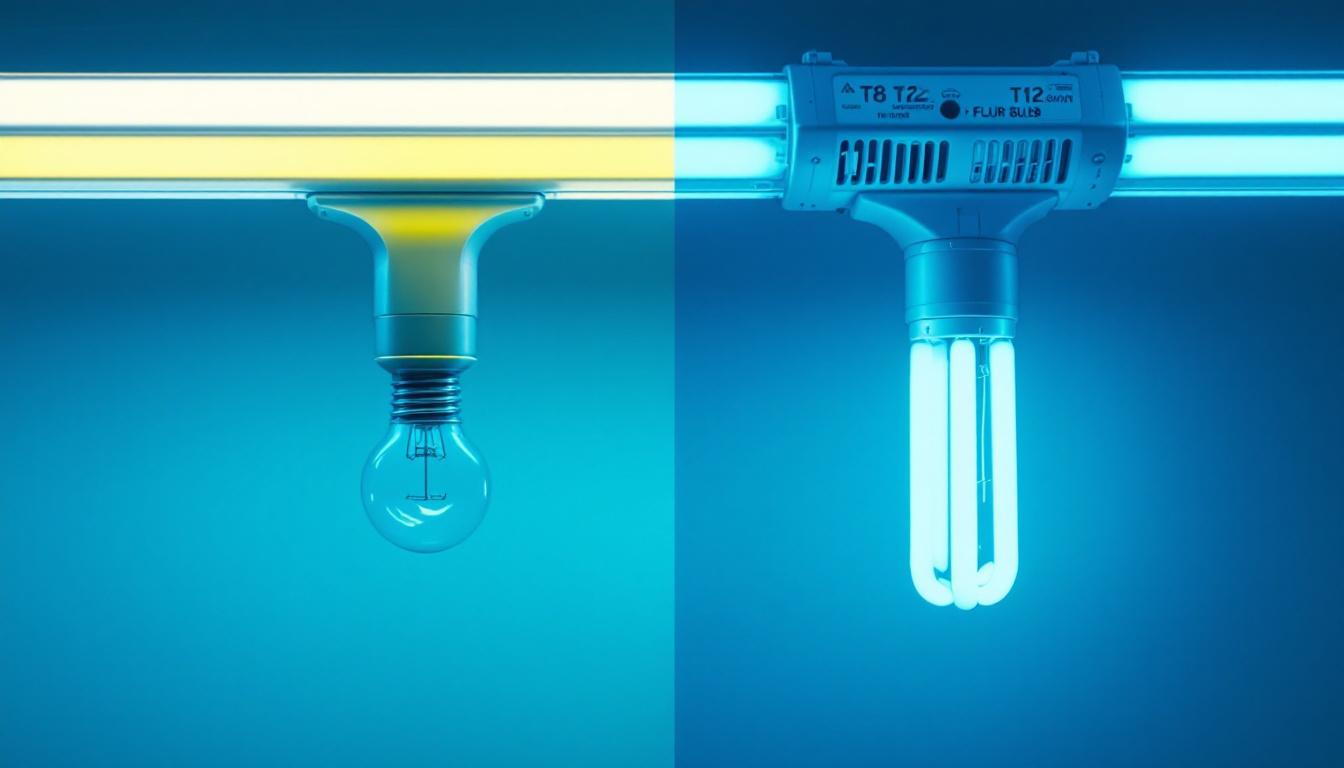
Understanding the Basics: T8 vs. T12 Bulbs
When working on lighting installations, it’s essential to grasp the fundamental differences between T8 and T12 bulbs. Both are fluorescent tubes, but they differ significantly in diameter, efficiency, and compatibility. T12 bulbs measure 1.5 inches in diameter, while T8 bulbs are slimmer at 1 inch. This size difference impacts not only the physical fit but also the electrical requirements and performance characteristics.
T12 fixtures were once the industry standard, but T8 bulbs have become more popular due to their energy efficiency and longer lifespan. For contractors, understanding these distinctions can directly influence project outcomes, client satisfaction, and profitability.
In addition to their physical differences, T8 and T12 bulbs also vary in their light output and color rendering capabilities. T8 bulbs typically produce a higher lumen output per watt, which translates to brighter light with less energy consumption. This efficiency not only reduces electricity bills but also contributes to a lower carbon footprint, making T8 bulbs a more environmentally friendly choice. Furthermore, T8 bulbs often come in a wider range of color temperatures, allowing for more flexibility in creating the desired ambiance in various settings, from warm and inviting to cool and energizing.
Another important aspect to consider is the ballast compatibility. T12 bulbs require a magnetic ballast, which can be less efficient and bulkier, while T8 bulbs are designed to work with electronic ballasts that provide better energy savings and improved performance. This compatibility can affect installation costs and maintenance over time. As more facilities upgrade their lighting systems, transitioning from T12 to T8 not only enhances energy efficiency but also aligns with modern lighting standards, paving the way for future upgrades to even more advanced technologies like LED lighting.
Can You Use T8 Bulbs in a T12 Fixture?
The short answer is: it depends. Physically, a T8 bulb can often fit into a T12 fixture because the sockets are similar. However, the compatibility of the ballast—the component that regulates the current to the bulb—is the critical factor. T12 fixtures typically use magnetic ballasts designed for T12 tubes, which may not work correctly or safely with T8 bulbs, especially if those T8s require electronic ballasts.
Using a T8 bulb in a T12 fixture without addressing the ballast can lead to flickering, reduced bulb life, or even fixture damage. In some cases, the bulb may not light at all. This incompatibility can cause unnecessary callbacks, increased labor costs, and dissatisfied clients, all of which eat into profitability.
Ballast Compatibility: The Key Consideration
Most T8 bulbs are designed to work with electronic ballasts, which are more efficient and provide better performance than the magnetic ballasts commonly found in T12 fixtures. If the existing T12 fixture has a magnetic ballast, simply swapping in a T8 bulb is not advisable. The ballast may overheat or fail prematurely, and the bulb may flicker or operate at reduced efficiency.
For contractors, the practical approach is to either replace the ballast with a compatible electronic ballast or retrofit the fixture entirely. This ensures the T8 bulbs operate correctly, delivering the promised energy savings and longevity. Additionally, retrofitting can often be a more sustainable choice, as it allows for the continued use of existing fixtures while upgrading their performance. The transition to T8 bulbs not only enhances lighting quality but can also significantly reduce energy consumption, which is a compelling selling point for clients looking to lower their utility bills.
Moreover, it’s worth noting that T8 bulbs come in various color temperatures and lumen outputs, providing flexibility to meet different lighting needs. Whether the goal is to create a warm, inviting atmosphere in a retail space or to ensure bright, clear visibility in a workshop, selecting the right T8 bulb can dramatically impact the overall effectiveness of the lighting scheme. This adaptability makes T8 bulbs a popular choice among designers and contractors alike, who are increasingly focused on energy efficiency and aesthetic appeal in their projects.
Economic and Energy Efficiency Benefits of Upgrading to T8
Switching from T12 to T8 bulbs isn’t just about bulb compatibility-it’s a strategic move to enhance energy efficiency and reduce operational costs. T8 bulbs consume less power, typically around 32 watts compared to the 40 watts of T12 bulbs, while providing similar or better light output. This reduction translates into significant energy savings over time, especially in commercial or industrial settings with numerous fixtures. Furthermore, the improved efficiency of T8 bulbs means that they generate less heat, which can contribute to lower cooling costs in buildings, making them an even more attractive option for energy-conscious businesses.
Additionally, T8 bulbs have a longer rated life, often exceeding 20,000 hours, compared to approximately 15,000 hours for T12s. This longevity reduces the frequency of replacements, lowering maintenance costs and labor hours. For contractors, these factors can be highlighted to clients as value-added benefits, justifying the initial investment in retrofitting or upgrading fixtures. Moreover, the transition to T8 lighting can also enhance the quality of illumination in workspaces, leading to improved productivity and employee satisfaction, as brighter and more consistent lighting can reduce eye strain and fatigue.
Case Study: Cost Savings in a Commercial Retrofit
Consider a commercial building with 200 T12 fixtures operating 12 hours a day. Replacing T12 bulbs with T8 equivalents and upgrading ballasts can reduce energy consumption by up to 20%. Over the course of a year, this can save thousands of dollars in electricity costs alone. When factoring in reduced maintenance and longer bulb life, the return on investment becomes compelling. In addition to these financial benefits, businesses may also qualify for energy efficiency rebates or incentives from local utility companies, further offsetting the initial costs of the upgrade. These programs not only encourage the adoption of energy-efficient technologies but also contribute to broader sustainability goals by reducing overall energy demand and greenhouse gas emissions.
Practical Steps for Contractors: Retrofitting and Installation Tips
For lighting contractors aiming to maximize profitability, the decision to use T8 bulbs in T12 fixtures should come with a clear retrofit plan. Here are actionable steps to ensure a successful upgrade:
1. Assess the Existing Fixtures
Begin by inspecting the current fixtures to identify the type of ballast installed. Magnetic ballasts require replacement with electronic ballasts compatible with T8 tubes. Some fixtures may be incompatible with ballast replacement, necessitating full fixture replacement. Additionally, take note of the fixture’s condition and location; factors such as moisture levels and dust accumulation can affect performance and longevity. A thorough assessment can also reveal opportunities for additional upgrades, such as improving fixture placement for optimal light distribution.
2. Choose the Right Ballast
Select electronic ballasts designed for T8 bulbs. Look for models that offer high power factor, low total harmonic distortion, and compliance with relevant energy standards. These features improve efficiency and reduce electrical noise, enhancing overall system performance. Furthermore, consider the ballast’s dimming capabilities if your clients require adjustable lighting solutions. Dimming not only enhances user comfort but can also lead to significant energy savings, making it an attractive option for both residential and commercial applications.
3. Consider LED Alternatives
While T8 bulbs offer efficiency gains over T12s, LED tube lights present even greater advantages. LEDs consume less power, last longer, and often operate without ballasts, simplifying retrofits. Contractors should evaluate LED options alongside T8 upgrades to recommend the best solution for clients. It’s also worth discussing the potential for smart lighting integration with LEDs, which can provide added convenience and energy management through mobile apps or centralized systems, appealing to tech-savvy customers looking for modern solutions.
4. Follow Safety and Code Requirements
Ensure all retrofits comply with local electrical codes and safety standards. Proper wiring, ballast disposal, and fixture handling are critical to avoid liability and ensure client trust. Additionally, consider implementing a checklist for safety measures, including personal protective equipment (PPE) for workers and proper training on handling electrical components. Educating clients about the importance of safety and compliance not only fosters trust but can also position contractors as knowledgeable professionals in the field, potentially leading to referrals and repeat business.
Maximizing Profitability Through Client Education and Service
Contractors who effectively communicate the benefits and limitations of using T8 bulbs in T12 fixtures can position themselves as trusted advisors. Educating clients about energy savings, maintenance reduction, and potential retrofit costs builds transparency and trust.
Offering comprehensive lighting audits and customized retrofit plans can differentiate a contractor’s service, leading to repeat business and referrals. Additionally, leveraging utility rebates and incentive programs for energy-efficient upgrades can make projects more financially attractive to clients.
Building Long-Term Relationships
Beyond the initial installation, contractors can offer maintenance contracts and periodic lighting assessments. This ongoing service not only provides steady revenue but also ensures the lighting system continues to operate efficiently, reinforcing the contractor’s value.
Conclusion: Strategic Choices for Lighting Contractors
Using T8 bulbs in a T12 fixture isn’t as simple as swapping tubes. It requires careful consideration of ballast compatibility, fixture condition, and client goals. For contractors, the decision to retrofit or replace fixtures affects not only project costs but also long-term profitability and client satisfaction.
By understanding the technical nuances and economic benefits, contractors can recommend solutions that optimize energy efficiency and reduce maintenance. This expertise enhances their reputation and opens doors to more profitable projects. Ultimately, investing time in proper assessment and client education pays dividends in the competitive lighting market.
Illuminate Your Projects with LumenWholesale
Ready to elevate your lighting installations with the most efficient solutions and ensure your clients enjoy the benefits of cutting-edge technology? Look no further than LumenWholesale for all your lighting needs. We provide contractors with high-quality, spec-grade lighting products at unbeatable wholesale prices. By choosing us, you eliminate the middleman and avoid inflated markups, getting the best value for your investment. Our extensive selection is designed to meet the highest industry standards, so you can confidently deliver reliable, high-performance lighting for every project. Plus, with free shipping on bulk orders, you can stock up on premium lighting without worrying about hidden fees or compromises. Don’t miss out on the perfect blend of quality, affordability, and convenience. Wholesale Lighting at the Best Value is just a click away!