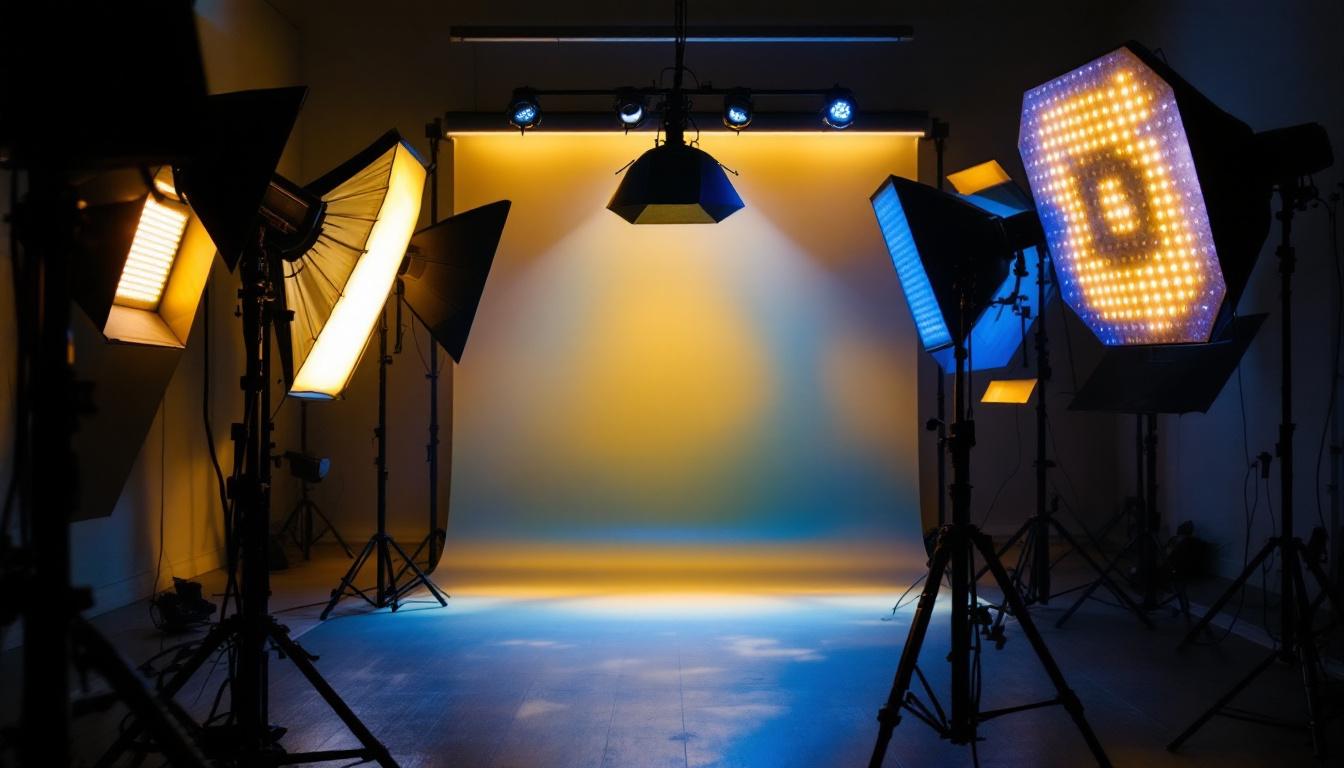
Introduction to LED Studio Lighting
In the evolving landscape of studio lighting, LED technology has become a cornerstone for lighting contractors aiming to deliver high-quality, energy-efficient solutions. Unlike traditional incandescent or fluorescent lights, LED (Light Emitting Diode) studio lighting offers numerous advantages that make it ideal for both photography and videography environments. Understanding the science behind LED lighting is crucial for contractors who want to optimize their installations, ensure client satisfaction, and stay ahead in a competitive market.
This article delves into the fundamental principles of LED studio lighting, explores its technical components, and highlights practical considerations for lighting contractors. By gaining a deeper comprehension of how LED lights function and their impact on studio environments, contractors can make informed decisions that enhance lighting quality and operational efficiency.
One of the most significant advantages of LED studio lighting is its versatility. LEDs can produce a wide range of color temperatures, allowing for precise control over the mood and tone of a shoot. This flexibility is particularly beneficial in creative industries where the ambiance can dramatically affect the final product. For instance, a warm light can create a cozy, inviting atmosphere, while cooler tones can evoke a more clinical or modern feel. Additionally, many LED fixtures come equipped with adjustable color settings, enabling contractors to adapt to different shooting conditions without the need for extensive equipment changes.
Moreover, the longevity and durability of LED lights are notable features that contribute to their growing popularity. Unlike traditional bulbs that may burn out after a few thousand hours, high-quality LED lights can last up to 25,000 hours or more, significantly reducing replacement costs and downtime for studios. This extended lifespan not only translates to financial savings but also aligns with sustainability goals, as fewer discarded bulbs mean less waste in landfills. Furthermore, many manufacturers are now producing LED lights that are designed to withstand the rigors of studio environments, ensuring that they can endure the demands of frequent use and transportation.
The Science of LED Technology
How LEDs Produce Light
LEDs generate light through a process called electroluminescence. When an electrical current passes through a semiconductor material within the LED, electrons recombine with electron holes, releasing energy in the form of photons. This process is highly efficient compared to traditional lighting methods, as it produces minimal heat and consumes less energy.
The core semiconductor materials used in LEDs determine the wavelength—and thus the color—of the emitted light. For studio lighting, white LEDs are typically used, which are created by combining blue LED chips with phosphor coatings that convert some of the blue light into longer wavelengths, resulting in a balanced white spectrum. This innovative approach not only enhances the quality of light but also allows for a more compact design, making LEDs suitable for a variety of applications, from small fixtures to large studio setups.
Moreover, the longevity of LED technology is another significant advantage. With a lifespan that can exceed 25,000 hours, LEDs reduce the need for frequent replacements, which is both cost-effective and environmentally friendly. As the demand for sustainable lighting solutions grows, LED technology stands out as a frontrunner, offering a viable alternative to traditional incandescent and fluorescent lights.
Color Rendering Index (CRI) and Its Importance
One of the most critical factors in studio lighting is the Color Rendering Index (CRI), a measure of how accurately a light source reveals the colors of objects compared to natural light. LEDs with a CRI of 90 or above are considered excellent for studio applications, as they ensure that colors appear vivid and true-to-life on camera.
For lighting contractors, specifying LED fixtures with high CRI values is essential to meet the demands of photographers and videographers who require precise color fidelity. Low CRI lighting can result in dull or distorted colors, negatively affecting the quality of the final production. In addition to CRI, the spectral power distribution of the light source plays a crucial role in how colors are perceived. A well-balanced spectrum can enhance skin tones, making them appear more natural, which is particularly important in portrait photography and video production.
Correlated Color Temperature (CCT) and Its Role
Correlated Color Temperature (CCT) describes the color appearance of the light emitted by a source, measured in Kelvins (K). Studio lighting typically ranges between 3200K (warm white) and 5600K (daylight). Understanding CCT allows contractors to select lighting that matches the ambient environment or creative intent.
Many modern LED studio lights offer adjustable CCT, providing flexibility for different shooting conditions. This feature is particularly valuable in mixed lighting scenarios or when transitioning between indoor and outdoor shoots. Additionally, the ability to fine-tune CCT can help create specific moods or atmospheres in a scene, allowing filmmakers and photographers to enhance their storytelling through lighting. For instance, warmer tones can evoke a sense of intimacy or nostalgia, while cooler tones can convey a more clinical or futuristic feel. As such, the versatility of adjustable CCT in LED lighting systems empowers creatives to push the boundaries of their visual narratives.
Technical Components and Design Considerations
LED Chips and Arrays
The heart of any LED studio light is the LED chip or array. These chips vary in size, power, and efficiency. High-quality chips from reputable manufacturers ensure consistent light output and longevity. Lighting contractors should be familiar with the specifications of LED chips, including luminous efficacy (lumens per watt), to assess energy efficiency and brightness.
Arrays of multiple LED chips are often used to achieve higher light intensities while maintaining uniformity. Proper thermal management is critical in these designs to prevent overheating, which can degrade performance and lifespan.
Heat Dissipation and Thermal Management
Although LEDs produce less heat than traditional bulbs, they still generate heat that must be effectively dissipated. Heat buildup can reduce LED efficiency and cause premature failure. Studio lighting fixtures incorporate heat sinks, cooling fans, or advanced materials to manage thermal output.
Lighting contractors should evaluate the thermal management features of LED fixtures to ensure reliability, especially in extended shoots where continuous operation is required.
Power Supply and Dimming Control
LED studio lights require a stable power supply with appropriate voltage and current regulation. Many fixtures include built-in drivers that convert AC to DC power and provide dimming capabilities. Flicker-free dimming is essential in video production to avoid visual artifacts.
Understanding the electrical requirements and compatibility of LED lights with dimming systems enables contractors to design flexible and user-friendly lighting setups.
Practical Advantages of LED Studio Lighting for Contractors
Energy Efficiency and Cost Savings
LED studio lights consume significantly less power than traditional tungsten or fluorescent fixtures. This energy efficiency translates into lower operational costs, reduced heat load in studios, and less demand on electrical infrastructure. For contractors, recommending LED solutions can be a strong selling point for clients focused on sustainability and cost-effectiveness.
Moreover, the long lifespan of LEDs—often exceeding 50,000 hours—reduces maintenance and replacement expenses, making them a smart investment for studios.
Flexibility and Customization
Modern LED studio lights offer a range of customizable features, including adjustable color temperature, brightness control, and even RGB color mixing for creative effects. This versatility allows lighting contractors to tailor solutions to diverse client needs, from portrait photography to cinematic video production.
Additionally, compact and lightweight LED fixtures facilitate easier rigging and repositioning, improving workflow efficiency on set.
Improved Safety and Environmental Impact
LEDs operate at lower temperatures, reducing the risk of burns or fire hazards on set. Their solid-state construction also makes them more durable and less prone to breakage compared to glass bulbs.
From an environmental perspective, LEDs contain no mercury or hazardous materials, and their reduced energy consumption contributes to lower carbon footprints. Lighting contractors can leverage these benefits to promote eco-friendly studio environments.
Installation and Maintenance Considerations
Proper Mounting and Positioning
Effective studio lighting depends not only on the quality of the fixtures but also on their correct installation. Contractors should ensure that LED lights are securely mounted using appropriate hardware, allowing for precise angle adjustments and stability.
Understanding beam angles and diffusion options helps in positioning lights to achieve desired lighting effects, such as soft shadows or focused highlights.
Routine Maintenance and Troubleshooting
Although LEDs require less maintenance than traditional lights, periodic inspections are necessary to check for dust accumulation, loose connections, or driver issues. Cleaning lenses and heat sinks helps maintain optimal performance.
Contractors should be prepared to diagnose common problems such as flickering, dimming failures, or color shifts, often related to power supply or thermal issues.
Integration with Control Systems
Many studios employ advanced lighting control systems, including DMX protocols, to manage multiple fixtures simultaneously. Lighting contractors must be adept at integrating LED studio lights with these systems to enable synchronized control over brightness, color, and effects.
Familiarity with wireless control options and software interfaces enhances the contractor’s ability to provide modern, efficient lighting solutions.
Future Trends and Innovations in LED Studio Lighting
Advancements in LED Efficiency and Color Quality
Ongoing research continues to improve LED chip efficiency and color rendering capabilities. Emerging technologies such as quantum dot LEDs promise even better color accuracy and brightness, which will further elevate studio lighting standards.
Lighting contractors should stay informed about these developments to offer cutting-edge solutions that meet evolving client expectations.
Smart Lighting and Automation
Integration of smart technology allows LED studio lights to be controlled via mobile apps, voice commands, or automated schedules. These features enhance convenience and creative control, enabling lighting setups that adapt dynamically to production needs.
Contractors who embrace smart lighting technologies can differentiate their services and provide added value to clients.
Sustainability and Circular Economy Practices
As environmental concerns grow, manufacturers and contractors are focusing on sustainable materials, recyclability, and energy-efficient designs. The adoption of circular economy principles in lighting products ensures reduced waste and longer product life cycles.
Contractors committed to sustainability can promote these practices as part of their service offerings, aligning with client values and regulatory trends.
Conclusion
For lighting contractors, mastering the science behind LED studio lighting is essential to delivering superior lighting solutions that meet the technical and creative demands of modern studios. By understanding the principles of LED operation, color rendering, thermal management, and control integration, contractors can optimize installations for performance, efficiency, and client satisfaction.
LED technology continues to advance rapidly, offering new opportunities for innovation and sustainability in studio lighting. Staying informed and adaptable ensures that contractors remain competitive and capable of providing state-of-the-art lighting environments that enhance every production.
Illuminate Your Projects with LumenWholesale
Ready to elevate your lighting installations with the cutting-edge LED studio lighting technology discussed in this article? Look no further than LumenWholesale for all your lighting needs. We provide lighting contractors with high-quality, specification-grade lighting products at unbeatable wholesale prices. Our extensive selection is designed to meet the highest industry standards, ensuring you deliver reliable, high-performance lighting for every project. Plus, with free shipping on bulk orders, you can secure premium lighting solutions at the best value — all without hidden fees or compromises. Don’t settle for less; choose LumenWholesale for the perfect blend of quality, affordability, and convenience. Wholesale Lighting at the Best Value is just a click away.