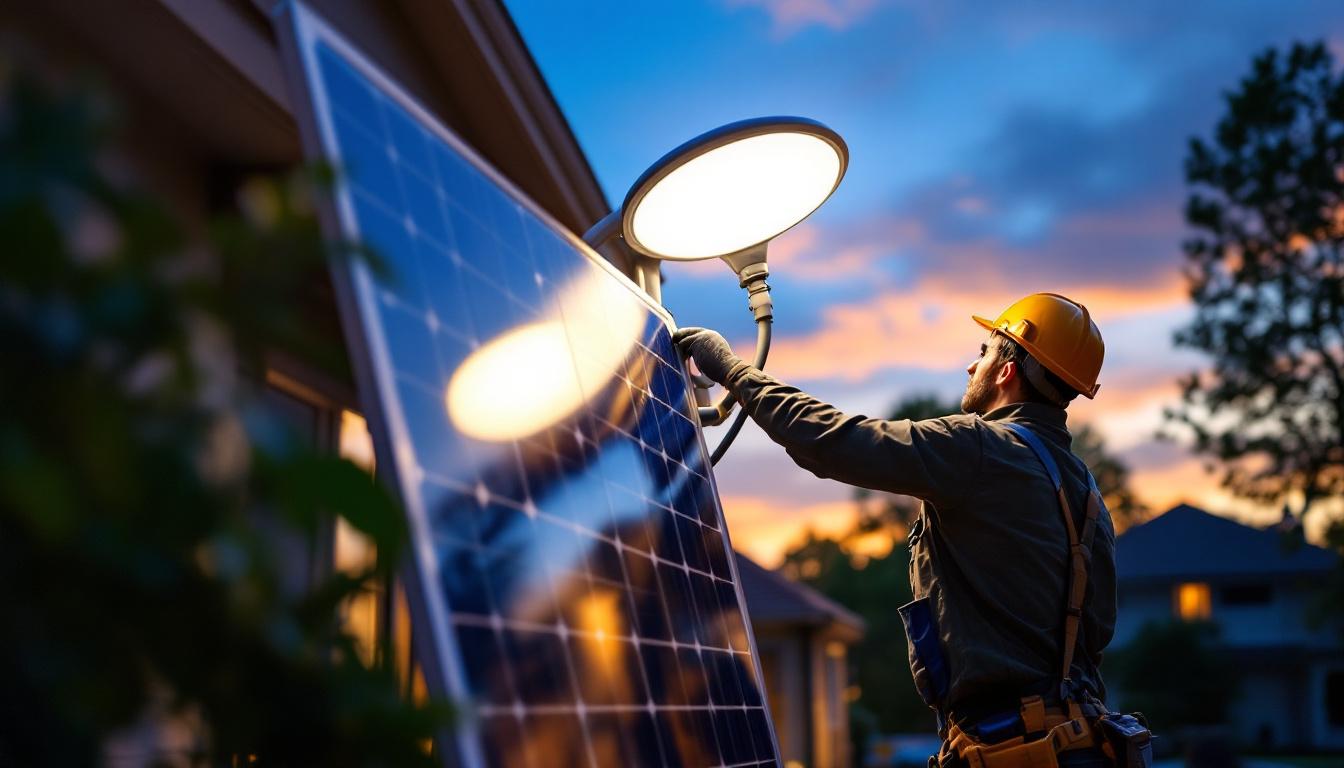
Understanding the Growing Demand for Large Solar Lights
As the global push towards sustainable energy intensifies, solar lighting has emerged as a pivotal solution for both residential and commercial applications. For lighting contractors, large solar lights represent an expanding market segment that combines environmental benefits with practical advantages. These systems are not only energy-efficient but also reduce operational costs and enhance safety in various settings. The reduction in energy consumption translates to lower electricity bills, making solar lights an attractive option for budget-conscious consumers and businesses alike.
Recent industry reports highlight that solar lighting installations have grown exponentially in outdoor and public spaces, including parking lots, parks, highways, and industrial sites. The appeal lies in their independence from grid infrastructure, which is particularly advantageous in remote or off-grid locations. Understanding this demand is crucial for contractors aiming to provide cutting-edge, eco-friendly lighting solutions. Additionally, the ability to install these systems with minimal disruption to existing landscapes makes them a preferred choice for urban development projects, where maintaining aesthetic integrity is essential.
Why Large Solar Lights Are Becoming Essential
Large solar lights offer high lumen output, making them suitable for illuminating expansive areas. Unlike smaller solar units designed for accent lighting or pathways, these robust systems can replace traditional streetlights and floodlights. Their integration supports municipal sustainability goals and reduces carbon footprints, aligning with increasing regulatory requirements for green infrastructure. Furthermore, many municipalities are now incentivizing the adoption of solar technology through grants and subsidies, making it easier for contractors to pitch these solutions to local governments and organizations.
Moreover, advancements in solar panel efficiency and battery technology have made large solar lights more reliable and cost-effective. Contractors who stay informed about these technological improvements can better advise clients and tailor installations to specific project needs. The latest solar lights often come equipped with smart technology, allowing for features such as motion sensors, dimming capabilities, and remote monitoring, which enhance their functionality and appeal. As cities become smarter and more connected, the integration of solar lighting with IoT (Internet of Things) systems is set to revolutionize how we think about public safety and energy management, making large solar lights not just a choice, but a necessity in modern urban planning.
Key Components and Technologies in Large Solar Lighting Systems
To effectively install and maintain large solar lighting, contractors must have a comprehensive understanding of the core components and their functions. Each element plays a critical role in the system’s performance and longevity.
Solar Panels
The solar panel is the heart of any solar lighting system. For large-scale applications, contractors typically work with monocrystalline or polycrystalline panels, which differ in efficiency and cost. Monocrystalline panels generally offer higher efficiency and better performance in low-light conditions, making them ideal for areas with variable sunlight.
Proper panel sizing is essential to ensure sufficient energy capture throughout the day. Contractors should calculate the total wattage required based on the light’s power consumption and expected autonomy (the number of nights the system can operate without sunlight). This calculation helps in selecting panels that meet or exceed energy demands.
LED Fixtures
Light Emitting Diode (LED) technology dominates the solar lighting market due to its energy efficiency and long lifespan. Large solar lights utilize high-output LED fixtures capable of delivering bright, uniform illumination. Contractors should be familiar with different LED configurations, color temperatures, and beam angles to optimize lighting quality for various environments.
Additionally, understanding the relationship between LED wattage and lumen output allows contractors to design systems that balance brightness and energy consumption effectively.
Battery Storage
Battery technology is a critical factor in the reliability of large solar lighting systems. Lithium-ion batteries have become the preferred choice over traditional lead-acid batteries because of their higher energy density, longer cycle life, and lighter weight. Proper battery sizing ensures that the lighting system can operate through multiple cloudy days or extended periods without sunlight.
Contractors should also consider battery management systems (BMS) that protect against overcharging, deep discharge, and temperature extremes, thereby extending battery life and maintaining consistent performance.
Smart Controls and Sensors
Modern large solar lights often incorporate smart controls such as motion sensors, dimming capabilities, and remote monitoring. These features enhance energy efficiency by adjusting light output based on occupancy or ambient light conditions. For contractors, integrating smart technology adds value by reducing maintenance costs and improving user experience.
Installation Best Practices for Lighting Contractors
Successful installation of large solar lighting systems requires meticulous planning and execution. Contractors must address site-specific challenges and ensure compliance with safety and quality standards.
Site Assessment and Planning
Before installation, a thorough site assessment is indispensable. Contractors should evaluate solar access, shading from trees or buildings, and local weather patterns. This assessment informs the optimal placement of solar panels and fixtures to maximize energy capture and light distribution.
Additionally, soil conditions and mounting options must be considered. Large solar lights often require sturdy poles or foundations, especially in areas prone to high winds or seismic activity. Proper anchoring ensures system stability and longevity.
Electrical and Structural Considerations
Although solar lighting systems are largely self-contained, contractors must ensure that wiring, connectors, and mounting hardware meet industry standards. Using weather-resistant and UV-protected materials prevents premature degradation. Grounding and surge protection are also critical to safeguard the system against electrical faults and lightning strikes.
Structural integrity is equally important. Poles and fixtures should comply with local codes and be capable of supporting the weight of solar panels and batteries. Regular inspections during installation help identify potential issues early.
Commissioning and Testing
After installation, comprehensive testing is necessary to verify system performance. Contractors should check panel orientation, battery charge levels, LED functionality, and sensor responsiveness. Testing under various lighting conditions ensures that the system operates as intended, providing consistent illumination and energy efficiency.
Documenting these tests and providing clients with operational guidelines fosters trust and supports future maintenance efforts.
Maintenance and Troubleshooting Strategies
Maintaining large solar lighting systems is essential for sustaining performance and extending service life. Lighting contractors play a vital role in establishing maintenance protocols and addressing common issues.
Routine Inspection and Cleaning
Solar panels accumulate dust, dirt, and debris, which can significantly reduce energy absorption. Regular cleaning, especially in dusty or polluted environments, restores panel efficiency. Contractors should recommend cleaning schedules based on local conditions and provide safe cleaning methods to prevent damage.
Inspecting LED fixtures for signs of wear, corrosion, or moisture ingress helps prevent unexpected failures. Battery terminals and connections also require periodic checks to ensure secure and corrosion-free contacts.
Battery Health Monitoring
Battery degradation is a common cause of system downtime. Contractors should employ diagnostic tools to monitor battery voltage, capacity, and temperature. Early detection of battery issues allows for timely replacement or repair, minimizing disruptions.
Educating clients on proper battery usage and storage conditions can further prolong battery life and maintain system reliability.
Troubleshooting Common Problems
Contractors often encounter issues such as dim lighting, flickering, or system shutdowns. These symptoms may result from panel shading, faulty wiring, depleted batteries, or sensor malfunctions. A systematic troubleshooting approach, starting from the solar panel and moving through the system components, helps isolate and resolve problems efficiently.
Maintaining detailed service records assists in identifying recurring issues and improving future installations.
Regulatory Compliance and Safety Considerations
Lighting contractors must navigate various regulatory frameworks to ensure that large solar lighting installations meet safety and environmental standards.
Local Codes and Standards
Compliance with electrical codes, building regulations, and environmental guidelines is mandatory. Contractors should stay updated on changes in legislation affecting solar lighting, such as requirements for light pollution control, energy efficiency, and material disposal.
Adhering to these standards not only avoids legal penalties but also enhances the reputation of contractors as responsible professionals.
Safety Protocols During Installation and Maintenance
Working with large solar lighting systems involves risks related to electrical components, heights, and heavy equipment. Contractors must implement strict safety protocols, including the use of personal protective equipment (PPE), fall protection, and lockout/tagout procedures.
Training personnel in safe handling and emergency response ensures a safer work environment and reduces liability.
Future Trends and Opportunities in Large Solar Lighting
The solar lighting industry continues to evolve rapidly, offering new opportunities for lighting contractors to expand their services and expertise.
Integration with Smart City Infrastructure
Large solar lights are increasingly integrated into smart city frameworks, enabling real-time data collection and adaptive lighting controls. Contractors who develop skills in IoT (Internet of Things) technologies can provide advanced solutions that improve urban management and energy efficiency.
Innovations in Energy Storage and Materials
Emerging battery chemistries and lightweight, durable materials promise to enhance the performance and reduce the cost of large solar lighting systems. Staying informed about these innovations allows contractors to recommend the most effective products and maintain a competitive edge.
Expanding Markets and Applications
Beyond traditional outdoor lighting, large solar lights are finding applications in agriculture, emergency response, and temporary event lighting. Contractors who diversify their offerings can tap into these niche markets and increase revenue streams.
Conclusion
For lighting contractors, mastering the installation and maintenance of large solar lighting systems is essential to meet the rising demand for sustainable and efficient outdoor illumination. A deep understanding of system components, best practices in installation, and proactive maintenance strategies ensures successful project outcomes and client satisfaction.
By embracing regulatory compliance, safety, and emerging technologies, contractors can position themselves as leaders in the evolving solar lighting landscape, delivering solutions that benefit both clients and the environment.
Illuminate Your Projects with LumenWholesale
Ready to elevate your lighting projects with the most efficient and sustainable solutions? Look no further than LumenWholesale, where we provide lighting contractors like you with the highest quality, spec-grade large solar lights at unbeatable wholesale prices. Our commitment to excellence ensures you have access to reliable and high-performance lighting that meets the strictest industry standards. Plus, with the convenience of free shipping on bulk orders, you can secure premium lighting for your projects at the best value — all without hidden fees or compromises. Don’t miss out on the opportunity to enhance your service offerings with LumenWholesale. Wholesale Lighting at the Best Value is just a click away.