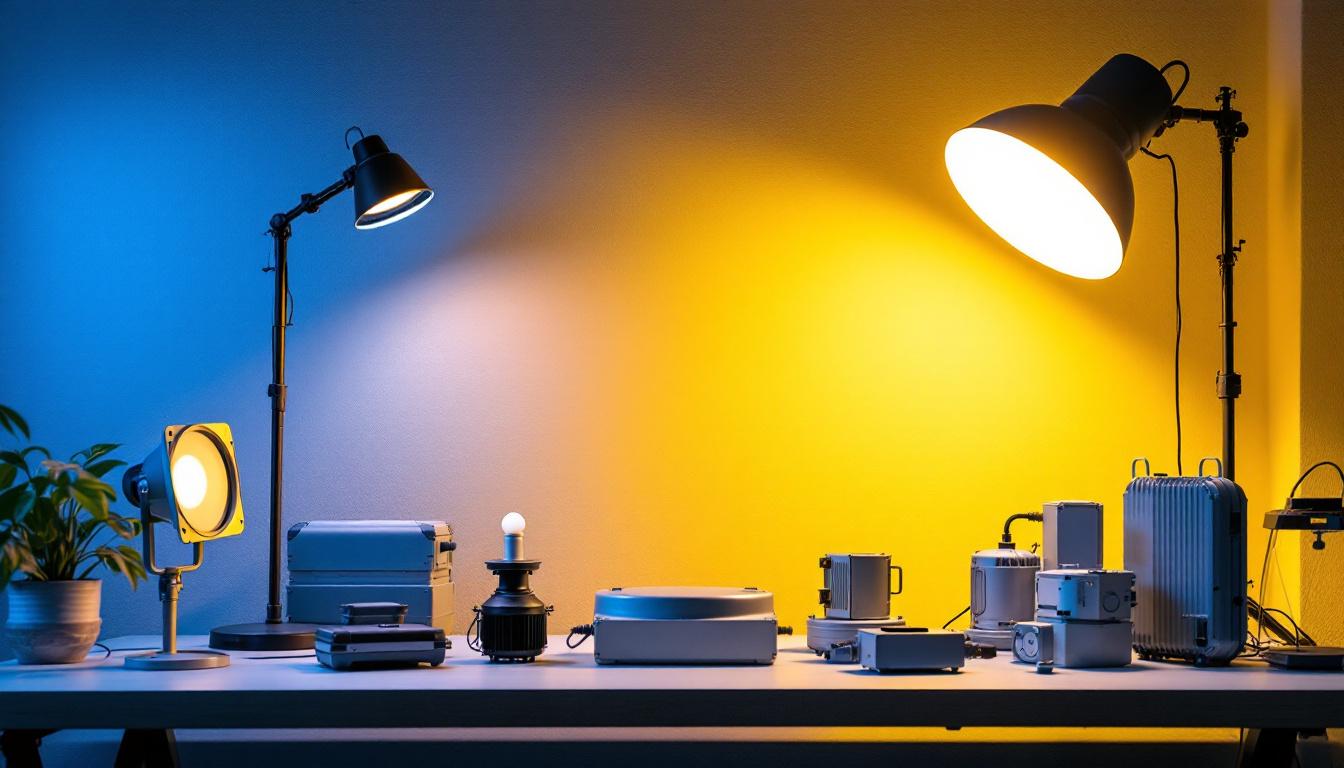
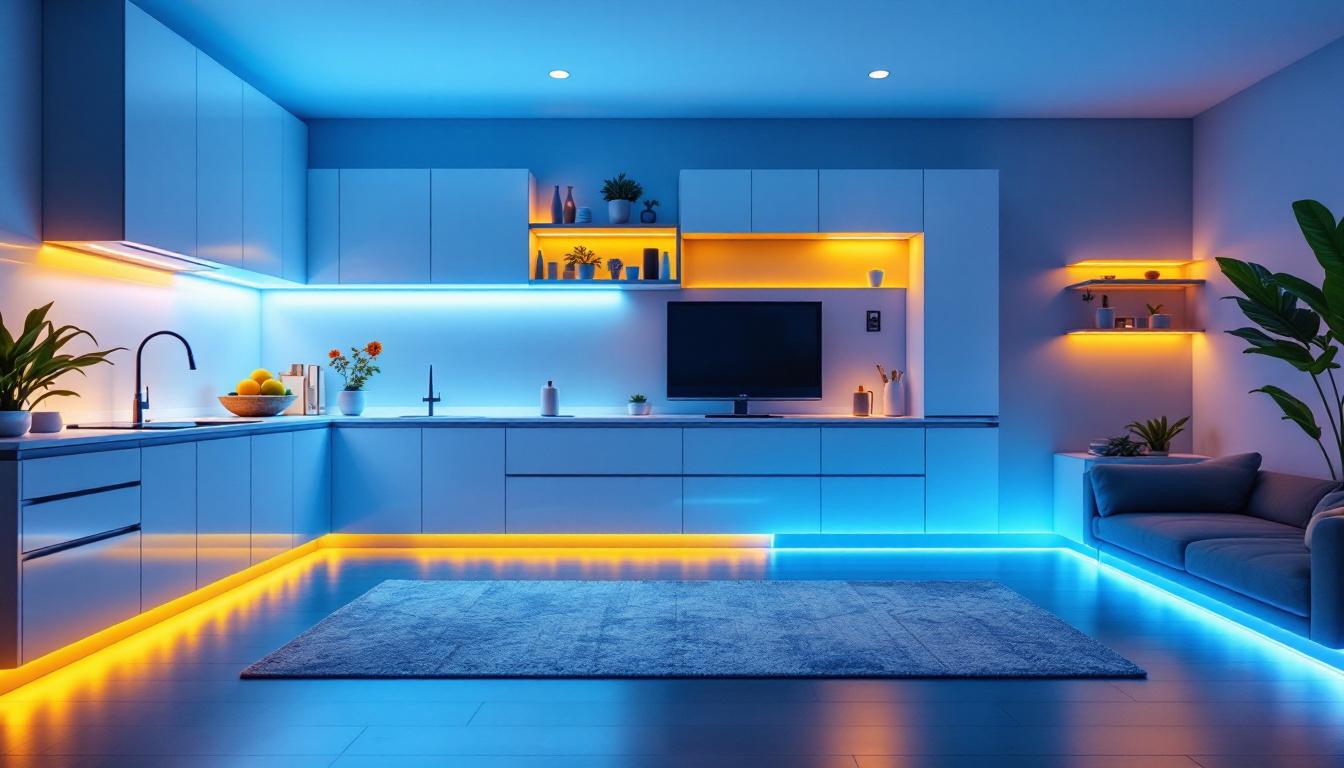
Introduction to LED Technology in the Lighting Industry
Light Emitting Diode (LED) technology has revolutionized the lighting industry, offering unparalleled energy efficiency, longevity, and versatility compared to traditional incandescent and fluorescent bulbs. For lighting contractors, understanding the different types of LED bulbs is essential to recommend the best solutions for diverse applications, optimize client satisfaction, and ensure compliance with evolving energy standards.
LED bulbs have become the go-to choice for residential, commercial, and industrial lighting projects due to their adaptability and cost-effectiveness. However, the wide variety of LED bulb types available can be overwhelming. This article aims to simplify the landscape by breaking down the most common LED bulb types, their features, and ideal use cases, empowering lighting contractors to make informed decisions.
One of the most significant advantages of LED technology is its energy efficiency. Compared to traditional bulbs, LEDs consume up to 80% less energy, which not only reduces electricity bills but also contributes to a lower carbon footprint. This is particularly important in today’s environmentally conscious market, where consumers are increasingly seeking sustainable options. Additionally, the long lifespan of LED bulbs—often exceeding 25,000 hours—means fewer replacements, which can lead to significant savings over time and less waste in landfills.
Moreover, the versatility of LED lighting extends beyond mere energy savings. LEDs are available in a wide range of color temperatures, from warm whites that mimic the glow of incandescent bulbs to cooler, daylight-like hues that enhance visibility and productivity in workspaces. This adaptability allows lighting contractors to tailor solutions to specific environments, whether it’s creating a cozy atmosphere in a living room or ensuring optimal lighting conditions in a retail setting. Furthermore, advancements in smart LED technology have introduced features such as dimming capabilities and color-changing options, providing even greater control over lighting design and enhancing user experience.
Core Types of LED Bulbs
Standard LED Bulbs (A-series)
The A-series LED bulb, often referred to as the “standard” or “A19” bulb, is the most recognizable LED bulb shape. It is designed to replace traditional incandescent bulbs in general lighting applications such as table lamps, ceiling fixtures, and wall sconces.
These bulbs typically offer a wide range of color temperatures, from warm white (2700K) to daylight (5000K), allowing contractors to tailor lighting ambiance to client preferences. They are available in various lumen outputs, making them suitable for everything from subtle accent lighting to bright task illumination.
Standard LED bulbs are highly energy-efficient, consuming up to 85% less energy than incandescent equivalents and lasting up to 25 times longer. Their compatibility with dimmer switches has improved significantly, but contractors should verify dimmer compatibility to avoid flickering or reduced bulb life.
Reflector LED Bulbs (R, BR, PAR Series)
Reflector LED bulbs are designed to direct light in a focused beam, making them ideal for recessed lighting, track lighting, and outdoor floodlights. The most common reflector bulb types include R (Reflector), BR (Bulged Reflector), and PAR (Parabolic Aluminized Reflector) bulbs.
R and BR bulbs are typically used indoors for ambient or accent lighting, with BR bulbs providing a wider beam spread compared to R bulbs. PAR bulbs, on the other hand, are favored for their precise beam control and are often used in commercial settings or outdoor security lighting.
Lighting contractors should consider the beam angle, lumen output, and color temperature when selecting reflector LED bulbs. For example, a narrow beam angle (15° to 25°) is suitable for spotlighting artwork, while a wider beam angle (40° to 60°) works well for general room illumination.
Candle LED Bulbs
Candle-shaped LED bulbs mimic the appearance of traditional flame-shaped incandescent bulbs, making them a popular choice for chandeliers, wall sconces, and decorative fixtures. Their elegant shape enhances aesthetic appeal without sacrificing energy efficiency.
These bulbs come in various base types, including candelabra (E12) and intermediate (E17) bases, which are common in decorative lighting. Contractors should ensure the chosen bulb’s size and base type match the fixture specifications to avoid installation issues.
Color temperature options usually lean towards warm white (2700K to 3000K) to maintain a cozy and inviting atmosphere. Some candle LED bulbs also offer dimmable features, adding versatility to decorative lighting schemes.
Tube LED Bulbs (T-series)
Tube LED bulbs, such as T8 and T12, are widely used to replace fluorescent tubes in commercial and industrial settings. These bulbs offer significant energy savings and reduced maintenance costs due to their extended lifespan.
Lighting contractors must consider the compatibility of LED tube bulbs with existing fixtures, as some require bypassing or removing the ballast, while others are designed to work with the ballast. This distinction is critical to ensure safety and optimal performance.
Tube LEDs come in various lengths and color temperatures, with options for single-ended or double-ended power input. Their high lumen output and uniform light distribution make them ideal for offices, warehouses, and retail environments.
Specialized LED Bulbs for Unique Applications
Smart LED Bulbs
Smart LED bulbs integrate wireless technology, enabling remote control, scheduling, and customization via smartphones or voice assistants. These bulbs are increasingly popular in both residential and commercial projects focused on energy management and user convenience.
For lighting contractors, offering smart LED solutions can differentiate their service and meet growing client demand for connected home and office environments. Smart bulbs often support features such as color tuning, dimming, and scene setting, which enhance ambiance and functionality.
When selecting smart bulbs, contractors should evaluate compatibility with existing smart home ecosystems, network reliability, and security protocols to ensure seamless integration and client satisfaction.
Filament LED Bulbs
Filament LED bulbs replicate the look of vintage incandescent bulbs by using LED filaments arranged inside a clear or tinted glass envelope. These bulbs combine nostalgic aesthetics with modern energy efficiency, making them ideal for restaurants, cafes, and retro-themed interiors.
Despite their decorative appeal, filament LEDs deliver bright, warm light with high color rendering index (CRI), enhancing the appearance of interior spaces. Contractors should note that these bulbs are typically non-dimmable or only compatible with specific dimmers, so verifying dimmer compatibility is essential.
High-Intensity LED Bulbs
High-intensity LED bulbs are designed for applications requiring powerful illumination, such as outdoor security lighting, stadiums, and industrial facilities. These bulbs often come in PAR or MR16 formats with high lumen outputs exceeding 2000 lumens.
Contractors must consider factors like heat dissipation, IP rating for weather resistance, and beam angle to ensure safety and optimal lighting performance in demanding environments. Additionally, high-intensity LEDs typically require robust fixtures capable of handling their thermal output.
MR16 LED Bulbs
MR16 bulbs are small, multifaceted reflector bulbs commonly used in track lighting, display cases, and accent lighting. They are prized for their precise beam control and compact size.
MR16 LED bulbs come in various voltage options, including 12V and 120V, and often require compatible transformers. Contractors should verify electrical compatibility and transformer specifications to avoid flickering or premature failure.
These bulbs offer excellent color rendering and are available in multiple beam angles, making them versatile for highlighting artwork, retail displays, or architectural features.
Key Considerations for Lighting Contractors When Choosing LED Bulbs
Color Temperature and Color Rendering Index (CRI)
Color temperature, measured in Kelvins (K), influences the mood and functionality of a space. Warm white (2700K-3000K) creates a cozy atmosphere, neutral white (3500K-4100K) suits workspaces, and daylight (5000K-6500K) is ideal for task lighting and areas requiring high visibility.
CRI measures a light source’s ability to reveal colors accurately compared to natural light. A CRI of 80 or above is generally recommended for most applications, while retail and art settings may benefit from CRI values of 90 or higher.
Energy Efficiency and Lifespan
Energy efficiency is a primary driver for LED adoption. Lighting contractors should prioritize bulbs with high lumens per watt (lm/W) ratings to maximize energy savings for clients. Additionally, bulbs with longer rated lifespans reduce maintenance costs and downtime, which is particularly important in commercial and industrial settings.
Dimming Compatibility
Not all LED bulbs are dimmable, and those that are may require specific dimmer switches. Lighting contractors must verify dimmer compatibility to prevent flickering, buzzing, or reduced bulb life. Providing clients with clear guidance on dimmer selection enhances user experience and system reliability.
Fixture Compatibility and Form Factor
LED bulbs come in diverse shapes and sizes. Ensuring the selected bulb fits the fixture both physically and electrically is crucial. For example, some LED tube replacements require fixture rewiring, while others are plug-and-play. Contractors should assess installation complexity and potential retrofit challenges before specifying products.
Environmental and Regulatory Compliance
Many regions have regulations governing energy efficiency and hazardous material content in lighting products. Lighting contractors should select LED bulbs that meet or exceed local standards such as ENERGY STAR or DLC certifications. This not only ensures compliance but also assures clients of product quality and performance.
Conclusion: Empowering Lighting Contractors with LED Knowledge
For lighting contractors, mastering the diverse types of LED bulbs is fundamental to delivering tailored, efficient, and compliant lighting solutions. From standard A-series bulbs to specialized smart and filament LEDs, each type serves distinct purposes and environments.
By understanding the technical specifications, application contexts, and installation considerations of various LED bulbs, contractors can confidently guide clients toward optimal lighting choices. This expertise not only enhances project outcomes but also positions contractors as trusted advisors in an increasingly competitive market.
Staying informed about technological advancements and industry trends will continue to be vital as LED technology evolves. Lighting contractors who invest in this knowledge will be well-equipped to meet the demands of modern lighting design and sustainability goals.
Illuminate Your Projects with LumenWholesale
Ready to elevate your lighting projects with the most efficient and cost-effective LED solutions? At LumenWholesale, we provide lighting contractors like you with an extensive selection of top-quality, spec-grade LED bulbs. Our commitment to unbeatable wholesale prices means you can access superior lighting products without the burden of inflated markups. With free shipping on bulk orders, you can stock up on reliable, high-performance lighting and enjoy the best value without any hidden fees. Don’t compromise on quality or cost. Discover wholesale lighting at the best value today and light up your projects with confidence and convenience.