Understanding Ceiling Types: The Foundation for Effective Lighting Installation
For lighting contractors, a thorough understanding of ceiling types is essential to delivering successful lighting solutions. The ceiling serves as the primary canvas for fixture installation, and its characteristics directly influence the choice, placement, and performance of lighting fixtures. Different ceiling constructions present unique challenges and opportunities that contractors must navigate to ensure optimal results.
Common ceiling types encountered in residential, commercial, and industrial projects include drywall (or gypsum board) ceilings, suspended (drop) ceilings, exposed beam ceilings, and specialty ceilings such as vaulted or tray designs. Each type demands tailored strategies to accommodate fixture weight, wiring accessibility, aesthetic integration, and maintenance considerations.
Lighting contractors who master the nuances of these ceiling types not only enhance the quality of their installations but also improve client satisfaction and project efficiency.
Drywall Ceilings: The Most Prevalent Canvas
Drywall ceilings are ubiquitous in modern construction due to their versatility and cost-effectiveness. These ceilings typically consist of gypsum panels secured to wooden or metal framing. For lighting contractors, drywall ceilings offer a relatively straightforward installation environment but require attention to structural support and finish integrity.
When installing recessed lighting or surface-mounted fixtures on drywall ceilings, contractors must ensure that the ceiling cavity can accommodate fixture housings and wiring without compromising the ceiling’s structural integrity. Using proper mounting brackets and anchors is crucial to prevent sagging or damage over time. Additionally, drywall ceilings often benefit from integrated lighting designs that maintain a clean, seamless look. The choice of paint finish can also influence the lighting effect; for instance, a matte finish can help diffuse light more evenly, while a glossy finish can create a more dramatic effect by reflecting light.
Suspended Ceilings: Flexibility Meets Functionality
Suspended ceilings, also known as drop ceilings, consist of a grid system that supports lightweight ceiling tiles. These are prevalent in commercial and institutional settings due to their accessibility and ease of maintenance. For lighting contractors, suspended ceilings offer significant flexibility, allowing fixtures to be installed within or below the grid.
One of the key advantages is the ability to easily access wiring and fixtures for repairs or upgrades. However, contractors must be mindful of the weight limits of the grid system and ensure that fixtures are properly supported to avoid grid deformation. Popular lighting options for suspended ceilings include troffers, LED panels, and pendant fixtures that complement the modular nature of the ceiling. Moreover, the use of color and texture in the ceiling tiles can enhance the overall ambiance of a space, providing opportunities for creative lighting designs that harmonize with the ceiling’s aesthetic. This versatility allows contractors to tailor lighting solutions that not only meet functional needs but also elevate the visual appeal of the environment.
Exposed Beam and Specialty Ceilings: Design Challenges and Opportunities
Exposed beam ceilings, often found in industrial or rustic designs, present unique challenges due to their open structure and irregular surfaces. Lighting contractors must creatively integrate fixtures that highlight architectural features while providing adequate illumination.
Specialty ceilings such as vaulted or tray designs add dimensionality but require precise planning to position fixtures effectively. In these cases, contractors often employ track lighting, adjustable pendants, or wall-mounted sconces to achieve balanced lighting and accentuate ceiling contours. Additionally, the interplay of light and shadow created by these ceiling types can be leveraged to enhance the overall design narrative of a space, drawing attention to specific areas or features. Incorporating smart lighting solutions, such as dimmers or color-changing LEDs, can further enhance the functionality of these unique ceilings, allowing for customizable atmospheres that adapt to various activities or moods. This adaptability not only improves the user experience but also showcases the contractor’s ability to deliver innovative and tailored lighting solutions that meet the specific needs of their clients.
Choosing the Right Lighting Fixtures for Each Ceiling Type
Selecting appropriate lighting fixtures is a critical step that directly affects the functionality, aesthetics, and longevity of the lighting installation. Lighting contractors must consider fixture size, weight, heat dissipation, and compatibility with the ceiling type to maximize success.
Recessed Lighting: Sleek and Subtle
Recessed lighting fixtures are popular for drywall ceilings due to their minimalistic appearance and ability to provide focused illumination without cluttering the ceiling surface. These fixtures require sufficient ceiling cavity depth and secure mounting points. LED recessed lights have become standard, offering energy efficiency and long service life.
Contractors should verify insulation compatibility and ensure that fixtures are rated for contact with insulation (IC-rated) to prevent fire hazards. Proper spacing and alignment are also crucial to avoid uneven lighting and shadows. Additionally, dimmable options can enhance the versatility of recessed lighting, allowing homeowners to adjust the ambiance according to different activities, from bright task lighting during cooking to softer illumination for movie nights.
Surface-Mounted Fixtures: Versatile and Accessible
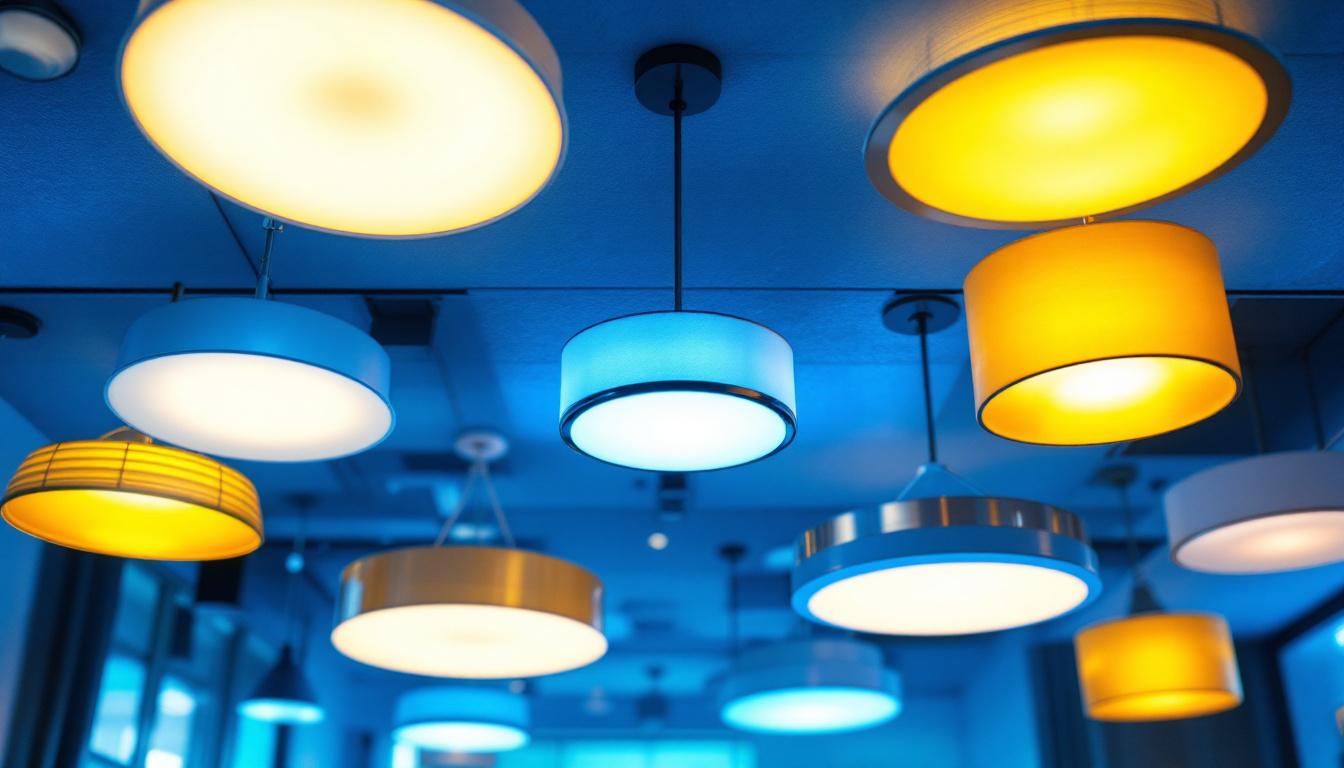
Surface-mounted fixtures are ideal for ceilings where recessed installation is impractical, such as suspended ceilings or exposed beams. These fixtures are attached directly to the ceiling surface and come in a wide range of styles, including flush mounts, semi-flush mounts, and decorative pendants.
For suspended ceilings, lightweight LED panels or troffers integrate seamlessly with the grid, providing uniform light distribution. In exposed beam scenarios, pendant fixtures can be suspended from beams to add visual interest and functional lighting. Moreover, surface-mounted fixtures can serve as artistic statements in a room; choosing unique designs or finishes can elevate the overall decor, making them not just sources of light but also integral elements of interior design.
Track and Pendant Lighting: Customizable and Dynamic
Track lighting systems offer flexibility in directing light where it is needed, making them suitable for specialty ceilings and commercial spaces. They can be mounted on drywall or exposed beams and allow for easy repositioning of individual fixtures along the track.
Pendant lighting is often used to create focal points or provide task lighting over counters, dining areas, or workstations. Their hanging design works well with high or vaulted ceilings, but contractors must carefully calculate drop lengths and ensure secure mounting to overhead structures. Furthermore, the choice of bulb type and color temperature can dramatically influence the mood of a space; warm white bulbs can create a cozy atmosphere, while cooler tones may be more appropriate for modern, sleek environments. Combining different styles of track and pendant lighting can also result in a layered lighting effect, enhancing both functionality and visual appeal in any room.
Installation Best Practices: Ensuring Safety, Efficiency, and Quality
Successful lighting installation goes beyond fixture selection; it requires meticulous planning, adherence to electrical codes, and attention to detail. Lighting contractors who implement best practices reduce the risk of costly rework and enhance client trust.
Assessing Structural Support and Load Capacity
Before installation, contractors should evaluate the ceiling’s ability to support the weight of the lighting fixtures. This is especially important for heavy pendants or clusters of fixtures. Reinforcing the ceiling structure or using specialized mounting hardware may be necessary to ensure safety and durability. Additionally, understanding the ceiling type—whether it’s drywall, plaster, or a suspended grid—can influence the choice of mounting methods. For instance, in older buildings with plaster ceilings, extra care must be taken to avoid compromising the integrity of the existing structure.
Electrical Considerations and Code Compliance
All wiring and electrical components must comply with local codes and standards to prevent hazards. Contractors should use appropriate gauge wiring, install proper junction boxes, and ensure that fixtures have the correct voltage and wattage ratings. Grounding and circuit protection are also critical elements. Furthermore, it’s essential to stay updated on any changes in electrical codes, as these can vary significantly by region and may introduce new safety requirements. Regular training sessions and workshops can help contractors remain informed about the latest standards and technologies in the field.
Additionally, integrating dimming controls or smart lighting systems requires coordination with electrical plans and may involve additional training or certification. The rise of smart home technology has made it imperative for contractors to understand how to install and configure these systems effectively, ensuring that they provide the intended benefits of energy efficiency and user convenience.
Optimizing Lighting Layout and Spacing
Proper fixture placement enhances both functionality and aesthetics. Contractors should consider the room’s purpose, ceiling height, and natural light sources when determining fixture spacing and beam angles. Utilizing lighting design software or consulting photometric data can improve accuracy and client satisfaction. Moreover, understanding the psychological impact of lighting on occupants can influence design choices; for example, warmer tones may create a cozy atmosphere in residential spaces, while cooler tones might be more suitable for offices or commercial environments. Engaging clients in the design process can also ensure that their preferences and needs are met, leading to a more personalized lighting solution.
Maintaining Ceiling Integrity and Finish Quality
During installation, care must be taken to avoid damaging ceiling materials. For drywall ceilings, patching and finishing around fixture cutouts should be neat and seamless. In suspended ceilings, tiles must be handled gently to prevent cracking or staining. Additionally, using protective coverings during installation can help safeguard against dust and debris, which can mar the finish of both the ceiling and the fixtures. After installation, a thorough inspection should be conducted to ensure that all elements are not only functional but also visually appealing, as the final appearance can significantly impact the overall perception of the space.
Emerging Trends and Technologies Impacting Ceiling Lighting
Lighting contractors who stay abreast of industry trends can offer innovative solutions that differentiate their services and meet evolving client demands.
LED Advancements and Energy Efficiency
LED technology continues to revolutionize ceiling lighting with improvements in brightness, color rendering, and energy consumption. Contractors can leverage these advancements to design sustainable lighting systems that reduce operational costs and environmental impact.
Smart Lighting Integration
Smart lighting systems enable remote control, automation, and customization of lighting environments. Ceiling fixtures compatible with wireless controls, occupancy sensors, and daylight harvesting sensors provide enhanced user experience and energy savings.
Architectural and Decorative Lighting
There is growing demand for lighting that doubles as architectural elements or art pieces. Lighting contractors can collaborate with designers to install fixtures that complement ceiling textures, colors, and shapes, creating immersive spaces.
Conclusion: Elevating Lighting Projects Through Ceiling Expertise
Mastering the relationship between ceiling types and lighting fixtures empowers contractors to deliver superior installations that combine safety, functionality, and aesthetics. By understanding ceiling structures, selecting appropriate fixtures, adhering to best practices, and embracing technological advancements, lighting contractors can maximize project success and client satisfaction.
Continuous education and adaptation to emerging trends will position contractors as trusted experts in a competitive market, ensuring long-term growth and professional excellence.
Get Your Premium Lighting Supplies at LumenWholesale
Ready to take your lighting projects to the next level? At LumenWholesale, we provide lighting contractors with the highest quality, spec-grade lighting products at prices that can’t be beaten. Say goodbye to local distributor markups and hello to our extensive selection that meets rigorous industry standards. With LumenWholesale, you’re guaranteed reliable, high-performance lighting for every type of ceiling installation. Plus, enjoy the convenience of bulk buying with free shipping, ensuring you get the best value without any hidden fees. Elevate your lighting installations with the perfect blend of quality, affordability, and convenience. Wholesale Lighting at the Best Value is just a click away.