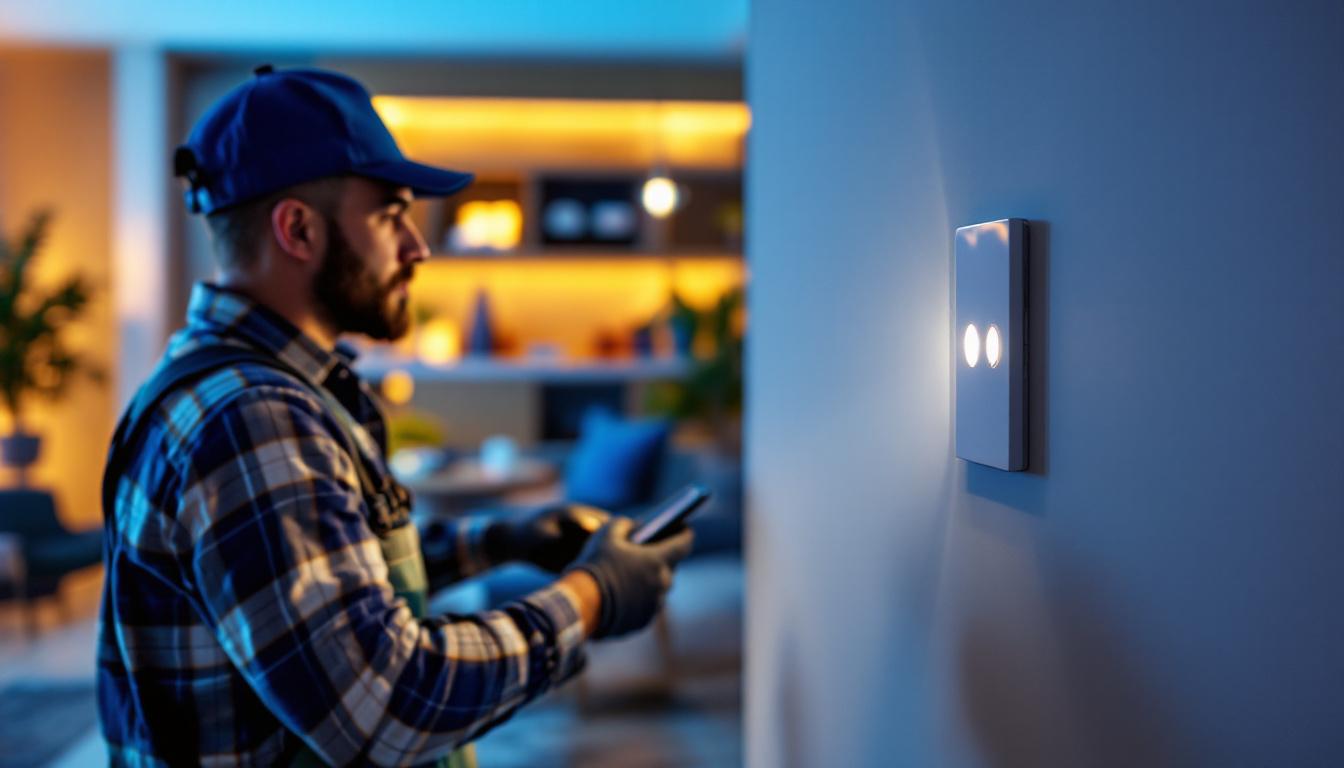
Understanding Motion Detector Dimmer Switches
Motion detector dimmer switches combine two essential lighting technologies: motion sensing and dimming control. For lighting contractors, mastering the nuances of these devices is crucial, as they offer enhanced energy efficiency, convenience, and user comfort. Unlike traditional switches, these advanced controls automatically adjust lighting levels based on occupancy and ambient light, providing an intelligent solution for both residential and commercial spaces.
The integration of motion detection with dimming capabilities allows for dynamic lighting environments. When a room is occupied, the switch can gradually increase brightness to a preset level, and when the space is unoccupied, it dims or turns off the light entirely. This not only reduces electricity consumption but also extends the lifespan of lighting fixtures, a key selling point for clients seeking sustainable solutions.
Key Components and How They Work
Motion detector dimmer switches typically include a passive infrared (PIR) sensor or ultrasonic sensor to detect movement. PIR sensors sense heat emitted by people, while ultrasonic sensors emit sound waves and detect changes in the reflected waves caused by motion. Some advanced models combine both technologies for improved accuracy and reduced false triggers.
The dimming function is controlled by an internal microcontroller that adjusts the voltage supplied to the lighting fixture. This modulation allows for smooth transitions between brightness levels, enhancing user experience and reducing abrupt lighting changes that can be distracting or uncomfortable.
Additionally, many motion detector dimmer switches come equipped with customizable settings, allowing users to tailor the sensitivity and timing of the motion detection. For instance, in a busy hallway, a user might prefer a shorter delay before the lights turn off, while in a more tranquil setting like a bedroom, a longer delay can create a more relaxed atmosphere. This level of customization not only improves user satisfaction but also ensures that the lighting adapts seamlessly to various activities and preferences throughout the day.
Furthermore, the installation of these devices can significantly contribute to smart home systems. Many modern motion detector dimmer switches can be integrated with home automation platforms, enabling users to control their lighting remotely via smartphone apps or voice commands. This integration not only enhances convenience but also allows for advanced programming options, such as scheduling lights to turn on or off at specific times, thus providing an additional layer of security and energy management for homeowners and businesses alike.
Why Lighting Contractors Should Prioritize Motion Detector Dimmer Switches
Lighting contractors are increasingly called upon to provide energy-efficient and user-friendly lighting solutions. Motion detector dimmer switches address both these demands effectively, making them a valuable addition to any contractor’s portfolio.
Energy savings are a primary driver. According to energy efficiency studies, lighting accounts for approximately 15-20% of total electricity use in commercial buildings. Incorporating motion detector dimmer switches can reduce lighting energy consumption by up to 50% in areas with intermittent occupancy, such as conference rooms, restrooms, and corridors.
Enhancing Client Satisfaction and Building Reputation
Clients appreciate lighting solutions that offer convenience and cost savings without compromising aesthetics. Motion detector dimmer switches provide seamless automation, eliminating the need to manually adjust lighting levels. This convenience translates into higher client satisfaction and repeat business.
Moreover, contractors who recommend and install such advanced controls position themselves as forward-thinking professionals committed to sustainability and innovation. This reputation can lead to referrals and opportunities in green building projects, which are becoming more prevalent as environmental regulations tighten.
In addition to energy efficiency, motion detector dimmer switches enhance the overall user experience by allowing for customizable lighting settings. For instance, in a multi-purpose space, users can adjust the lighting to suit various activities, from presentations to casual gatherings. This adaptability not only improves functionality but also creates an inviting atmosphere that can significantly impact the mood and productivity of occupants.
Furthermore, the integration of smart technology with motion detector dimmer switches opens up new avenues for contractors. Many of these switches can now be connected to home automation systems, enabling users to control their lighting remotely via smartphone apps. This feature not only adds a layer of convenience but also appeals to tech-savvy clients who are looking for modern solutions that fit seamlessly into their lifestyles. By staying ahead of technological trends, contractors can ensure they remain competitive in a rapidly evolving market.
Best Practices for Installation
Proper installation is critical to ensure motion detector dimmer switches perform optimally. Lighting contractors must consider several factors to avoid common pitfalls and maximize the benefits of these devices.
Assessing the Environment and Application
Before installation, contractors should evaluate the space’s layout, lighting requirements, and occupancy patterns. For example, high-traffic areas with frequent movement may benefit from shorter sensor time delays, while spaces with intermittent use might require longer delays to prevent frequent switching.
Additionally, the type of lighting fixture and load compatibility must be verified. Not all dimmer switches are compatible with every bulb type, especially LED and CFL lamps. Using incompatible dimmers can cause flickering, reduced bulb life, or even damage to the switch.
Sensor Placement and Coverage
Sensor placement is vital for reliable motion detection. PIR sensors require a clear line of sight to detect heat signatures effectively, so they should be installed where occupants’ movement is unobstructed. Ultrasonic sensors, while less dependent on line of sight, can be sensitive to environmental noise and air currents, which should be taken into account.
Contractors should also consider the sensor’s coverage angle and range. Overlapping coverage zones may cause unintended switching, while insufficient coverage can lead to dark spots. Testing the sensor’s detection area before finalizing installation helps mitigate these issues.
Wiring and Electrical Considerations
Correct wiring is essential for safety and functionality. Many motion detector dimmer switches require a neutral wire, which may not be present in older buildings. Contractors should verify wiring configurations and, if necessary, upgrade electrical boxes to accommodate the new switch.
Additionally, proper grounding and adherence to local electrical codes are mandatory. Using manufacturer-provided wiring diagrams and installation instructions ensures compliance and reduces the risk of faults.
Programming and Customization for Optimal Performance
Modern motion detector dimmer switches often come with programmable features that allow contractors to tailor the device’s behavior to specific client needs and environments.
Adjusting Sensitivity and Time Delay
Most devices allow adjustment of motion sensitivity to prevent false triggers caused by pets, HVAC airflow, or other environmental factors. Contractors should calibrate sensitivity based on the space’s typical activity levels to balance responsiveness and energy savings.
Time delay settings control how long the light remains on after motion is no longer detected. Setting appropriate delays helps avoid unnecessary energy consumption while ensuring occupant comfort. For example, a restroom might require a shorter delay than a conference room.
Setting Minimum and Maximum Light Levels
Dimming ranges can be customized to maintain a minimum light level for safety or ambiance, while the maximum level ensures adequate illumination. This feature is particularly useful in spaces where complete darkness is undesirable, such as hallways or stairwells.
Some switches also include ambient light sensors that adjust lighting based on natural daylight, further enhancing energy efficiency. Contractors should educate clients on these features to maximize benefits.
Troubleshooting Common Issues
Despite careful installation and programming, motion detector dimmer switches may occasionally encounter problems. Lighting contractors should be prepared to diagnose and resolve these issues promptly.
Flickering or Inconsistent Lighting
Flickering often results from incompatibility between the dimmer and the lighting load. Ensuring the use of dimmer-compatible bulbs and verifying load specifications can prevent this issue. Additionally, loose wiring connections or voltage fluctuations may cause flickering and should be inspected.
False Triggers or Failure to Detect Motion
False triggers can stem from environmental factors such as HVAC drafts, pets, or reflective surfaces. Adjusting sensor sensitivity or repositioning the sensor can mitigate these problems. Conversely, failure to detect motion may indicate obstructed sensor views, dead batteries in wireless units, or sensor malfunction.
Switch Not Responding or Power Issues
If the switch fails to operate, contractors should check for proper wiring, including neutral and ground connections. Circuit breakers and fuses should also be inspected. In some cases, firmware updates or factory resets may resolve operational glitches.
Future Trends and Innovations
The evolution of motion detector dimmer switches continues to accelerate, driven by advances in sensor technology, connectivity, and smart home integration. Lighting contractors should stay informed about emerging trends to offer cutting-edge solutions.
Integration with Building Automation Systems
Increasingly, motion detector dimmer switches are being integrated into comprehensive building automation platforms. This integration allows centralized control, data analytics, and remote management, enabling facility managers to optimize lighting based on real-time occupancy and energy usage patterns.
Enhanced Sensor Technologies
New sensor technologies, such as radar-based detection and machine learning algorithms, are improving accuracy and reducing false positives. These advancements promise more reliable performance in complex environments.
Wireless and IoT Connectivity
Wireless dimmer switches that communicate via Wi-Fi, Zigbee, or Bluetooth enable seamless integration with smart home systems and voice assistants. This connectivity offers contractors opportunities to expand their service offerings into smart lighting installations.
Conclusion
For lighting contractors, motion detector dimmer switches represent a powerful tool to deliver energy-efficient, user-friendly, and sustainable lighting solutions. By understanding the technology, adhering to best installation practices, and leveraging customization options, contractors can enhance client satisfaction and position themselves as leaders in modern lighting design.
Staying current with technological advancements and troubleshooting techniques ensures that contractors can confidently address challenges and maximize the benefits of these sophisticated devices. Ultimately, motion detector dimmer switches not only improve lighting quality but also contribute significantly to energy conservation efforts, aligning with the growing demand for green building practices.
Get Your Motion Detector Dimmer Switches at LumenWholesale
Ready to elevate your lighting projects with the latest in motion detector dimmer switch technology? Look no further than LumenWholesale, where we provide lighting contractors with the highest quality, spec-grade lighting products at unbeatable wholesale prices. Our extensive selection is designed to meet the highest industry standards, ensuring you get reliable, high-performance lighting for every project. Plus, with free shipping on bulk orders, you can stock up on premium lighting solutions at the best value — without any hidden fees or compromises. Don’t miss out on the perfect blend of quality, affordability, and convenience. Visit LumenWholesale today and experience wholesale lighting at the best value for your next installation.